
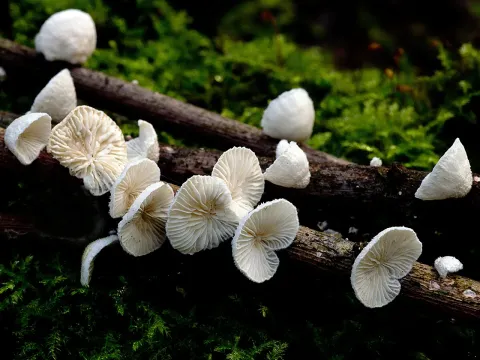
Chaetocalathus craterellus
Chaetocalathus craterellus
The disease is caused by the fungus Chaetocalathus craterellus, a member of the Marasmiaceae family. It is primarily known as a saprotrophic organism that can become opportunistic under stress conditions for host plants.
What the section contains
Chaetocalathus craterellus
The fungus produces small, crater-like fruiting bodies on organic substrates. Its mycelium actively decomposes plant tissues, utilizing organic compounds for growth and subsequent reproduction.
The life cycle involves the production of basidiospores that are easily dispersed by wind and splashing water. This efficient spread mechanism allows the pathogen to colonize new areas rapidly in favorable conditions.
Although typically found on decaying wood, the fungus can impact living tissues if the plant's natural defense systems are compromised. This is particularly common in weakened nursery stock or plants in high-humidity environments.
The organism's biological resilience is linked to its ability to remain dormant within infected debris until conditions become suitable for active colonization.
The development of Chaetocalathus craterellus is heavily dependent on high relative humidity levels, typically exceeding 80%. Prolonged wet periods provide the necessary conditions for spore germination.
Temperatures ranging from 18°C to 24°C are optimal for the growth and spread of this pathogen. In this range, the fungus can rapidly expand its mycelial network across susceptible surfaces.
Poor airflow and high planting density create microclimates that trap moisture, facilitating the establishment of infection. Such conditions are most frequently encountered in indoor horticultural facilities.
Organic debris, such as bark, mulch, or unsterilized growing media, acts as a primary reservoir for the fungus. The presence of these materials in close proximity to vulnerable plant tissue significantly increases risk.
Improper sanitation practices, such as failing to clean tools after contact with infected plant parts, significantly promote the further transmission of the fungus within the crop area.
The primary damage caused by Chaetocalathus craterellus is tissue degradation, which interferes with nutrient transport. This stress causes wilting, chlorosis, and eventual necrosis of affected stem or root tissues.
Infection often weakens the structural integrity of the plant, leading to lodging or stunted growth. For ornamental plants, even minor lesions reduce aesthetic value, rendering the crop unmarketable.
Secondary pathogens frequently exploit the wounds created by the primary fungal invasion. This synergy often leads to a faster collapse of the plant and complicates the diagnostic process.
Massive infections in nursery settings can lead to significant economic losses, requiring the destruction of entire plant batches to prevent the spread of the disease.
Persistent soil contamination makes subsequent cultivation difficult, necessitating expensive treatments such as heat sterilization or chemical fumigation before reuse of the growth medium.
The cornerstone of management is strict sanitation. All dead plant matter and infected debris must be promptly removed and disposed of to eliminate the pathogen's food source.
Proper environmental control, including regular ventilation and humidity regulation, is essential to keep the habitat unfavorable for fungal growth. Avoiding over-irrigation is vital.
Systemic fungicides are recommended when early symptoms are identified. Treatments should be applied to both the plant surface and the soil interface to effectively halt mycelial expansion.
Biological control agents, particularly beneficial fungi like Trichoderma species, can be applied to suppress the pathogen's growth and create a competitive environment in the substrate.
Regular monitoring of irrigation water quality and the use of pasteurized mulch or substrate can prevent the introduction of the fungus into the growth environment.