
Chaenotheca
Chaenotheca
Chaenotheca is not a plant disease but a genus of lichens belonging to the family Coniocybaceae. These organisms are commonly found as epiphytes, meaning they live on the surface of plants without harming them.
What the section contains
Chaenotheca
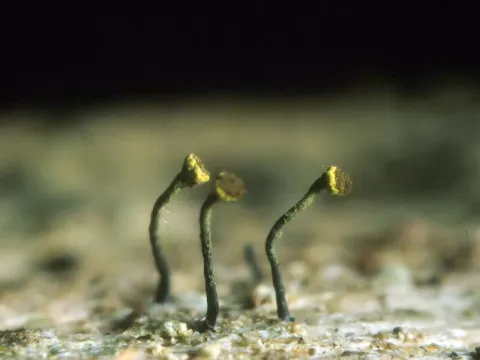
The organism is a symbiotic complex of fungi and algae, typically from the genus Stichococcus. It derives its name from its unique morphology, characterized by pin-like fruiting bodies that rise above the substrate.
Biologically, Chaenotheca species are known for their small size and specific reproductive structures called mazzidia, which release spores into the air to propagate in favorable environments.
Unlike parasitic fungi, Chaenotheca does not infiltrate plant tissues or feed on the host's nutrients. It functions entirely independently, using the bark only as a structural support.
In terms of agricultural pathology, this genus has no negative impact on the health, productivity, or lifespan of trees. It is not considered a pathogen in any agricultural classification.
Chaenotheca species thrive in environments characterized by high humidity and long-term stability. They are typically found in undisturbed forest ecosystems.
The bark of mature, old-growth trees provides the ideal substrate for these lichens, offering the necessary surface texture and chemical balance required for their slow growth.
These lichens are extremely sensitive to air quality and are often used as bioindicators. They rarely persist in areas with high levels of pollution, particularly sulfur dioxide or industrial smog.
The dispersal of the lichen is facilitated by wind, which carries spores to new surfaces. Once established, the growth cycle is notoriously slow, taking many years to form visible colonies.
Conditions in modern commercial orchards are rarely suitable for Chaenotheca due to frequent maintenance, pest management, and the relatively young age of the trees.
Chaenotheca poses no risk to plants. It is an innocuous epiphyte that lacks the biological mechanism to infect or degrade the living tissues of its host.
The presence of this lichen does not impede the plant's physiological processes, such as gas exchange or nutrient transport. It does not penetrate the cork layer of the bark.
There is no economic harm associated with Chaenotheca. It does not cause wilting, decay, lesions, or any other signs of illness in agricultural or ornamental plants.
While some growers might find the growth of any lichen aesthetically unpleasing, its presence is a sign of a stable environment rather than a symptom of plant stress.
No protective measures are required against this organism. It is a natural component of biodiversity and does not require intervention in a forestry or agricultural setting.