
Banana anthracnose
Colletotrichum musae
Description
Symptoms
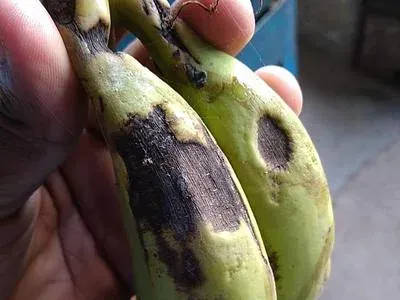
The first signs of banana anthracnose are small, brown-to-black spots on the skin of the ripening fruit. These spots quickly expand in size and often merge to form large, blackened areas.
Under conditions of high humidity, creamy-pink or orange spore masses appear in the center of the lesions. This is a definitive sign of Colletotrichum musae sporulation.
As the disease progresses, the underlying fruit pulp becomes soft, watery, and discolored. The infection eventually destroys the quality of the banana, making it completely unmarketable.
The peduncles or stems of the banana hands can also be affected, leading to "crown rot" or fruit drop. This weakens the structural integrity of the bunch, causing economic losses in the field.
Unlike some other fungal rots, the lesions caused by anthracnose are often sunken, giving the fruit a deformed appearance that is highly characteristic of the infection.
Pathogen
The causal agent of banana anthracnose is the fungus Colletotrichum musae, which belongs to the Ascomycota phylum. This pathogen is a major concern in tropical fruit production worldwide.
The fungus can persist on decaying plant tissues, serving as a constant source of infection in banana plantations. It primarily affects the fruit, although it can also colonize leaves and stems.
Spore dispersal is facilitated by water splashes during rain or overhead irrigation, as well as by wind. These spores land on the banana surface and remain latent until the fruit approaches maturity.
The fungus exhibits a hemibiotrophic lifestyle, initially living within the host tissues without causing damage before switching to a necrotrophic phase that kills host cells.
Genetic diversity within the Colletotrichum genus means that different strains may exhibit varying levels of virulence, making disease management challenging for commercial growers.
Conditions for development
Anthracnose development is strongly favored by warm and humid weather conditions. Temperatures between 24°C and 28°C are optimal for the growth and spread of the fungus.
Prolonged wet periods or frequent rainfall are essential for the germination of fungal spores on the fruit surface. High humidity prevents the surface from drying, allowing the fungus to penetrate the skin.
Poor plantation management, such as lack of pruning or dense planting, limits airflow and increases the local humidity levels, creating a microclimate suitable for infection.
The physiological changes occurring during fruit ripening are crucial. As bananas ripen, the levels of antifungal compounds in the peel decrease, allowing the latent fungus to activate.
Mechanical damage caused by pests, birds, or during harvest acts as a direct entry point for the pathogen, significantly increasing the severity of the infection.
Why it matters
Banana anthracnose is recognized as one of the most significant postharvest diseases. It causes substantial losses during storage, ripening, and transport to international markets.
The presence of lesions on the peel renders the fruit visually unappealing to consumers, resulting in massive product rejection by retailers and wholesalers.
Because the disease spreads rapidly in enclosed ripening chambers, a single infected hand can contaminate an entire crate of fruit, causing catastrophic losses for exporters.
Reduced shelf life is a major consequence, forcing producers to sell fruit quickly, often at lower prices, to avoid total losses due to rotting.
Beyond cosmetic damage, the nutritional value and palatability of the banana are severely degraded, making the fruit unsuitable for fresh consumption or processing.
Protection
Sanitation is the cornerstone of anthracnose management. Regularly removing dead leaves, stalks, and decaying fruit from the plantation reduces the primary inoculum source.
Fungicide sprays are often applied during the fruit development stage to suppress fungal growth. Strategic application schedules are required to maintain protection throughout the season.
Postharvest treatment of fruit involves dipping banana clusters in fungicide solutions. This is critical for maintaining quality during the long-distance shipping required for global trade.
Bagging bunches with perforated plastic or paper covers creates a physical barrier against spores and improves the microenvironment around the developing fruit.
Careful handling during harvest and packaging is essential to avoid bruises and skin injuries, as intact skin acts as a primary barrier against the pathogen's entry.
Discussion
No discussions yet — be the first.