
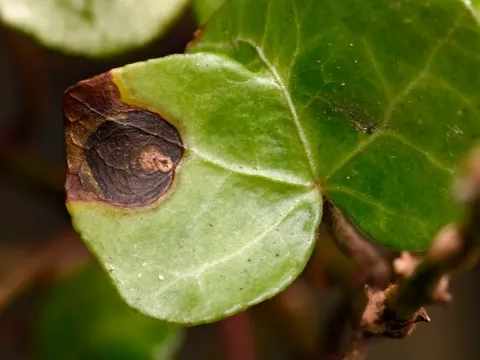
Phoma leaf spot of ivy
Boeremia hedericola
The disease is caused by the fungus Boeremia hedericola, a pathogen that specifically targets English ivy (Hedera helix) and its cultivars, severely impacting plant health.
What the section contains
Phoma leaf spot of ivy
The fungus propagates through pycnidia, which are tiny, dark, flask-shaped reproductive structures that develop within the dead tissue of infected leaves and stems.
These pycnidia release microscopic spores that are easily spread by water splashes, air currents, or contact with contaminated gardening equipment and hands.
The pathogen thrives by colonizing the leaf mesophyll, leading to cell necrosis and the collapse of the plant's structural integrity, which results in characteristic spotting.
It can remain dormant in plant debris or soil for extended periods, making it a persistent threat in environments where sanitation is poorly maintained.
The initial symptoms include the appearance of small, water-soaked spots on the leaves, which gradually turn brown or reddish-brown as they enlarge.
Lesions are often surrounded by a distinct dark margin, and the center may eventually become bleached or necrotic as the tissue dies off entirely.
As the infection progresses, tiny black pimple-like structures, which are the fungal pycnidia, become visible on the surface of the infected leaf tissue.
Severe infestations lead to premature leaf drop, causing the ivy vines to appear thin and spindly, which ruins the overall aesthetic of the plant.
In humid conditions, the foliage may develop a fuzzy appearance due to the formation of fungal masses on the necrotic spots.
The development of Boeremia hedericola is highly dependent on moisture; it spreads most aggressively when relative humidity remains consistently above 70%.
Overhead irrigation acts as a primary vector for spore dissemination, splashing the pathogen from lower, infected leaves to healthy, higher parts of the canopy.
Temperatures ranging between 18°C and 25°C provide an ideal environment for the fungus to colonize host tissues rapidly and complete its reproductive cycle.
Poor ventilation and overcrowded arrangements prevent foliage from drying out, which provides the sustained wetness required for spore germination.
Weakened plants, whether due to nutrient deficiency or improper lighting, show a significantly higher susceptibility to successful fungal colonization.
The disease significantly diminishes the decorative value of the ivy, making it unsuitable for commercial use or home interior design.
Persistent infection weakens the ivy plant, inhibiting new growth and reducing its overall resilience to environmental stressors.
If left untreated, the cumulative damage can lead to the death of the vine, especially when combined with other stress factors like root rot or pests.
The presence of the fungus creates a hazardous environment for other nearby plant species, potentially turning a single pot into a source of widespread contamination.
Economic losses arise from the need for frequent pesticide applications and the necessity of discarding heavily infected plants that cannot recover.
The most important control measure is strict sanitation, which involves pruning and removing all infected foliage and disposing of it away from healthy plants.
Proper water management is essential; avoid overhead watering and ensure that the root system has excellent drainage to prevent excessive humidity.
Fungicidal treatments containing copper compounds or systemic fungicides like chlorothalonil are effective if applied during the early stages of the disease.
Ensure adequate spacing between containers and improve airflow using small fans to facilitate the quick drying of leaves after watering.
- Sterilize all pruning tools with alcohol to prevent cross-contamination.
- Avoid working with plants when they are wet to prevent spore spread.
- Provide sufficient light to keep the plant vigorous and resistant.
- Quarantine new plants before adding them to your collection.
- Monitor foliage closely for early signs of lesions.