
Phoma leaf spot of sorghum
Phoma insidiosa
Description
Symptoms
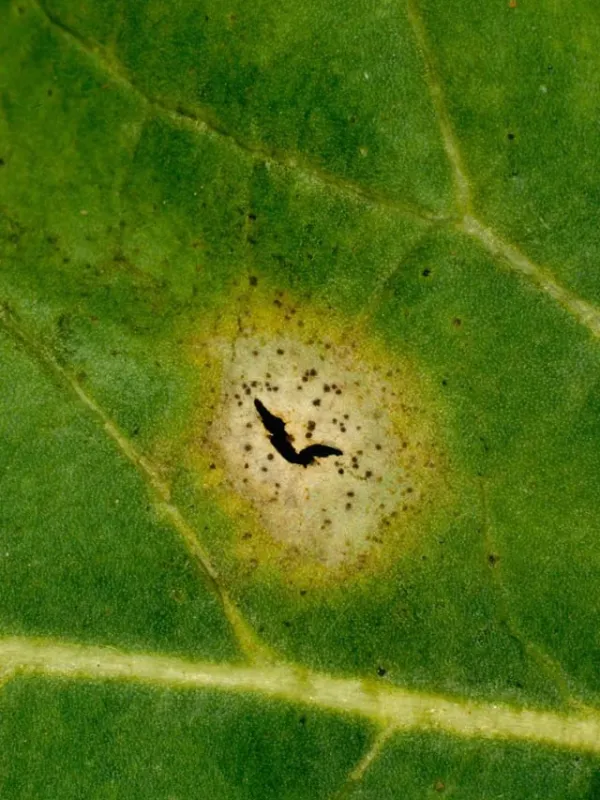
Initial symptoms appear as small, water-soaked spots on the lower leaves. As the disease progresses, these spots expand and develop into irregular, oval or circular lesions, often tan to reddish-brown in color.
A diagnostic characteristic of Phoma insidiosa is the presence of numerous tiny black dots within the lesions, which are the pycnidia of the fungus. These structures are often visible to the naked eye or with a hand lens.
Under favorable conditions, lesions can coalesce, leading to extensive necrosis of the leaf blade. This significantly reduces the total photosynthetic area and causes premature yellowing and drying of the foliage.
Infection can also affect the leaf sheaths and occasionally the stalks, particularly in high-humidity environments. Severe cases may result in the blighting of entire leaves.
When the panicles are infected, the grain may become discolored or shriveled. This not only impacts the yield but also reduces the quality and germination potential of the seeds.
Pathogen
The causative agent of Phoma leaf spot of sorghum is the fungus Phoma insidiosa (synonym Phoma sorghina). This pathogen is a facultative parasite, capable of surviving as a saprophyte on plant debris remaining in the soil.
The fungus overwinters in the form of mycelium and pycnidia on crop residues and infected seeds. These structures serve as the primary inoculum for the next season's crop, initiating the infection cycle in spring.
The life cycle involves the production of pycnidiospores (conidia) inside microscopic fruit bodies called pycnidia. These spores are disseminated primarily by splashing rain and wind currents to healthy plant parts.
Infection occurs when spores land on susceptible host tissue and germinate under moist conditions. The fungus then penetrates the epidermal layer, colonizing the leaf tissue and establishing the infection site.
This pathogen is widely adapted and can affect various sorghum types, including grain, forage, and sweet sorghum, as well as some wild grasses, which may serve as alternative hosts.
Conditions for development
High humidity and frequent rainfall are the most critical factors for the development of Phoma leaf spot. Moisture is required for the release of spores from pycnidia and for their successful germination.
The disease thrives in warm temperatures, typically ranging from 20°C to 25°C. These conditions often coincide with the rapid growth stages of sorghum, making the crop highly vulnerable.
Dense planting configurations restrict airflow within the canopy, leading to a microclimate with prolonged periods of leaf wetness, which drastically promotes the spread of the pathogen.
Plant injury caused by insect feeding, hail, or mechanical cultivation creates entry points for the fungal mycelium, increasing the severity of the infection.
Field management, such as leaving crop debris on the surface, provides a continuous source of inoculum, increasing the disease pressure for subsequent plantings in the same field.
Why it matters
The primary economic damage caused by Phoma leaf spot is the reduction in grain yield and forage quality due to the premature destruction of the leaf canopy.
Severe infections during the grain-filling stage lead to stunted grain development and lower test weights. Furthermore, infected seed lots show reduced viability and vigor.
Forage value is diminished because damaged leaves lose their nutritional content. Additionally, certain strains of the fungus may produce toxins, causing concerns for livestock health when used as silage.
Crop lodging may occur in highly susceptible fields where the fungus weakens the stem integrity, complicating harvest operations and leading to further yield losses.
Under heavy infection pressure, yield losses can range from minor to significant, depending on the susceptibility of the hybrid and the duration of the favorable weather for the pathogen.
Protection
Integrated disease management is essential to minimize losses. Prevention is the most effective approach due to the soil-borne and seed-borne nature of the fungus.
- Use certified, high-quality, and fungicide-treated seeds.
- Implement crop rotation with non-host species to break the disease cycle.
- Incorporate crop residues into the soil to accelerate decomposition and reduce inoculum.
- Manage weeds around the field that could host the fungus.
- Maintain optimal plant spacing to promote air circulation and reduce canopy humidity.
Fungicide applications may be utilized as a remedial measure in seed production fields or when favorable weather threatens to cause an epidemic outbreak of the disease.
Discussion
No discussions yet — be the first.