
Club foot
Ampulloclitocybe clavipes
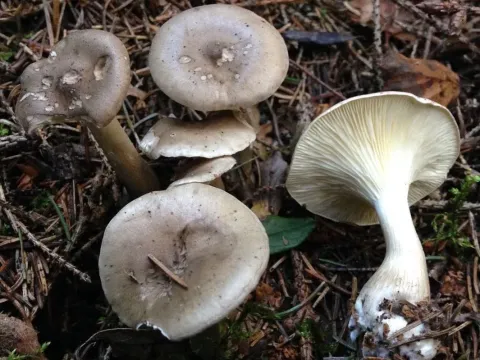
The club foot fungus (Ampulloclitocybe clavipes) is a basidiomycete fungus classified as a saprotroph, meaning it does not cause diseases in crops or plants.
What the section contains
Club foot
This fungus is widely recognized by its distinct club-shaped stem and grayish-brown cap, typically found in forested environments rather than agricultural fields.
Because it feeds on decomposing organic matter rather than living tissue, it lacks the pathogen status required to cause infections in crops.
Biological studies indicate that the fungus thrives in symbiotic or saprotrophic relationships within forest ecosystems, contributing to soil health.
In professional agronomy and plant pathology, it is not considered a threat to plant health and requires no intervention from growers or producers.
The fungus develops optimally in forest habitats with a high accumulation of leaf litter and organic residue, which provides the necessary carbon sources.
High humidity levels and consistent rainfall during late summer and autumn are the primary environmental drivers for the appearance of fruit bodies.
Moderate temperatures ranging from cool to temperate climates provide the ideal conditions for the mycelium to spread through the soil substrate.
Acidic soil environments are often preferred by this species, which allows it to thrive in various types of coniferous and deciduous woodland settings.
Limited light exposure is standard for the growth of this fungus, as the mycelium prefers the protected microclimate underneath forest canopy layers.
As a non-pathogenic fungus, the club foot species poses no harm to cultivated plants, agricultural yields, or garden ornamentals.
It does not cause wilting, root decay, or foliar diseases, and therefore has no negative economic impact on the farming or agricultural sector.
Its presence is actually beneficial to the ecosystem, as it aids in the decomposition of cellulose and lignin, effectively enriching the soil environment.
No protective measures, chemical treatments, or preventive agricultural practices are necessary, as the fungus does not interact with crops.
In summary, Ampulloclitocybe clavipes serves as a natural forest decomposer and should not be mistaken for a crop-destroying plant pathogen.