
Clubroot
Plasmodium
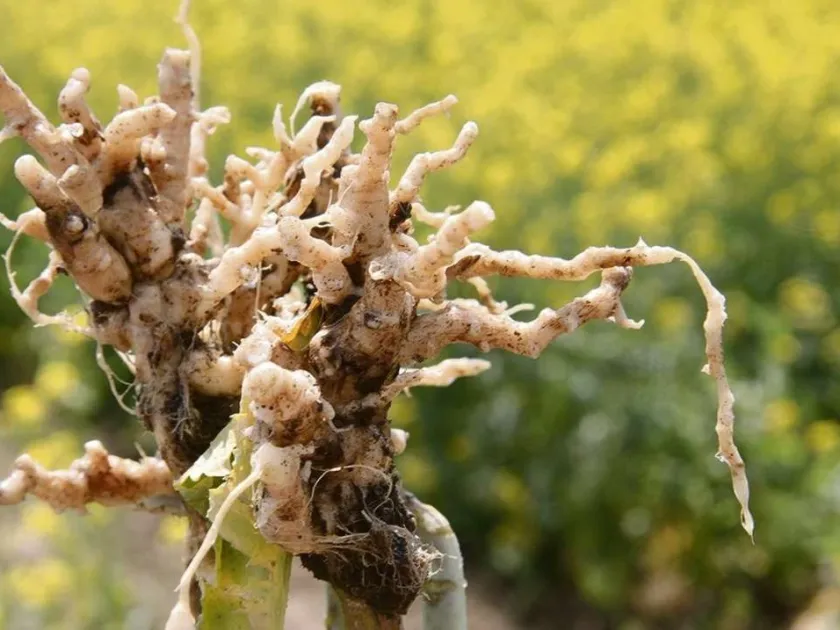
Description
Symptoms
The primary symptom of clubroot is the development of distinct galls, or clubs, on the roots of infected plants. These galls vary in size from small nodules to massive, malformed structures.
Above-ground symptoms often begin with daytime wilting, particularly during hot or dry conditions. Although plants may recover overnight, they eventually become permanently stunted as the root system fails.
Leaves of affected plants often turn pale or yellow, and the plants show signs of severe nutrient deficiency. In cabbage or cauliflower, head formation is either severely hindered or fails completely.
When you pull an infected plant from the soil, the root system is visibly distorted. Instead of fine root hairs and healthy structures, there is a mass of decayed, spongy tissue.
In later stages of the disease, the root galls begin to rot, inviting secondary pathogens like bacteria and fungi, which further accelerates the collapse of the plant's structural integrity.
Pathogen
The causative agent of clubroot is Plasmodiophora brassicae, an obligate parasite categorized as a slime mold. It invades the root cells of host plants, triggering abnormal cellular growth and tissue enlargement.
The parasite spreads through the soil in the form of resting spores that can survive for many years. When moisture levels are sufficient, these spores release motile zoospores that swim through soil water to find roots.
Once the zoospores reach the root hairs, they enter the tissue and form plasmodia. These structures draw nutrients from the plant, causing the roots to swell into the characteristic galls that give the disease its name.
As the plant tissues decay, the parasite releases millions of new resting spores back into the soil, creating a massive pool of future inoculum. This biological mechanism ensures its long-term persistence.
The resilience of these spores makes the disease notoriously difficult to eradicate from soil, meaning that long-term management strategies are essential once an area becomes infested.
Conditions for development
Clubroot thrives in acidic soil conditions, with an optimal pH range of 5.5 to 6.5. Increasing soil alkalinity is one of the most effective ways to inhibit the pathogen's activity.
High soil moisture is critical for the movement of zoospores. Environments with poor drainage or excessive irrigation significantly increase the rate of root infection and disease spread.
Soil temperatures between 18°C and 25°C are ideal for the rapid development of the parasite. In warmer soils, the infection cycle completes much faster than in cooler conditions.
Transmission primarily occurs via soil movement. Infested soil on boots, tractor tires, or hand tools is often the cause of the disease appearing in previously uninfected garden patches.
Continuous cropping of crucifers on the same land facilitates the buildup of spore populations. This monoculture approach creates a perfect habitat for the parasite to dominate the soil.
Why it matters
Clubroot is arguably the most destructive disease for all Brassica crops, including broccoli, kale, cabbage, and turnips. It poses a major threat to both domestic gardens and commercial farms.
By crippling the root system, the parasite effectively starves the plant. Without the ability to transport water and nutrients to the shoots, the plant's development is severely compromised.
The marketability of produce is destroyed. Even if the plant reaches harvest, the quality is poor, and the produce is prone to rapid spoilage during transport or storage due to secondary infections.
The long-term economic impact is substantial, as infected land may require years of fallowing or expensive soil treatments before it can be safely used for cruciferous crops again.
The disease also increases the overall vulnerability of the crop to other pests and diseases, creating a weakened ecosystem that struggles to produce any significant yield at all.
Protection
Rotation is the cornerstone of prevention. A minimum break of 5 to 7 years between growing susceptible brassica crops is highly recommended to starve the pathogen.
Liming the soil to maintain a higher pH (near 7.0 or above) creates an environment that is significantly less hospitable to Plasmodiophora brassicae, helping to reduce the severity of symptoms.
Sanitation is vital. Always use certified disease-free seedlings. If a plant shows signs of clubroot, it must be carefully removed with all its roots and burned or discarded in the trash.
Weed control is essential, as wild members of the mustard family (such as shepherd's purse) can act as hosts, maintaining the pathogen population even when no commercial crops are present.
After working in an area suspected of being infested, thoroughly clean all garden tools and footwear with a disinfectant or high-pressure water to prevent tracking spores to other parts of the site.
Discussion
No discussions yet — be the first.