
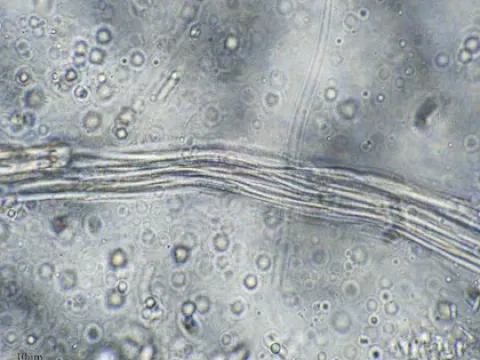
Schizothrix calcicola
Schizothrix calcicola
Schizothrix calcicola is a species of filamentous cyanobacteria often observed as a surface crust on wet soil or horticultural substrates.
What the section contains
Schizothrix calcicola
While not a plant pathogen in the traditional sense, its rapid proliferation is frequently perceived by growers as a disease due to the visual impact on the growing medium.
The organism grows in long filaments (trichomes) enclosed in a mucilaginous sheath, which allows it to form dense mats across moist surfaces.
Biologically, it thrives through photosynthesis, making light exposure a critical factor for its successful colonization and subsequent spread.
In professional agriculture, it is classified as a nuisance organism that disrupts the soil surface interface rather than infecting the plant tissue itself.
The primary driver for the growth of Schizothrix calcicola is high surface moisture combined with consistent illumination in greenhouse environments.
Excessive levels of nitrogen and phosphorus fertilizers on the substrate surface act as nutrients, accelerating the development of algal mats.
Moderate temperatures ranging from 20 to 30 degrees Celsius provide an optimal window for the rapid multiplication of these cyanobacterial colonies.
Poor ventilation and inadequate drainage of the containers prevent the substrate from drying out, which is necessary to suppress algal growth.
The presence of fine-textured potting mixes with low macro-porosity contributes to the retention of surface water, fostering ideal conditions for the organism.
The formation of a thick, hydrophobic algal crust significantly restricts the gas exchange between the roots and the atmosphere, potentially leading to root suffocation.
Surface crusting hinders uniform water infiltration during irrigation, causing uneven moisture distribution throughout the container profile.
The dense layer can create an environment conducive to the colonization of other pathogens, including various species of fungi and damping-off organisms.
The aesthetic decline of the growing medium directly impacts the marketability of nursery stock, often leading to reduced product quality perception.
Continuous presence of such mats alters the pH and chemical balance of the surface layer, which may negatively influence the uptake of nutrients by seedlings.
Adjusting irrigation schedules to allow the surface of the substrate to dry between watering events is the most effective preventative measure.
Applying a thin layer of grit, coarse sand, or expanded perlite creates a physical barrier that restricts light reaching the surface, inhibiting algal photosynthesis.
Improving the airflow and dehumidification systems in the greenhouse reduces surface moisture persistence and prevents the establishment of mats.
Regular mechanical cultivation or light raking of the substrate surface can disrupt established algal colonies and improve aeration for the plant roots.
Where infestation is severe, the use of approved algicides may be considered, provided they are compatible with the specific crop and irrigation method.