
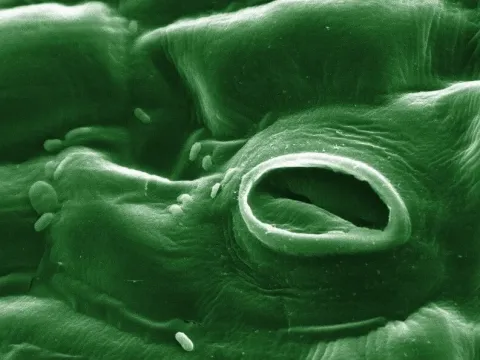
Salmonella on plants
Salmonella
The causative agent of salmonellosis in agricultural contexts is a Gram-negative bacterium of the Salmonella genus, belonging to the Enterobacteriaceae family. Although traditionally considered zoonotic pathogens, these bacteria are capable of colonizing plant tissues.
What the section contains
Salmonella on plants
Salmonella possesses the unique ability to enter plant tissues through stomata, microscopic cracks, or wounds caused by pests. The bacteria can exist both in an endophytic form (inside the plant) and an epiphytic form (on the surface).
Unlike true phytopathogens, Salmonella does not always cause severe tissue necrosis, but it adapts well to the apoplast environment. Its metabolism allows it to efficiently proliferate in fruit tissues rich in nutrients.
Contamination often occurs through contact with soil, irrigation with wastewater, or the use of organic fertilizers containing animal waste. The bacteria exhibit high resistance to various environmental stresses.
The development of bacteria inside the plant poses a hidden threat, as the pathogen becomes protected from surface disinfection. This makes control during the cultivation stage a critical aspect of modern agronomy.
In most cases, Salmonella infection in plants is asymptomatic. The plant typically appears healthy, which makes identifying contaminated produce nearly impossible without laboratory-based diagnostic testing.
In rare cases with high bacterial density, localized areas of soft rot or tissue discoloration may occur. However, these symptoms are non-specific and are frequently misidentified as other common bacterial diseases.
The primary diagnostic indicator is not a visual change in the plant, but the epidemiological history related to potential contamination sources. Detection is only possible through PCR methods or plating on selective media.
It is important to distinguish Salmonella from typical plant-specific pathogens such as Erwinia or Pseudomonas. Salmonella does not degrade plant cell walls as aggressively as classic soft-rot agents.
Contamination can be detected at various stages, from seed germination to fruit maturity. The presence of colonies is often associated with the formation of biofilms on leaves or fruit surfaces.
The development of Salmonella on plants is favored by high temperatures (ranging from 25 to 37 degrees Celsius) and high humidity levels. These conditions are optimal for the bacteria's metabolic activity.
Using water from open water sources contaminated with agricultural runoff is a primary factor in the spread of the pathogen. Drip irrigation is generally considered safer than overhead spraying.
The presence of uncomposted manure or organic fertilizer that has not undergone sufficient heat treatment provides a reservoir for primary infection. The pathogen can survive in soil particles for extended periods.
Poor crop rotation and inadequate control of organic fertilizer quality can trigger disease outbreaks. Plants experiencing physiological stress due to nutrient deficiencies are more susceptible to bacterial colonization.
Surface damage to fruits caused by insect pests or mechanical injury during harvesting provides entry points for bacteria to penetrate deep into the plant tissues.
The main harm associated with Salmonella on plants is the transformation of agricultural produce into a product hazardous to human health, resulting in significant economic losses for producers.
The detection of bacteria in vegetable batches leads to mandatory product recalls, causing direct financial impact. The reputation damage for an agricultural enterprise in such scenarios can be long-lasting.
The consumption of produce contaminated with Salmonella causes severe gastroenteritis in humans. Many regions have strict phytosanitary protocols prohibiting the sale of produce with even trace levels of the pathogen.
The pathogen can survive on the surface of produce for several weeks while maintaining its virulence for humans. This creates safety risks across the entire logistics chain from the field to the retail shelf.
The absence of visible disease symptoms forces manufacturers to implement costly quality control and certification systems to ensure compliance with food safety standards.
Prevention begins with strict control of irrigation water quality. Regular microbiological analysis and the use of filtration or water disinfection systems are highly recommended.
- Use only certified organic fertilizers that have undergone thorough thermophilic composting.
- Strict adherence to hygiene practices by personnel handling the produce.
- Regular pest management to prevent mechanical damage to fruits.
- Implementation of GAP (Good Agricultural Practices) standards across all cultivation stages.
An essential protection element is preventing direct contact between produce and the soil by using mulch or raised beds. This minimizes the risk of bacterial splash during irrigation.
Post-harvest processing should include thorough washing of produce using approved sanitizing agents to reduce residual bacterial levels on the surface.
Continuous monitoring of crop health and early identification of potentially contaminated field areas help to isolate infection sources before they spread further.