
Pseudomonas corrugata
Pseudomonas corrugata
Pseudomonas corrugata is a motile, Gram-negative bacterium recognized as a significant plant pathogen affecting various vegetable crops, especially tomatoes.
What the section contains
Pseudomonas corrugata
The bacterium specifically targets the xylem and vascular tissue, leading to a condition commonly known as bacterial pith necrosis in greenhouse tomatoes.
It survives in infested soil, plant debris, and can be seed-borne, making sanitation a critical aspect of disease management in agricultural environments.
The pathogen utilizes natural openings and mechanical wounds, often caused by pruning or insect activity, to invade the host tissue and establish a systemic infection.
Research indicates that Pseudomonas corrugata is capable of forming biofilms, which enhances its survival capacity under diverse environmental conditions.
Initial symptoms are often subtle and manifest as chlorosis (yellowing) of the younger, upper leaves followed by a gradual wilting of the plant.
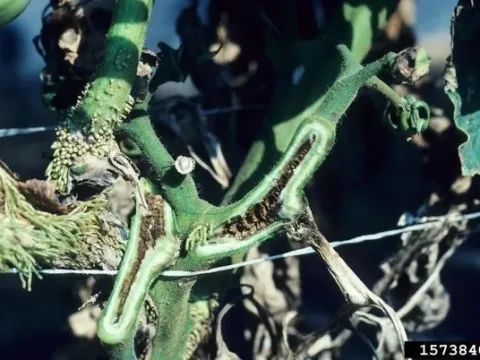
The hallmark sign of this disease is the internal necrosis of the stem pith, which turns a brownish color and may eventually become hollow as tissues decompose.
External symptoms include dark streaks or lesions on the stem, and in some cases, longitudinal cracks appear as the internal tissue collapses.
A distinctive response by the host plant is the development of adventitious roots originating from the stem above the necrotic area, indicating a vascular blockage.
- yellowing of top leaves;
- necrosis of the stem pith;
- longitudinal cracks on the stem;
- adventitious root formation;
- wilting of the whole plant.
The development of Pseudomonas corrugata is strongly favored by high relative humidity levels within the greenhouse environment, typically exceeding 80 percent.
Moderate temperatures ranging from 20 to 25 degrees Celsius are optimal for the rapid multiplication of this bacterial pathogen within the host tissue.
Excessive nitrogen fertilization often leads to succulent, lush growth that is highly susceptible to infection and more prone to mechanical damage during handling.
Poor ventilation and the presence of condensation on plant surfaces provide the necessary conditions for the bacteria to spread through water droplets.
Contaminated pruning tools and improper hygiene during cultivation practices act as primary vectors for the dissemination of the bacterium within a greenhouse.
The economic impact of this disease is significant, as it can cause widespread plant mortality and a drastic reduction in total fruit yield.
Infected plants suffer from disrupted water and nutrient transport, resulting in stunted growth, fruit malformation, and premature flower or fruit drop.
Affected fruits are often of poor quality, undersized, and lack the firmness required for commercial distribution, leading to financial losses for producers.
In severe infestation cases, entire greenhouse sectors can be lost, necessitating expensive soil sterilization and a complete overhaul of the growing cycle.
The persistent nature of the pathogen in the soil complicates long-term management and requires strict adherence to crop rotation and soil management protocols.
Effective management requires stringent sanitation, including the regular disinfection of all tools, equipment, and surfaces used during cultivation.
Climate control is vital; maintaining lower humidity through proper ventilation and avoiding overhead irrigation can significantly reduce the infection risk.
Balanced crop nutrition, avoiding high nitrogen levels and ensuring adequate potassium, helps in strengthening the plant's resistance to pathogen invasion.
Early identification and immediate removal of symptomatic plants, including the surrounding root zone, are essential to limit the spread of the bacteria.
Biocontrol agents, such as specific strains of Bacillus species, can be used as a preventative measure to inhibit the growth of Pseudomonas corrugata.