
Pseudanabaenales
Pseudanabaenales
Pseudanabaenales are an order of filamentous cyanobacteria that can pose significant challenges in hydroponic and aquaculture systems.
What the section contains
Pseudanabaenales
These organisms are not traditional plant parasites but act as opportunistic pathogens that compete for space and nutrients with cultivated crops.
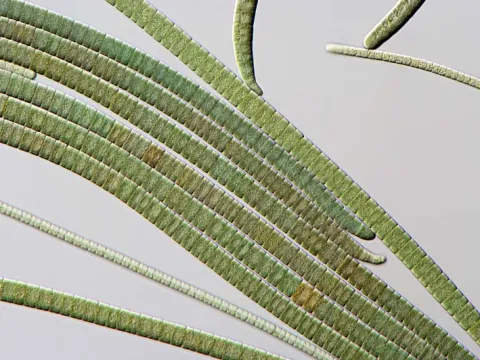
The morphology consists of simple, unbranched filaments that proliferate rapidly, forming dense mats in water environments.
Unlike parasitic fungi, their lifecycle is strictly dependent on photosynthetic activity, making them thrive in light-exposed irrigation channels.
They are known to form biofilms that adhere to surfaces, irrigation equipment, and the root zones of plants, hindering their biological functions.
High levels of nutrients, particularly nitrogen and phosphorus, create the ideal environment for the explosion of Pseudanabaenales populations.
Warm water temperatures, typically ranging between 22 and 30 degrees Celsius, significantly accelerate their growth rates.
Stagnant or slow-moving water is a primary condition that favors the settling and consolidation of cyanobacterial colonies.
Increased pH levels in the nutrient solution facilitate the dominance of these organisms over other beneficial aquatic microflora.
Direct sunlight penetration into irrigation systems is the most important environmental trigger for their rapid development.
The primary harm caused by Pseudanabaenales involves the physical blockage of roots and the depletion of dissolved oxygen in the water.
The secretion of metabolic waste products can lead to toxicity, causing root necrosis and overall plant growth suppression.
These organisms often interfere with nutrient uptake, leading to visible chlorosis and reduced yields in greenhouse crops.
In aquaculture, their presence can create unfavorable conditions by altering the water quality and oxygen availability for fish and plants.
- Disruption of irrigation and fertigation systems.
- Increased mortality of delicate root structures.
- General decline in hydroponic crop health.
Effective prevention starts with shading water tanks and piping systems to prevent light-induced growth of the cyanobacteria.
Implementing continuous water filtration and high-performance aeration systems helps to maintain water quality and inhibit colonization.
Regular maintenance and deep cleaning of hydroponic equipment are necessary to remove any remnants of biofilms formed by the bacteria.
The use of UV sterilization units is highly recommended as a chemical-free way to maintain a clean irrigation environment.
Careful monitoring of fertilizer runoff and nutrient concentration prevents the overfeeding of these invasive aquatic organisms.