
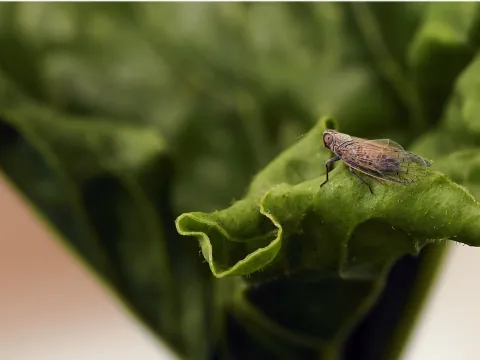
Arsenophonus nasoniae
Arsenophonus nasoniae
Arsenophonus nasoniae is a Gram-negative gammaproteobacterium that functions as an obligate endosymbiont. It resides within the host's cells, maintaining a complex evolutionary relationship with various insect species.
What the section contains
Arsenophonus nasoniae
While often discussed in the context of plant pathology literature due to its interaction with plant-feeding insects, it is primarily a parasite or symbiont of insects, specifically known for its presence in Nasonia wasps.
Transmission occurs vertically from the maternal host to the offspring. This mechanism ensures that the bacteria persist throughout the generations of the insect population, creating a stable ecological niche.
The bacterium is famous for its ability to manipulate the host's reproduction, often causing male-killing phenotypes or cytoplasmic incompatibility, which significantly alters the sex ratio within the insect population.
Understanding this biological model is essential for modern agronomy, as it helps identify how internal microbial symbionts regulate insect behavior and population dynamics in various ecosystems.
The prevalence of Arsenophonus nasoniae is highly correlated with the density of insect host populations. High concentrations of insects in a field provide the necessary conditions for the bacteria to spread successfully.
Environmental factors, particularly temperature and humidity, dictate the metabolic activity of the insect host, which in turn influences the rate of bacterial replication within the host.
The availability of food sources for the insect populations in the field ensures the survival of the hosts, thereby maintaining the reservoir of the symbiont throughout the growing season.
Human-induced disturbances, such as the application of broad-spectrum pesticides, can drastically disrupt the insect host population, which can inadvertently affect the cycle of bacterial transmission.
Migration patterns of insects contribute to the dispersal of the bacteria across agricultural landscapes, making it a widespread biological factor in insect-plant interactions.
The primary concern regarding this bacterium in an agricultural context is its potential impact on biological control agents. If beneficial wasps are infected, their reproductive capacity decreases, reducing their effectiveness against agricultural pests.
Research indicates that endosymbionts can influence the ability of insects to transmit plant viruses. By altering the physiology of the vector, the bacterium may indirectly facilitate the spread of phytopathogenic viruses.
Reduced efficiency of natural enemies leads to a higher reliance on chemical pest management, as the natural balance of insect populations is skewed by the reproductive manipulation of the symbiont.
In greenhouses, the introduction of contaminated beneficial insect stocks can lead to the establishment of the symbiont, potentially affecting the success of integrated pest management programs.
The harm is subtle but cumulative; it involves the degradation of natural pest regulation services that are critical for sustainable and productive agricultural systems.
Managing the impact of Arsenophonus nasoniae involves focusing on the health and quality of beneficial insect populations used in biological control programs.
Screening programs for insectaries ensure that laboratory-reared beneficials are free from reproductive-altering symbionts before being released into the environment or greenhouses.
Integrated Pest Management (IPM) practices, which prioritize non-chemical control, help maintain stable insect populations, reducing the stress that might trigger shifts in symbiotic relationships.
Monitoring the reproductive success and sex ratios of entomophagous insects in the field allows for early detection of potential outbreaks of symbiont-related population shifts.
- Rigorous quality control for biocontrol agents.
- Maintaining biodiversity to support healthy insect populations.
- Regular monitoring of insect population dynamics in the field.