
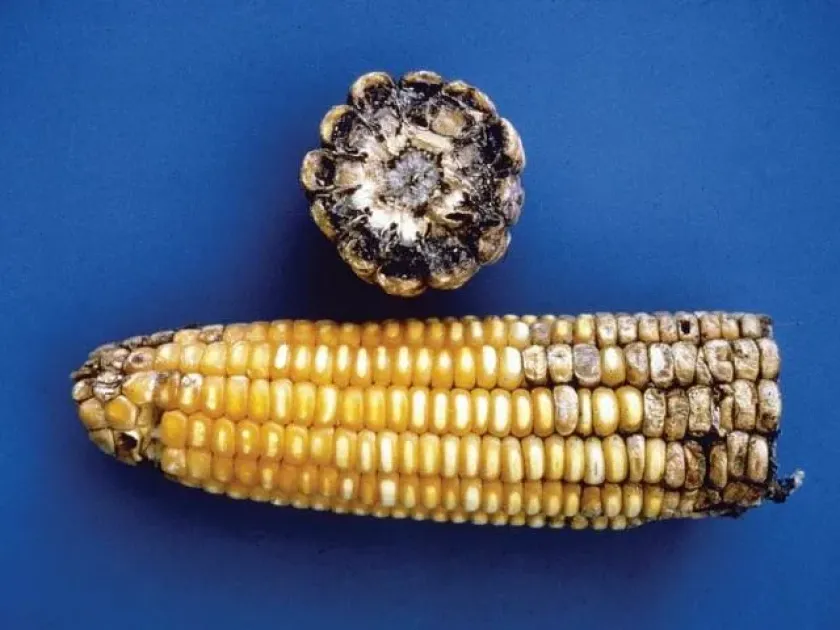
Description
Symptoms
A primary sign of Nigrospora infection is the emergence of black spots or characteristic mold-like growth on plant tissues. On apples, the disease manifests as sunken lesions that eventually turn dark and become covered in the velvety sporulation of the fungus.
In cereal crops, the infection affects stalks, leaves, and ears, causing premature wilting and drying. A characteristic feature is the formation of black pustules containing a mass of spores that easily detach upon touch.
Tissue degradation is often accompanied by rotting of internal fruit or stalk structures. Produce suffers from loss of marketability, tissue softening, and degradation of nutritional quality due to fungal enzymatic activity.
In field conditions, symptoms may remain latent until the maturation phase, when the weakened plant becomes highly susceptible. Necrotic zones gradually expand, consuming significant parts of the vegetation.
Microscopic examination of affected areas reveals the presence of characteristic dark, slightly flattened spores of the fungus, which serve as a definitive diagnostic marker for this specific pathogen.
Pathogen
The causative agent of the disease is the microscopic fungus Nigrospora oryzae (Petch), belonging to the class of imperfect fungi. It functions as a facultative parasite, capable of surviving as a saprotroph on crop residues.
The fungus reproduces actively through asexual means, forming an abundance of conidia. Conidia of Nigrospora oryzae are highly resistant to adverse environmental conditions and can remain viable for extended periods.
The infection spreads via wind currents, rain splash, or insect vectors. Upon landing on plant tissues, spores germinate in the presence of moisture, penetrating the host's intercellular spaces.
The biology of the pathogen allows it to infect a wide range of agricultural crops, including domestic apple trees, rice, corn, cotton, and various vegetable species.
It is a typical representative of pathogenic mycoflora capable of causing both systemic damage and localized rot, which complicates early diagnosis in the field.
Conditions for development
The development of the disease is closely linked to high relative humidity and moderate temperatures. Optimal conditions for spore germination and tissue colonization occur during prolonged rainy periods and heavy mists.
Poor agricultural practices, such as high-density planting or inadequate orchard ventilation, create a favorable microclimate for infection. Excessive nitrogen fertilization can also reduce the plant's natural resistance.
The presence of uncollected crop residues on the field is the primary source of initial inoculum each season. The fungus persists in the soil or on debris until environmental conditions become suitable for activation.
Physical injuries to tissues, whether caused by hail, insect pests, or mechanical harvesting, significantly facilitate the entry of Nigrospora oryzae into the plant.
Improper storage conditions, particularly high humidity in warehouses, promote the rapid spread of Nigrospora infection among healthy produce harvested from the field.
Why it matters
Nigrospora infection causes significant economic losses by reducing both yield quantity and quality. Infected fruit loses commercial value and becomes unsuitable for long-term storage.
In cereal crops, the disease leads to shriveled grains and reduced germination rates. Mass development of the fungus in the field can result in the loss of a large portion of the crop in unfavorable years.
In apple orchards, fruit infection can begin before harvest, leading to premature fruit drop. Within storage facilities, a single infected fruit can contaminate an entire crate or bin.
Fungal metabolites can alter the chemical composition of plant tissues, negatively impacting the safety of feed and food products and requiring strict quality control.
Prolonged infection weakens the plant's metabolism, reducing its cold hardiness and resistance to other pathogens, often triggering secondary infections.
Protection
The primary focus of management is preventive measures. The most critical step is the thorough removal and destruction of all plant debris, which serves as a reservoir for the fungus.
Crop rotation and maintaining spatial isolation between planting sites help break the pathogen's life cycle. Utilizing resistant varieties and hybrids significantly mitigates the risk of epidemics.
Fungicidal treatments during critical vegetative stages help suppress the development of the infection. Product selection must strictly adhere to regulations for the specific crop being treated.
- Pruning orchards to improve canopy aeration and airflow.
- Managing insect pest populations that damage the skin of fruits.
- Optimizing mineral nutrition to avoid nitrogen excess.
- Monitoring temperature and humidity levels in storage facilities.
Regular phytosanitary monitoring of crop and orchard health allows for the early detection of disease foci, preventing the pathogen from spreading across larger areas.
Pathogens and affected parts
Affects crops · 1
Discussion
No discussions yet — be the first.