

Description
Symptoms
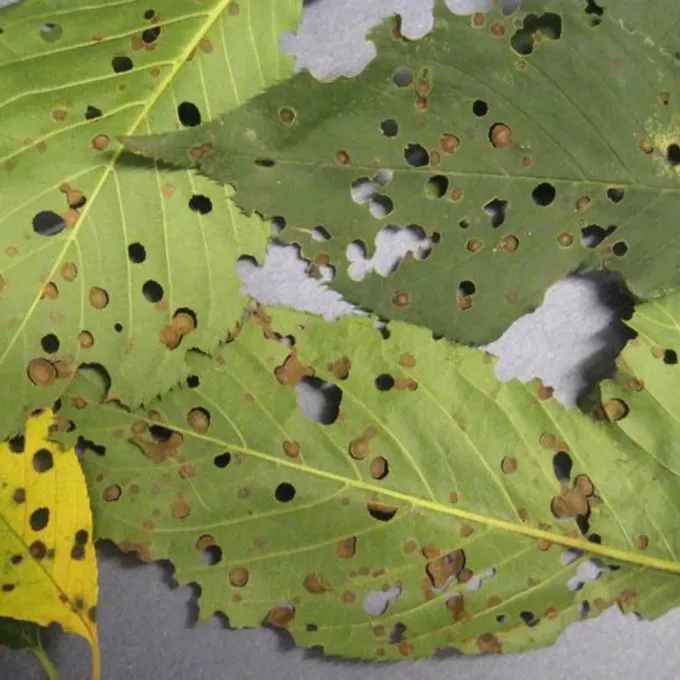
The most recognizable symptom is the appearance of small, circular, reddish-purple lesions on the leaves, which expand as the disease progresses.
As the infected tissue dies, it dries out and falls away from the healthy leaf tissue, creating the characteristic small, round holes that resemble buckshot impact.
On young shoots, the infection results in distinct, slightly sunken lesions that may ooze gummy sap, often causing the branch to become stunted or eventually die.
Fruit symptoms typically manifest as small, red-speckled scabs, which can lead to fruit distortion, unsightly blemishes, and vulnerability to secondary rot organisms.
Bud infection is equally severe, where buds turn dark brown or black, become coated in fungal spores, and fail to open, resulting in significant crop loss.
Pathogen
The causative agent of shot hole disease is the fungus Wilsonomyces carpophilus (formerly known as Clasterosporium carpophilum), which is a common pathogen of various stone fruit species.
This fungus overwinters primarily as mycelium in infected twigs, buds, and fruit spurs, where it remains dormant until favorable weather conditions return in the spring.
During wet weather, the fungus produces conidia which are disseminated by rain splash, wind, and insects, leading to the rapid infection of new leaves and stems.
The fungus is highly specialized to attack hosts in the Prunus genus, exploiting structural weaknesses or openings in the plant tissue to establish its mycelial network.
Given its ability to survive in various forms within the tree canopy, it represents a persistent threat to orchards throughout the entire growing season.
Conditions for development
Shot hole disease is highly dependent on moisture; frequent rainfall and extended periods of leaf wetness are essential for spore germination and infection.
The pathogen thrives in cool to moderate temperatures, which makes early spring the most critical period for disease development and secondary spread.
Poor orchard sanitation, such as leaving diseased plant debris on the ground or failing to prune infected branches, drastically increases the severity of future outbreaks.
Dense canopies that prevent airflow and rapid drying of leaves provide the perfect humid microclimate for the fungus to establish itself and reproduce.
Trees that are already weakened by drought, poor nutrition, or winter injury are significantly more susceptible to infection by Wilsonomyces.
Why it matters
Defoliation is a major consequence of severe infection, which significantly reduces the tree's photosynthetic capacity and weakens its long-term energy reserves.
The loss of fruit quality due to surface lesions and gumming makes the harvest commercially worthless, impacting the profitability of stone fruit production.
Continued twig infection leads to dieback, which necessitates constant pruning and may result in the loss of entire branches or the death of the tree.
In addition to physical damage, the disease imposes high management costs related to fungicide applications, labor for pruning, and increased maintenance requirements.
In severe cases, the cumulative stress of the infection reduces tree lifespan, forcing producers to remove and replant sections of the orchard prematurely.
Protection
Sanitation is the cornerstone of disease control; all infected twigs and branches must be pruned out during the dormant season and removed from the orchard.
Preventative copper-based fungicide sprays applied in late fall and early spring are highly effective in reducing the overwintering fungal population.
During the growing season, applications of protective fungicides are necessary if weather conditions remain conducive to disease spread, particularly during bloom.
Proper orchard management, including thinning the canopy to allow for better air movement, is essential to minimize the duration of leaf wetness.
- Maintaining tree vigor through proper irrigation and fertilization.
- Applying fungicides during the critical bud-swell stage.
- Disinfecting pruning tools between trees to prevent cross-contamination.
Content graph
Connections · Shot hole disease
Most often together:
Marketplace
Products · 1
Community
Discussion
No discussions yet — be the first.