

Turnip mosaic
Turnip spp.
Description
Symptoms
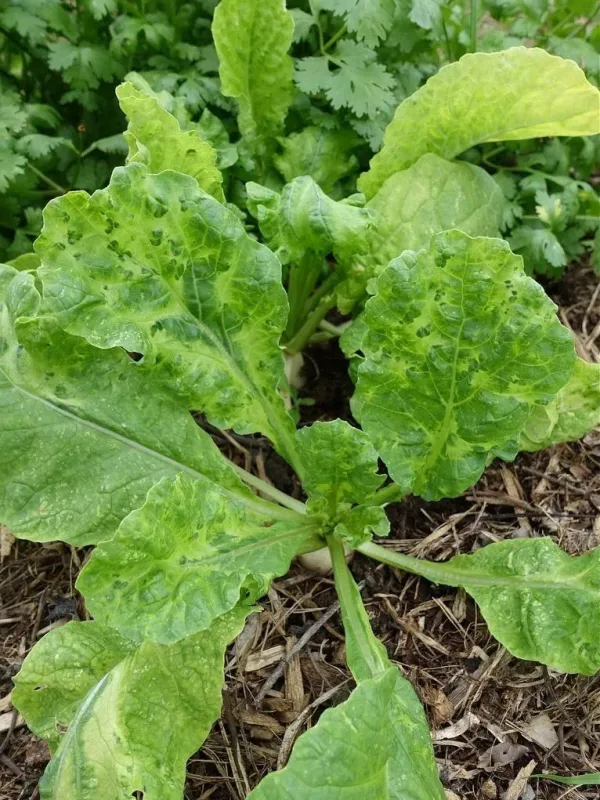
Typical symptoms include distinct mosaic patterns of yellow and green spots on leaves, often accompanied by leaf curling and deformation.
Infected plants usually exhibit stunted growth, reduced biomass, and a generally chlorotic appearance that impacts overall crop uniformity.
Some hosts show ring spots, vein clearing, or necrotic streaks on leaf tissue, which can progress to total leaf senescence under severe pressure.
In root crops like turnips or radishes, the disease leads to poor root development, reduced size, and internal tissue discoloration.
For canola, early infection leads to compromised vigor and increased susceptibility to winter damage, leading to significant stand loss.
Pathogen
The disease is caused by the Turnip mosaic virus (TuMV), a member of the Potyvirus genus, characterized by a single-stranded RNA genome.
It is transmitted primarily by aphids in a non-persistent manner, meaning the virus is acquired and transmitted by the vector within seconds of feeding.
The virus has an exceptionally wide host range, infecting various species within the Brassicaceae family, as well as many other dicotyledonous weeds.
Overwintering of the pathogen occurs in perennial weeds and self-sown seedlings, which serve as reservoirs for the virus to infect new crops.
Mechanical transmission is also possible through agricultural equipment or handling of infected plant material, facilitating the spread within the field.
Conditions for development
The development of the disease is favored by mild temperatures, which are optimal for the rapid population growth and movement of aphid vectors.
High moisture levels maintain the succulent growth of reservoir weeds, providing a continuous supply of the virus for aphid transmission.
Dense planting and poor spacing between susceptible crop blocks create a favorable environment for the rapid dispersal of the virus.
The timing of vector migration relative to crop emergence is the most critical factor in determining the severity of a viral outbreak.
Lack of proper sanitation in surrounding areas allows the virus to persist and re-infect susceptible commercial crops every growing season.
Why it matters
The economic impact of Turnip mosaic virus is significant, affecting major agricultural crops including winter canola, radish, spinach, and lettuce.
Infection disrupts photosynthesis and nutrient translocation, leading to reduced yield quantity and poor-quality produce unsuitable for the market.
Severe infestations often result in total crop failure for leafy vegetables, as they lose their aesthetic value and marketability due to distortion.
For oilseed crops, the virus causes a decrease in seed oil content and yield potential, directly impacting the profitability of the enterprise.
The cumulative effect of the disease can lead to widespread crop decline, especially when integrated management practices are ignored.
Protection
Management strategy focuses on breaking the virus infection cycle through rigorous field sanitation and the removal of weeds around the field margins.
Implementing a proper crop rotation schedule is essential, avoiding the continuous cultivation of Brassicaceae in the same location for several years.
Insecticide applications targeted at controlling aphid populations during critical growth stages can reduce the rate of virus transmission.
Prioritizing the use of genetically resistant or tolerant varieties remains the most effective and sustainable tool for managing the disease.
- Removing host weeds from fields.
- Spatial separation of crops.
- Monitoring aphid vector populations.
- Planting in windows avoiding vector migration.
In brief
4
Affects crops
Biology
Pathogens and affected parts
Pathogens
Affected plant parts
whole plant
Content graph
Affects crops · 4
Content graph
Connections · Turnip mosaic
Most often together:
Marketplace
Products · 1
Community
Discussion
No discussions yet — be the first.