
Karnal bunt
Tilletia indica
Description
Symptoms
Karnal bunt is often difficult to detect in the field because infected spikes frequently appear normal until the grain matures, leaving little external evidence.
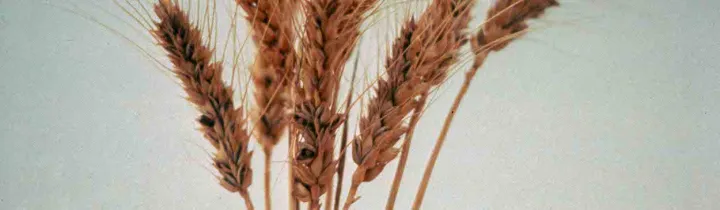
The hallmark symptom is the partial replacement of the grain endosperm with a black, powdery mass of teliospores, often rupturing the pericarp of the seed.
When infected grains are crushed, they emit a distinctive, unpleasant odor similar to rotting fish, caused by the release of trimethylamine compounds.
In some cases, the glumes of infected spikes may be slightly flared, but this is not always consistent, making field diagnosis unreliable without laboratory verification.
Detection often occurs during harvesting or grain processing, where the dark spore masses become visible and contaminate the sound grains within the lot.
Pathogen
The causal agent of this disease is the basidiomycete fungus Tilletia indica Mitra. It is recognized globally as a significant quarantine pathogen for wheat and triticale.
The fungus produces teliospores that are remarkably hardy and can persist in soil for several years, maintaining their viability despite environmental stressors.
The life cycle begins with the germination of teliospores, which produce primary and secondary sporidia. These are then disseminated to the wheat ears by wind or water droplets.
Infection is most successful during the anthesis stage of wheat. The fungal mycelium colonizes the ovaries, eventually replacing the grain tissues with fungal spores.
Because the pathogen is easily transported via contaminated seeds and soil, strict international phytosanitary regulations are in place to prevent its spread.
Conditions for development
The development of Tilletia indica is highly dependent on specific climatic conditions occurring during the heading and flowering stages of the wheat plant.
Cool to moderate temperatures, typically between 18°C and 22°C, combined with high humidity, are ideal for the fungus to complete its infection process.
Moisture is a critical limiting factor; rainfall or high dew levels are necessary for the germination of spores and their subsequent entry into the developing wheat ovaries.
Soils that retain moisture, such as heavy clays, can sustain the pathogen for longer periods, increasing the risk of infection in subsequent cropping seasons.
Agronomic practices that increase canopy density and moisture, such as excessive nitrogen fertilization or overhead irrigation, promote the spread of the disease.
Why it matters
The primary economic impact of Karnal bunt is the degradation of grain quality, rendering it unsuitable for human consumption due to the fishy odor and potential mycotoxins.
Flour produced from contaminated wheat is unmarketable because the fishy smell persists during baking and processing, destroying the product's quality.
Direct losses include reduced yield, as the grains are partially replaced by spores, and the inability to sell infected lots on the international market.
The disease triggers strict quarantine measures, which can lead to the closure of export markets for entire regions or countries found to be infested with the fungus.
Contaminated wheat lot rejections cause significant financial losses for farmers, exporters, and the entire agricultural supply chain involved in wheat production.
Protection
The most effective strategy involves the use of pathogen-free certified seeds and strict enforcement of quarantine regulations to prevent the introduction of the fungus.
Crop rotation with non-host plants is essential to reduce the inoculum level in the soil and break the life cycle of the pathogen over several years.
In regions where the disease is established, the cultivation of resistant or tolerant wheat varieties is the most reliable method to mitigate field-level losses.
Fungicide applications during the flag leaf to flowering stage can provide protection when environmental conditions are conducive to spore germination.
Good agricultural practices, such as deep plowing to bury infested debris and avoiding excessive nitrogen, help minimize the favorable microenvironment for the fungus.
Discussion
No discussions yet — be the first.