
Dwarf bunt of wheat
Tilletia controversa
Description
Symptoms
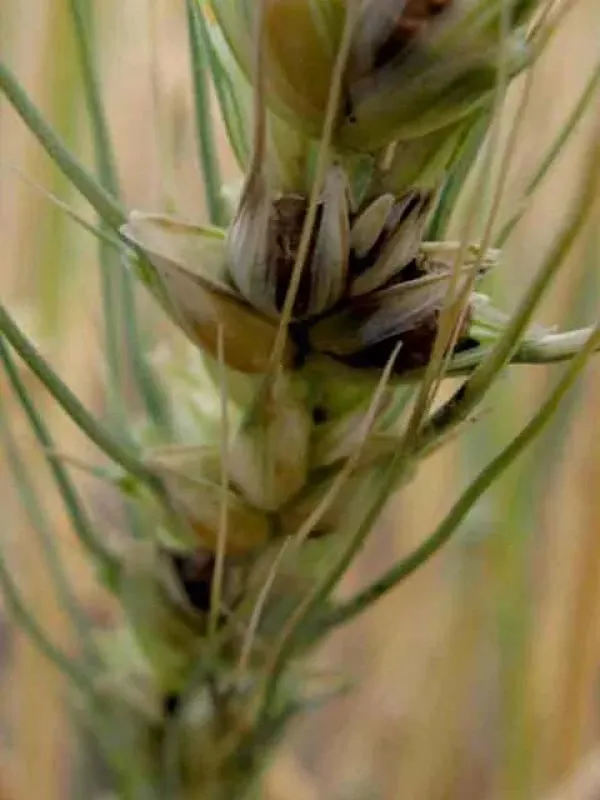
The most distinctive symptom of dwarf bunt is the severe stunting of plants. The infected wheat displays shortened internodes, giving the plants a compact, bushy appearance.
Heavily infected plants often remain much lower to the ground compared to healthy stalks, making the crop canopy appear uneven and distorted.
Instead of developing normal healthy kernels, the ears produce dense bunt balls filled with black, powdery teliospores of the fungus.
These bunt balls are often partially covered by the glumes and can remain trapped inside the leaf sheaths during the maturation process of the crop.
During harvest, the fragile bunt balls break open, releasing clouds of spores that contaminate the healthy grain and re-infest the soil for future planting seasons.
Pathogen
The causative agent of dwarf bunt is the fungus Tilletia controversa, a highly specialized basidiomycete. This pathogen is known for its extreme persistence and ability to survive in the soil for extended periods.
The teliospores of the fungus can remain viable in the soil for up to a decade, maintaining an infectious reservoir that complicates disease management in affected regions.
Its biological cycle is strictly synchronized with the development of winter wheat. The pathogen infects plants during the prolonged, cool periods of autumn and winter when the host growth is slowed.
The primary transmission routes include contaminated seeds, soil movement via machinery, and animal manure, which can transport dormant spores across large distances.
While winter wheat is the primary host, the fungus can also infect triticale, rye, and certain wild grasses, allowing the pathogen to persist in agricultural environments.
Conditions for development
Tilletia controversa requires specific environmental conditions for infection: temperatures ranging from 0°C to 10°C and high soil moisture levels for a prolonged period.
The disease is most prevalent in regions with mild winters and persistent snow cover, which insulates the soil and provides the necessary cold, wet environment for spore germination.
Long, cool autumns significantly extend the window of opportunity for the fungus to attack the developing seedlings before they enter their active spring growth phase.
Poorly drained or compacted soils that retain excessive moisture provide an ideal microenvironment for the teliospores to successfully infect the young host tissues.
Deep planting of seeds increases the time that seedlings must spend in the soil, thereby increasing their exposure to potential soil-borne inoculums of the dwarf bunt fungus.
Why it matters
Dwarf bunt causes significant economic impact by reducing both the quantity and quality of the wheat yield, often rendering the harvest unsuitable for milling.
The spores release trimethylamine during infection, which imparts a distinct, unpleasant "fishy" odor to the grain, making it totally unacceptable for food or feed markets.
The disease causes substantial loss of standing plant density, leading to lower yields and an overall reduction in the productivity of the wheat crop across the field.
As a regulated quarantine pest, the presence of dwarf bunt spores in grain shipments frequently triggers international trade restrictions and costly phytosanitary inspections.
In addition to direct crop loss, farmers face significant costs related to soil management, mandatory crop rotations, and the chemical disinfection of farm machinery.
Protection
The primary line of defense against dwarf bunt is the use of genetically resistant wheat varieties, which provide the most effective long-term solution to the disease.
Seed treatment with systemic fungicides is essential to protect young seedlings from early infection, although its efficacy can be limited under high soil-borne inoculum pressures.
Implementing a crop rotation scheme with a break of at least 3 to 5 years from wheat or other susceptible crops helps to reduce the density of spores present in the soil.
Improving agronomic practices, such as choosing optimal planting dates and avoiding deep seeding, helps wheat plants emerge and establish more quickly, reducing vulnerability.
Rigorous sanitation of farm equipment and machinery after working in infected areas is crucial to prevent the spread of teliospores to previously uninfested fields.
Discussion
No discussions yet — be the first.