
Potato smut
Thecaphora solani
Description
Symptoms
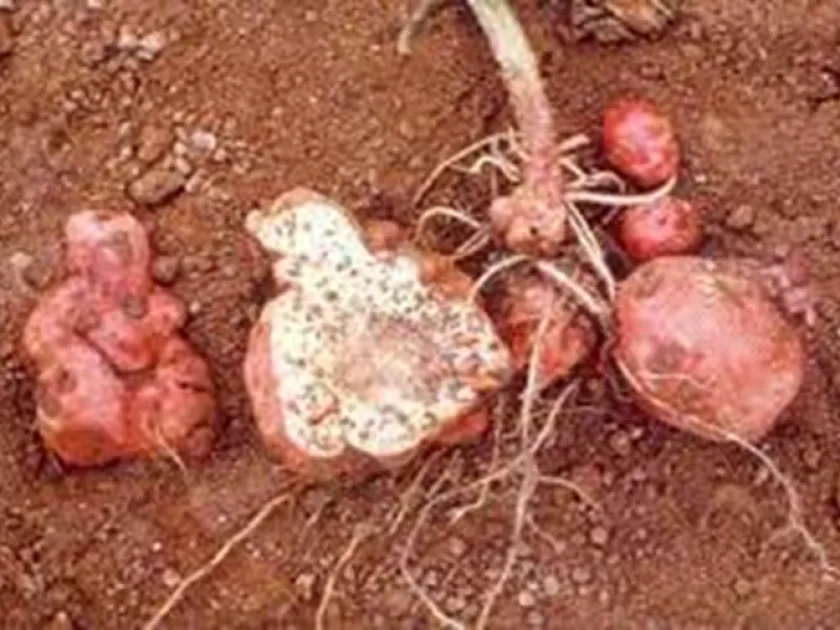
The symptoms of potato smut are most visible at harvest time. Affected tubers exhibit severe deformation, becoming knotty, bumpy, and often growing into distorted, unnatural shapes that are commercially unmarketable.
When an infected tuber is cut open, the internal flesh is found to be largely replaced by a dark grey or black powdery mass of fungal spores. The structure of the tuber may collapse, leaving hollow, spore-filled cavities.
Above-ground parts of the plant may also show signs of distress. Typical symptoms include stunted growth, premature yellowing of foliage, and early senescence of the entire plant canopy.
In some cases, the skin of the tuber may rupture, exposing the dark, powdery spore mass within. This rupture allows for the easy dispersal of spores, which can then contaminate healthy soil or other nearby plants.
- Deformation and knotting of tubers
- Dark, powdery spore-filled cavities within the flesh
- Stunted plant growth and development
- Premature yellowing and death of the plant
Pathogen
The causal agent of this disease is the fungus Thecaphora solani (syn. Angiosorus solani), which belongs to the class of basidiomycetes. It is a highly specialized pathogen that affects exclusively plants of the Solanaceae family.
The fungus has a life cycle closely associated with the soil, where it survives in the form of spore clusters (teliospores). These spores are extremely resistant to adverse environmental conditions and can remain viable in the soil for many years.
The infection begins when the pathogen enters the plant tissues, typically through young stolons. Inside the host plant, the fungus develops, gradually replacing healthy tissues with a mass of its spores.
The primary transmission routes include the movement of infected seed tubers, contaminated soil attached to agricultural machinery, transport vehicles, and the dispersal of spores by wind or surface water.
Because of its ability to survive for long periods in the soil and its high level of host specialization, Thecaphora solani is considered a significant quarantine pest in many potato-producing regions.
Conditions for development
The development of Thecaphora solani is favored by moderate soil temperatures, typically ranging from 15 to 22 degrees Celsius, and sufficient moisture levels, particularly during the tuber initiation and enlargement phases.
The disease tends to be more severe in fields where crop rotation is neglected, as the pathogen accumulates in the soil over successive growing seasons, increasing the overall infection pressure.
Soil pH and texture can also play a role in the susceptibility of the crop. Certain soil conditions may facilitate the germination of spores and their subsequent penetration into the root system and stolons.
Environmental stress factors, such as waterlogging or root damage caused by pests, may create entry points for the fungal hyphae, making the plant more vulnerable to the initial infection.
The rapid spread of the disease to new regions is almost always correlated with the distribution of asymptomatic but infected seed tubers, which appear healthy on the surface.
Why it matters
The primary impact of potato smut is the complete loss of crop quality. Infected tubers are unfit for human consumption, animal feed, or seed use, leading to total economic loss of the affected harvest.
The damage caused by the disease can be devastating, with potential yield losses ranging from 50 to over 80 percent in heavily infested fields, rendering potato production non-viable on those sites.
Because it is a regulated quarantine organism, the detection of potato smut triggers strict regulatory restrictions on the affected land, prohibiting the cultivation of any Solanaceae crops for several years.
Beyond the loss of harvest, producers face significant financial costs for mandatory decontamination of equipment, storage facilities, and the implementation of long-term soil management programs.
The insidious nature of the disease, where symptoms may be latent or mild in the early stages, makes it a constant threat to biosecurity in potato-growing industries worldwide.
Protection
Strict quarantine enforcement is the most critical measure for controlling potato smut. This includes preventing the import and movement of seed material from known infected regions.
The use of certified, disease-free seed tubers is the foundation of effective management. Thorough visual inspection of every seed batch before planting is essential to prevent introducing the pathogen.
Implementing long-term crop rotation schemes, which exclude all Solanaceae species from the rotation cycle for at least 5 to 7 years, is vital to reducing the fungal spore density in the soil.
Agricultural hygiene, including deep plowing and the eradication of weed hosts (such as wild nightshade species), helps limit the survival and spread of the pathogen within the field.
Chemical control options are generally ineffective in field conditions. Therefore, management focuses primarily on phytosanitary monitoring, quick identification and destruction of disease hotspots, and preventing cross-contamination.
Discussion
No discussions yet — be the first.