
Sugarcane chlorotic streak
Sugarcane chlorotic streak agent
Description
Symptoms
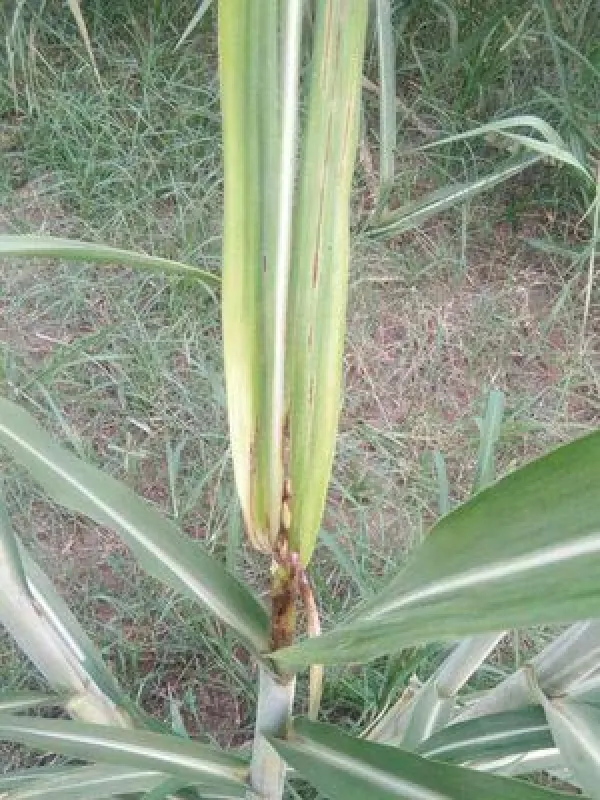
The primary symptom consists of narrow, elongated chlorotic streaks on the leaf blades, which appear pale yellow or white.
These streaks typically run parallel to the leaf veins and can extend for most of the length of the leaves.
As the infection progresses, these streaks often become more numerous and may eventually coalesce, causing significant yellowing of the entire leaf.
In certain susceptible varieties, the edges of the chlorotic streaks may exhibit reddish-brown discoloration, aiding in visual diagnosis.
Older leaves generally show more severe symptoms compared to younger foliage, although the virus eventually spreads systemically throughout the plant.
Pathogen
The disease is caused by the Sugarcane chlorotic streak virus (SCSV), which is a serious pathogen impacting the vascular tissue of the crop.
This virus is transmitted primarily by the soil-borne plasmodiophorid Polymyxa graminis, a fungus-like organism that parasitizes sugarcane roots.
The virus particles reside within the zoospores of the vector, allowing the pathogen to persist in agricultural soils for many years even without a host crop.
In addition to soil-borne transmission, the virus is easily spread through the use of infected sugarcane setts during the planting process.
The complexity of the virus-vector relationship makes this disease particularly difficult to eradicate once it is established in the soil.
Conditions for development
Development of the disease is highly dependent on soil moisture levels, as zoospores of the vector require water to swim and infect root cells.
Fields with poor drainage or those located in low-lying areas are at a much higher risk of developing severe outbreaks of the disease.
The pathogen thrives in moderate soil temperatures, typically ranging from 15 to 25 degrees Celsius, which coincides with active root growth periods.
Heavy rainfall and waterlogged soil conditions provide ideal environments for the migration and colonization of Polymyxa graminis.
Conversely, well-drained, sandy, and aerated soils tend to limit the spread of the vector, thereby reducing the incidence of the viral infection.
Why it matters
The disease causes significant stunting of the sugarcane plants, leading to a reduced number of tillers and overall poor biomass accumulation.
By interfering with vascular function, the virus reduces the photosynthetic efficiency, which directly leads to lower sugar content in the stalks.
Economic damage is substantial, particularly in regions where environmental conditions favor the continuous activity of the soil-borne vector.
Heavily infected fields often require early replanting, as the crop becomes unproductive and vulnerable to secondary diseases or abiotic stress.
The cumulative impact of stunted growth and low sucrose levels results in significant financial losses for sugarcane producers worldwide.
Protection
The most effective strategy is the use of disease-free, certified seed cane to prevent the initial introduction of the virus into clean fields.
Improving field drainage is critical for reducing the population and activity of the Polymyxa graminis vector in the soil profile.
Implementing long-term crop rotation cycles with non-host plants can help reduce the virus and vector inoculum levels in infested soil.
Breeding and planting resistant sugarcane cultivars remains the primary method for managing the disease in endemic tropical and subtropical regions.
Sanitation practices, including thorough cleaning of equipment to remove soil, help prevent the movement of the vector between different plantation plots.
Discussion
No discussions yet — be the first.