
Macrotyloma begomovirus
Begomovirus macrotylomae
Description
Symptoms
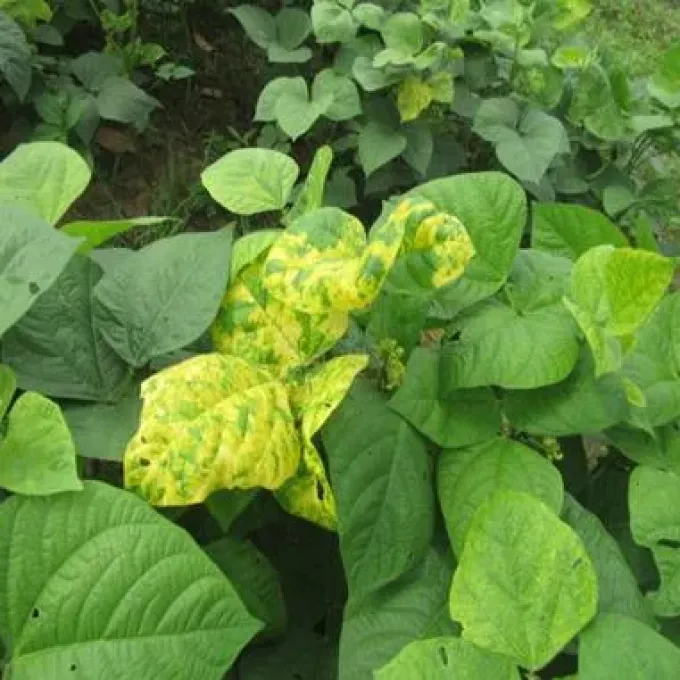
The primary signs of infection include characteristic mosaic patterns on leaves, manifesting as alternating light and dark patches of tissue.
Severe deformation of leaf laminae is observed, often accompanied by curling at the edges or pronounced crinkling.
Plant growth is significantly stunted with shortened internodes, leading to the formation of dwarfed and weakened specimens.
During the reproductive phase, bud and flower drop are noted, along with a substantial reduction in both the weight and quality of developing fruit.
- Vein yellowing on leaves.
- General chlorosis of vegetative organs.
- Disruption of normal root system development.
Pathogen
The causative agent of the disease is a virus belonging to the Begomovirus genus within the Geminiviridae family. This pathogen features a single-stranded circular DNA genome packaged into characteristic twinned virions.
Viruses in this genus are primarily transmitted by insect vectors, specifically the whitefly Bemisia tabaci, within which the virus undergoes persistent circulation.
During the feeding process of an infected insect on a healthy plant, the virus is introduced into the phloem, where active replication occurs within the host cell nuclei.
This virus is characterized by a high degree of genetic variability, which complicates the breeding of resistant crop cultivars.
The biology of the pathogen is closely tied to the ecological characteristics of its vector, which serves as a key link in the spread of the infection in agroecosystems.
Conditions for development
The primary factor for epiphytotic development is a high whitefly population density during the warm growing season.
The virus spreads most actively under high air temperatures, which favor the rapid reproduction of insect vectors.
The presence of alternative reservoir hosts, including weed species in the legume family, ensures the virus's survival during off-seasons.
Inadequate phytosanitary discipline in fields and greenhouses contributes to the creation of persistent infection foci and subsequent infection of cultivated crops.
Intensive irrigation and the application of excessive nitrogen fertilizers can also indirectly trigger outbreaks by promoting vegetative growth that is attractive to pests.
Why it matters
The harm caused by Macrotyloma begomovirus lies in massive losses of marketable yields, which can reach 80-100% in affected areas.
The infection induces physiological stress in plants, making them more susceptible to secondary fungal and bacterial diseases.
Economic losses consist not only of partial harvest loss but also the costs associated with conducting systematic insecticide applications.
The virus poses a serious threat to commercial vegetable production, as affected produce loses its marketability and is unsuitable for long-term storage.
The persistent presence of the virus in an agricultural system necessitates a complete renewal of seed stock and the implementation of long-term quarantine measures.
Protection
The main method of control is strict management of the whitefly population, involving regular applications of systemic insecticides.
It is essential to maintain strict spatial isolation between fields with different planting dates to minimize virus transfer by vectors.
An important preventive element is the removal of weeds that can serve as hidden reservoirs for viral infection.
It is recommended to use only certified disease-free planting material that has been screened for viral pathogens in laboratory conditions.
The application of agrotechnical practices, such as mulching the soil with reflective films, helps reduce vector activity and protect young seedlings.
Discussion
No discussions yet — be the first.