
Sclerotinia rot
Sclerotinia scleroulivirus
Description
Symptoms
The hallmark symptom of Sclerotinia rot is the development of a dense, white, cottony mycelial growth on the surface of stems, leaves, or pods.
Infected plant parts become soft, watery, and lose their integrity, eventually turning into a mushy, light-colored rot that is characteristic of the disease.
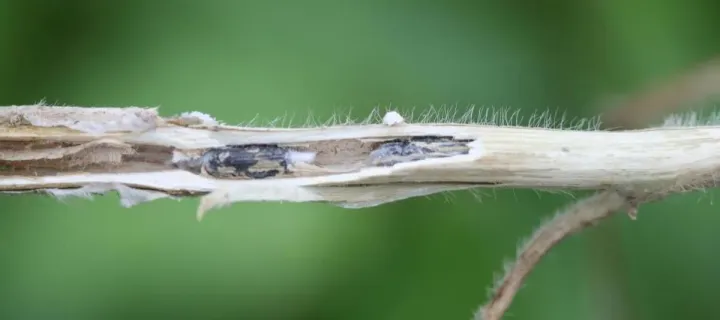
As the infection progresses, large, black, irregular-shaped sclerotia form within the hollowed stems or on the surface of the rotted plant material.
The stems of affected plants often bleach or turn pale, become brittle, and break easily, leading to lodging and premature death of the entire plant.
In cases of root infection, the plant will show signs of wilting even if the soil moisture is adequate, followed by rapid chlorosis and subsequent total collapse.
Pathogen
The disease is caused by the necrotrophic fungus Sclerotinia sclerotiorum, a soil-borne pathogen known for its ability to produce long-lasting resting structures called sclerotia.
Sclerotia are hard, black, fungal masses that can survive in the soil for several years, waiting for optimal conditions to germinate and initiate an infection cycle.
This fungus has a very broad host range, infecting hundreds of species of dicotyledonous plants, including oilseeds, legumes, and many vegetables.
Infection occurs either through mycelial growth from germinating sclerotia near the roots or through airborne ascospores that land on sensitive plant tissues.
Once inside the host, the pathogen secretes enzymes and oxalic acid, which destroy plant cell walls and lead to rapid tissue decomposition and cell death.
Conditions for development
Sclerotinia development is highly favored by cool to moderate temperatures ranging from 15°C to 25°C combined with high relative humidity or prolonged rainfall.
A canopy that is too dense restricts airflow, creates a microclimate with trapped moisture, and provides a perfect environment for the germination of fungal spores.
The pathogen thrives in areas where there is a history of susceptible crops, as the buildup of sclerotia in the soil increases the inoculum potential significantly.
Periods of leaf wetness lasting for several hours are critical for successful infection, making early morning dew or frequent summer rains major contributors to disease outbreaks.
Over-fertilization with nitrogen can lead to excessive, lush vegetative growth, which is more prone to infection and less capable of resisting the spread of the fungus.
Why it matters
Sclerotinia rot can cause severe yield losses, often exceeding 50% in heavily infested fields, making it one of the most destructive diseases in modern agriculture.
The disease reduces the quality of harvests, particularly in oilseeds, as the presence of fungal material leads to rancidity and contamination of the oil.
Harvesting becomes significantly more difficult and expensive due to the lodging of crops and the uneven maturation caused by premature plant death.
Contaminated fields remain a source of long-term problems, as the persistent nature of sclerotia makes it nearly impossible to eradicate the fungus completely.
Trading contaminated seeds or products can be restricted, causing additional financial losses for producers and distributors who have to deal with rejected shipments.
Protection
The cornerstone of management is a diverse crop rotation, avoiding susceptible crops like sunflowers or beans on the same land for at least 4 to 5 years.
Deep plowing can help bury sclerotia to a depth where their germination is discouraged, though this should be balanced with soil conservation practices.
Foliar fungicide applications are used to protect crops, especially during the flowering stage, which is the most critical window for infection by airborne spores.
Planting at appropriate densities and ensuring good weed management helps improve air circulation and reduces humidity within the crop canopy.
- Selection of tolerant or resistant hybrids where available.
- Use of disease-free, high-quality seeds treated with fungicides.
- Precision irrigation management to avoid unnecessary high moisture periods.
- Balanced nutrient management to promote plant health and stress tolerance.
Discussion
No discussions yet — be the first.