
Description
Symptoms
The initial symptom of rust on sweet potatoes is the formation of small chlorotic spots on the upper side of the leaf blade. As the disease progresses, characteristic pustules appear in the center of these spots.
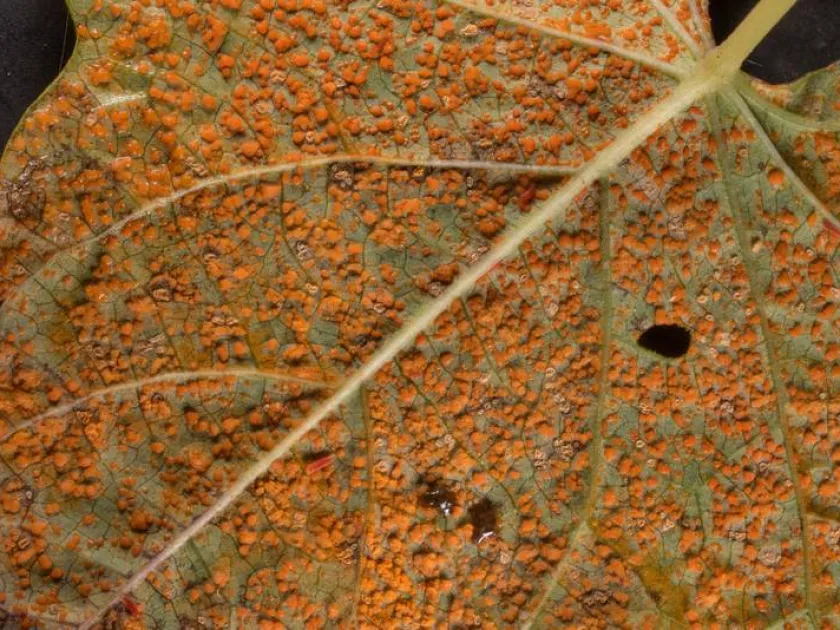
On the underside of the leaf, bright orange or yellow pustules are clearly visible, containing masses of fungal spores. This powdery coating is easily dislodged upon contact, leaving visible residue on clothing or tools.
Affected leaves eventually yellow, curl, and drop prematurely. Tissue necrosis may cover a significant portion of the leaf surface, leading to severe defoliation of the plant.
Under high infection pressure, pustules can also appear on petioles and stems. This disrupts vascular transport and retards the development of the vegetative mass.
- Yellowing of leaf blades
- Orange powdery deposits on leaf undersides
- Premature leaf drop
- Stunted growth of side shoots
- Loss of plant vigor
Pathogen
The disease is caused by the fungal pathogen Coleosporium ipomoeae, which belongs to the rust fungi group. It is a highly specialized microorganism that primarily infects plants of the Convolvulaceae family, with the sweet potato serving as a major host.
The life cycle of this fungus involves the production of several types of spores, allowing for rapid dispersal within agricultural fields. The infection can persist in crop residues and on alternative wild host plants such as morning glory.
The fungus acts as an obligate parasite, extracting nutrients from leaf tissues. This leads to the depletion of the plant's metabolic resources, which negatively impacts the rate of photosynthesis.
The pathogen's biology is strictly linked to moisture, which is necessary for the germination of urediniospores. The fungal mycelium grows within the intercellular spaces of the leaf, gradually compromising its structure.
Spores are disseminated by wind, irrigation water, or rainfall, spreading the infection to healthy areas of the field. Infection typically begins on the lower canopy leaves.
Conditions for development
The development of the disease is favored by moist and moderately warm weather. The optimal temperature range for spore germination is between 20 and 25 degrees Celsius.
High relative humidity, frequent fog, or prolonged rainfall create ideal conditions for epidemic spread. Surface moisture on leaves is critical for the infection process to initiate.
Crowded sweet potato plantings create a microclimate with poor air circulation, which accelerates the accumulation of pathogen spores. Poor ventilation in greenhouses or fields is a major risk factor.
Poor agricultural practices, such as excessive overhead irrigation, facilitate the spread of spores between plants. High soil moisture levels also weaken the natural defenses of the crop.
The presence of weeds from the Convolvulaceae family around the field creates a constant reservoir of infection. The pathogen can overwinter on wild relatives of the sweet potato, providing a source of inoculum for the next season.
Why it matters
The primary economic damage caused by rust is the significant reduction of the photosynthetic leaf area. The plant loses the ability to produce sufficient sugars required for tuber formation.
As a result, the total yield of the sweet potato crop drops significantly. Tubers remain small and often suffer from lower quality and diminished taste due to a lack of nutrient accumulation.
Early-season infections can lead to total crop failure, as normal tuberization is halted. The plant diverts all its energy into attempts to regenerate its foliage.
Sweet potato plants weakened by rust are more susceptible to secondary fungal and bacterial infections. This complicates the storage life of the harvested tubers.
Economic losses also include costs associated with additional fungicide applications and the disposal of sub-standard produce during post-harvest sorting.
Protection
For rust prevention, it is essential to use only disease-free planting material sourced from reputable nurseries. Ensuring that the propagules are healthy is the first line of defense.
Timely weed control, particularly of morning glory, significantly reduces the inoculum potential in the field. Clearing surrounding areas of wild Convolvulaceae species is a mandatory measure.
Crop rotation helps break the pathogen's life cycle. Sweet potatoes should not be planted on the same ground for at least three to four years after the previous cycle.
Upon detection of initial symptoms, fungicides based on copper or specific systemic compounds should be applied. Applications should be performed according to the label's recommended intervals.
It is important to manage plant spacing to ensure good aeration. Irrigation systems should be designed to keep water off the foliage; drip irrigation is the preferred method for this crop.
Pathogens and affected parts
Affects crops · 1
Discussion
No discussions yet — be the first.