

Red leaf spot
Polystigma ochraceum
Description
Symptoms
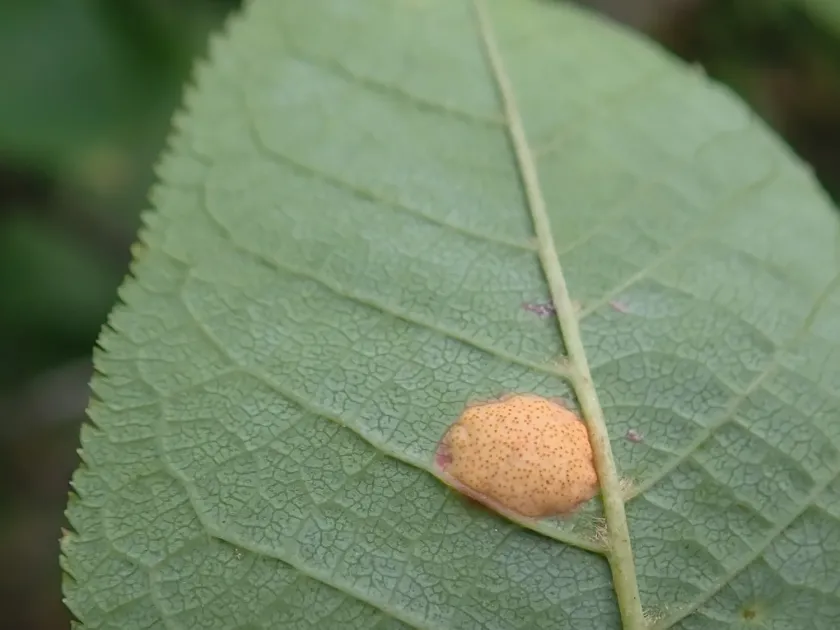
Initial signs of infection appear as small yellowish spots, which gradually transform into a vivid orange-red or brick-red color over time.
As the infection progresses, these spots expand in size and become thicker and more prominent. The tissue in the affected areas often thickens, which disrupts normal physiological processes like photosynthesis.
Small black dots visible on the underside of the leaf within the spots are the fruiting bodies of the fungus. They serve as an indicator of the pathogen's active reproduction phase.
Severe infestations lead to a "rusty" appearance, causing leaves to curl, dry out, and drop prematurely, which significantly reduces the plant's leaf surface area.
- Initial yellow discoloration of leaf blades.
- Formation of intense red or orange necrotic spots.
- Increased thickness of the affected leaf tissue.
- Premature senescence and leaf drop.
Pathogen
The causative agent of the disease is the ascomycete fungus Polystigma ochraceum. Its biological life cycle focuses primarily on the leaf tissue of host plants, where it develops internal structures known as stroma.
This disease is classified as a mycosis, characterized by the development of specific red spots. The fungus overwinters in fallen infected leaves, primarily in the form of ascospores that are released during the following spring.
The pathogen's life cycle is strictly synchronized with the phenological stages of the host plant. Throughout the growing season, the fungus progresses through asexual and sexual spore-forming phases.
Key hosts for this pathogen include members of the Rosaceae family, such as almond trees, as well as certain legumes like soybeans. Its host specialization allows it to adapt effectively to different agricultural environments.
As an obligate parasite, the pathogen requires living plant tissue to thrive, which limits its development in the environment to the active growing season of the host crops.
Conditions for development
High humidity and moderate temperatures are the most critical factors favoring the development of red leaf spot. Frequent spring rains significantly trigger the release and spread of spores.
Free moisture on the leaf surface is essential for spore germination. Consequently, the disease is most prevalent in areas with poor ventilation, low-lying landscapes, or dense canopy coverage.
Dense planting patterns in soybean fields or almond orchards create a microclimate with elevated humidity, accelerating the transfer of the pathogen between plants.
High inoculum levels occur when fallen leaves are not removed or incorporated into the soil, as these residues serve as the primary reservoir for the fungus during winter.
Optimal temperatures for mycelial growth inside the leaf tissues and the production of conidia generally range between 18°C and 25°C.
Why it matters
The primary damage caused by red leaf spot is the significant reduction of the plant's total photosynthetic area, which negatively impacts overall vigor and health.
Premature leaf drop drains the energy reserves of the plant, which often results in poor flower bud set and lower yields in subsequent growing seasons.
In soybean crops, the infection interferes with nutrient accumulation in the seeds, reducing both oil and protein content and lowering overall commercial quality.
For almond trees, the disease acts as a debilitating factor that makes the trees more susceptible to secondary pests, pathogens, and environmental stresses like cold winter temperatures.
Economic losses during epidemic years can range from 15 to 30 percent, necessitating timely and strategic management to protect the harvest.
Protection
The primary control measure is sanitation: the thorough collection and destruction of fallen leaves, which prevents the survival of the pathogen until the next spring.
Deep plowing or soil incorporation of plant residues is an effective strategy to limit the primary inoculum and prevent the initial spring infection cycle.
Chemical control using copper-based fungicides or systemic triazole compounds can be highly effective, provided that applications are timed correctly before the disease spreads.
Proper pruning of almond trees and optimizing plant density in soybean fields improves air circulation, allowing the foliage to dry faster and making it harder for the fungus to establish.
Regular monitoring of plant health and the selection of resistant cultivars are essential components of an integrated pest management program to reduce the reliance on chemical treatments.
In brief
2
Affects crops
Biology
Pathogens and affected parts
Affected plant parts
leaf
Content graph
Affects crops · 2
Content graph
Connections · Red leaf spot
Most often together:
Marketplace
Products · 2
Community
Discussion
No discussions yet — be the first.