
Carrot thin leaf virus
Potyvirus carotatenuifoli
Description
Symptoms
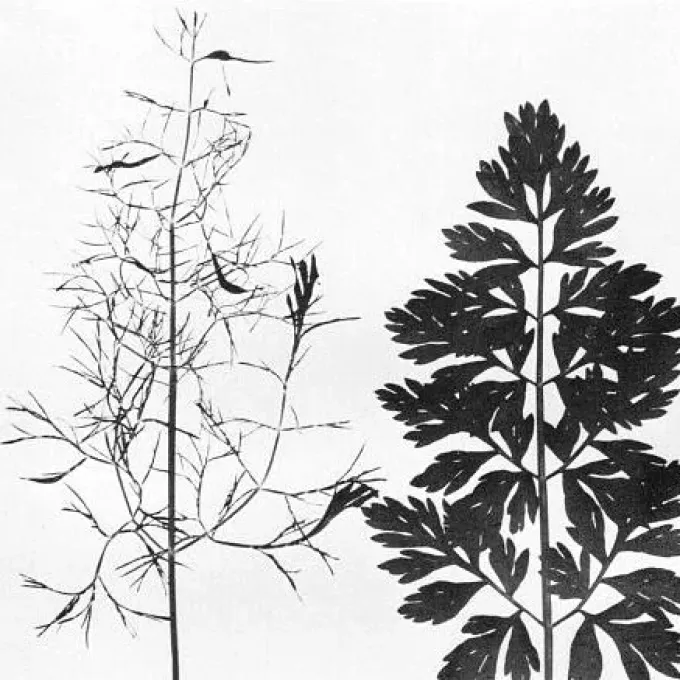
The primary diagnostic symptom is the dramatic leaf deformation, where leaves become excessively narrow, filamentous, or feather-like, significantly departing from the healthy morphology.
Infected plants frequently exhibit mosaic patterns, yellowing, or chlorotic mottling on younger leaves, indicating disruption of chlorophyll synthesis and photosynthesis.
Growth reduction is common, with infected carrots appearing stunted, having shortened internodes or, conversely, abnormally elongated petioles that lack structural integrity.
Leaf curling and necrosis may appear as the infection progresses, eventually leading to the premature yellowing and death of older leaves in the rosette.
Symptom expression is typically non-uniform across the field, reflecting the patchy distribution of the aphid vector activity and initial infection points.
Pathogen
The causal agent is the Carrot thin leaf virus (CTLV), which is classified within the Potyvirus genus of the Potyviridae family. This pathogen is a significant systemic virus affecting carrot production globally.
Transmission occurs in a non-persistent manner, primarily mediated by various species of aphids. These insects acquire the virus during brief probes and transmit it to healthy plants almost immediately.
The virus persists in wild perennial plants belonging to the Apiaceae family, which serve as natural reservoirs throughout the growing season and winter months.
The viral particle consists of a filamentous structure containing a positive-sense single-stranded RNA, which replicates within the plant cells and moves through the phloem.
Co-infection with other viruses, such as those causing carrot motley dwarf, often occurs, leading to synergistic interactions that severely exacerbate the symptoms and crop damage.
Conditions for development
The development of a virus outbreak is largely driven by aphid population dynamics, as weather patterns that favor insect reproduction increase the risk of rapid spread.
Warm and moist environmental conditions are ideal for the mass migration of winged aphids, facilitating the dispersal of the virus across large carrot production areas.
Proximity to uncultivated land or field margins with dense populations of wild umbelliferous weeds significantly elevates the risk of early-season infection.
Staggered planting schedules, where young, vulnerable seedlings are grown near older, potentially infected crops, create a bridge for virus movement.
Plant physiological stress, caused by drought, nutrient deficiencies, or soil compaction, often exacerbates the severity of viral symptoms in the field.
Why it matters
The economic impact of the virus is substantial, primarily resulting from severe reductions in marketable yield and total root biomass production.
Roots from infected plants often fail to reach standard sizes and may exhibit malformations, rendering them unsuitable for retail and high-quality processing.
Physiological disruption reduces the accumulation of carbohydrates, essential oils, and pigments like beta-carotene, leading to poor culinary and storage quality.
High incidence rates can lead to significant gaps in the field, as stunted plants are often outcompeted or fail to develop enough energy for storage root formation.
Secondary losses occur during post-harvest storage, as weakened, virus-stressed tissues are more susceptible to opportunistic pathogens and rotting organisms.
Protection
Effective management focuses on aphid control, utilizing systematic insecticide applications during the early vegetative stages to disrupt the transmission cycle.
Field sanitation is critical; this involves the removal of alternative wild host plants, particularly wild carrot and other Apiaceae weeds, from field borders.
Spatial and temporal separation of planting blocks helps to prevent the movement of the virus from heavily infected crops to younger, more susceptible plantings.
The use of floating row covers during the early weeks of plant development can provide a physical barrier against aphid vectors, though this is primarily feasible for smaller operations.
- Integration of resistant or tolerant cultivars into the crop production program.
- Routine monitoring of aphid populations using yellow sticky traps to trigger control measures.
- Good agricultural practices, including balanced fertilization to improve plant vigor and stress tolerance.
Discussion
No discussions yet — be the first.