
Pepper necrotic spot
Pepper necrotic spot virus
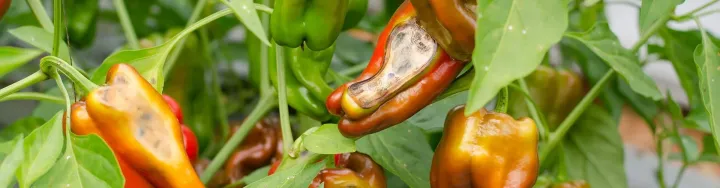
Description
Symptoms
Initial symptoms include sunken, irregularly shaped necrotic spots on the pepper fruits. These spots often appear dark brown, gray, or black in color.
Leaves often exhibit mosaic patterns, chlorosis, and diagnostic concentric ring spots. The growing tips of the plants may become stunted or distorted.
Fruits affected by necrosis lose their commercial value due to deformation and surface spotting. Beneath the necrotic spots, the fruit tissue becomes corky and dry.
Systemic infection often results in necrotic streaks along the stems of the pepper plant. Affected plants typically show a significant reduction in overall growth and vigor.
- Sunken necrotic spots on fruit surfaces
- Concentric rings and mosaic leaf patterns
- Stunted plant growth and distorted shoots
- Corky tissue formation under the necrotic spots
- Stem streaking and eventual plant decline
Pathogen
The most common cause of necrotic spot in peppers is the Tomato Spotted Wilt Virus (TSWV). This is a highly destructive virus that affects a broad range of plant species.
The virus belongs to the Tospoviridae family. Its transmission is primarily facilitated by thrips, which act as vectors, picking up the virus from infected weeds and spreading it to crops.
Aside from viral causes, physiological necrosis can occur due to localized calcium deficiency. Distinguishing between these two causes is essential for effective treatment.
The virus persists in perennial weeds during winter months. These reservoirs serve as the primary source of infection for newly planted crops in the spring.
Once inside the plant, the virus spreads systemically through the phloem. It disrupts cellular functions, leading to the necrotic tissue death observed in leaves and fruits.
Conditions for development
Warm weather conditions are ideal for the rapid development of the disease as they accelerate the life cycle of the thrips vectors. This leads to higher infection pressure.
High weed density in or near the production area provides a continuous supply of the virus. Poor sanitation practices in greenhouses contribute to persistent infection cycles.
Physiological necrotic spot is often exacerbated by uneven irrigation practices, which interfere with calcium uptake and translocation to the rapidly developing fruit.
Excessive use of nitrogen fertilizers can make plants more attractive to thrips and increase their susceptibility to viral infections due to changes in cell wall thickness.
Poor ventilation and high humidity in greenhouses can facilitate the movement of insects and promote the secondary spread of fungal pathogens in damaged tissue.
Why it matters
The economic impact of necrotic spot is severe, as infected fruits are unsuitable for sale. Crop losses can reach over 50% in heavily infested greenhouse operations.
The disease reduces the photosynthetic efficiency of the plant, leading to lower fruit yields and inferior nutritional quality of the peppers produced.
Viral infection leaves the plants weak and prone to secondary infections, such as bacterial soft rots, which can destroy the remaining fruits on the plant quite quickly.
Once a plant is systemically infected with TSWV, there is no cure. The plant remains a source of infection for the rest of the crop throughout the growing season.
Storage and shelf life are significantly compromised in produce that appears healthy but carries latent necrotic symptoms, leading to post-harvest losses.
Protection
Management of the thrips population is the most critical step. Using blue and yellow sticky traps helps monitor insect activity and timing for pesticide applications.
Regular sanitation, including the removal of weeds around the greenhouse, is essential to eliminate the primary sources of the virus before the crop season begins.
Selecting resistant or tolerant cultivars is the most effective long-term strategy to prevent losses from viral necrosis in areas where the pathogen is endemic.
Applying calcium-based fertilizers as a foliar spray during the fruit development stage helps mitigate physiological necrosis and strengthens the cell wall structure.
Strict hygiene protocols, including disinfecting tools and controlling movement in the greenhouse, help reduce the risk of spreading the virus within the facility.
Discussion
No discussions yet — be the first.