
Description
Symptoms
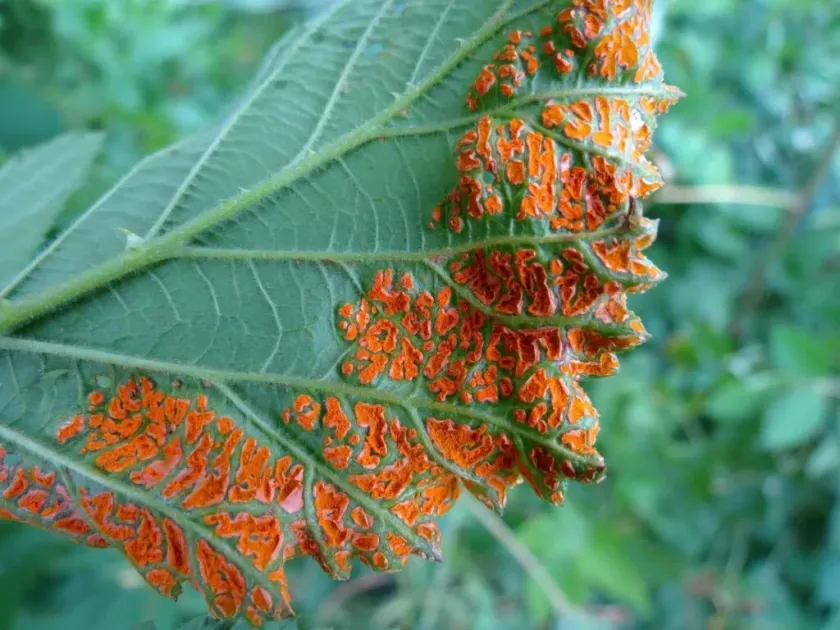
The primary symptom of the disease appears in early spring, when bright orange pustules erupt on the undersides of the leaves. These pustules contain a mass of spores that cover the foliage in a powdery, rusty-orange coating.
Infected leaves often become distorted, curled, or chlorotic as the season progresses. The affected canes are usually stunted and appear weaker compared to their healthy counterparts in the same row.
Canes may show unusual growth patterns, such as excessive spindly growth or strange twisting. In severe cases, the entire shoot can be covered with the characteristic orange fungal mass, indicating heavy colonization.
By mid-summer, infected leaves often dry out and drop prematurely. This foliage loss weakens the plant's ability to undergo photosynthesis, directly impacting its energy storage for the following season.
Fruit production is severely inhibited in infected plants. If berries form, they are typically undersized, dry, or malformed, rendering the crop unmarketable and unsuitable for consumption.
Pathogen
The causal agent of this disease is the fungus Arthuriomyces peckianus, which belongs to the class of basidiomycetes. It is a highly specialized pathogen that targets plants within the Rosaceae family, primarily raspberries.
The fungus produces distinctive orange spores, which are easily disseminated by wind and water splash onto neighboring canes. It is a systemic pathogen, meaning the mycelium colonizes the entire plant, including the vascular system and crown.
As a systemic parasite, it lives within the host's crown and roots for several years. Each spring, the fungus becomes active within the plant's tissues, producing new spores that appear on the undersides of leaves.
The biological nature of Arthuriomyces peckianus is that it depletes the host's energy reserves throughout the season. Unlike transient leaf fungi, this pathogen essentially occupies the plant and remains there until the host dies.
Because the fungus is integrated into the host's systemic structure, there are no curative treatments available. Once a plant is infected, it remains infected for the remainder of its life, acting as a constant source of spores.
Conditions for development
Orange rust thrives under cool, wet environmental conditions, particularly during the early spring months. Moisture on the leaf surface is essential for the germination of fungal spores.
Dense, overcrowded plantings that lack proper air circulation create the perfect microclimate for the disease. Poor airflow keeps humidity high and prevents leaves from drying quickly after rainfall.
Temperatures ranging from 10°C to 18°C are considered optimal for the pathogen's development. While extreme heat may limit spore production, the underlying systemic infection remains unaffected within the plant.
Soil conditions, such as high acidity or poor drainage, may contribute to the plant's stress, making it more susceptible to infection. A healthy, well-nourished plant is better equipped to resist opportunistic infections.
Proximity to wild raspberries or blackberries is a significant risk factor, as these plants serve as primary reservoirs for the fungus. Spores are easily carried by air currents from wild patches to commercial plantings.
Why it matters
Orange rust is a devastating disease for raspberry production due to its systemic nature. Once the fungus is established within the crown and root system, it is impossible to eradicate the pathogen through chemical sprays.
The primary economic harm is the total loss of marketable yield. An infected plant will stop producing viable fruit within one to two seasons, becoming a wasted space in the production row.
The disease effectively reduces the lifespan of a raspberry field. If left unmanaged, the infection can spread rapidly through the patch, forcing the removal of the entire planting prematurely.
Because the plant is constantly struggling against the fungus, its immunity is compromised. This makes the raspberry bushes more susceptible to secondary pathogens, such as cane blights or root rot.
The spores produced by the fungus travel significant distances. This means that a single infected cluster can compromise the health of an entire farm, leading to long-term management challenges and increased costs.
Protection
The primary management strategy is the physical removal and destruction of all infected plants. Because the disease is systemic, the entire root system must be removed to ensure the fungus is eradicated.
- Scout for symptoms in early spring, identifying orange lesions early.
- Remove and burn all infected canes and crowns immediately after discovery.
- Eliminate all wild raspberries and blackberries in the surrounding area.
- Ensure adequate plant spacing to promote airflow and quick leaf drying.
- Purchase only certified, disease-free nursery stock for new plantings.
Fungicides provide only limited, preventative control and are ineffective once the plant is systemically infected. Growers should focus on cultural practices to keep the environment unfavorable for spore germination.
After rogueing out diseased plants, the soil should be kept free of raspberry regrowth to ensure no remaining root pieces serve as a source of infection for new plantings.
Maintaining optimal soil fertility and pH helps ensure that the remaining plants in the patch remain vigorous and less stressed, effectively creating a healthier field overall.
Pathogens and affected parts
Affects crops · 1
Discussion
No discussions yet — be the first.