
Description
Symptoms
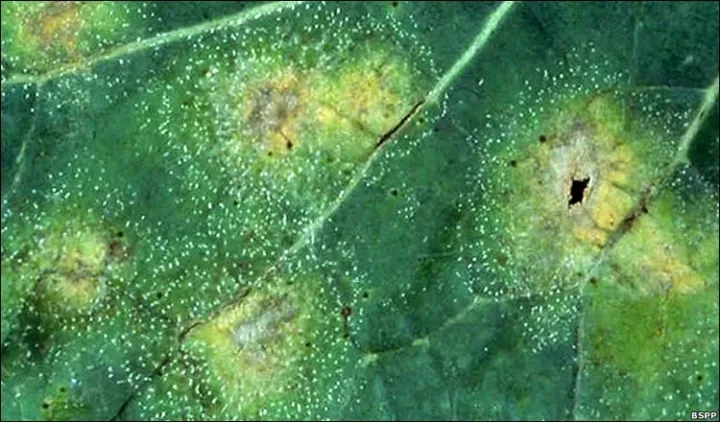
Initial symptoms consist of small, pale or white spots on the leaves. These spots are often circular and may show concentric rings as the infection progresses.
On the undersides of the leaves, the fungus produces dense white to cream-colored cushions of conidia. These are key diagnostic features for identifying the disease in the field.
The disease can affect petioles and stems, leading to severe localized necrosis. Infected stems may become weakened and susceptible to splitting, which negatively impacts plant health.
As the infection advances, the spots may coalesce, causing significant tissue death. In severe cases, the entire leaf may yellow and drop prematurely, leading to defoliation.
Pod infection is also possible, which leads to distorted pod development and reduced grain filling. Severely infected pods may shatter prematurely, causing substantial yield loss.
Pathogen
The causal agent of light leaf spot is the fungus Cylindrosporium concentricum (the asexual stage). Its sexual stage, Pyrenopeziza brassicae, plays a crucial role in its long-distance dispersal.
The pathogen survives primarily on infected crop debris and oilseed rape volunteers left in the field after harvest. It acts as a polycyclic pathogen, producing multiple cycles of spores during one season.
Rain splash is the primary mechanism for spore dissemination within the crop canopy. The fungus can also spread via wind-borne ascospores produced during the sexual phase in late winter or spring.
The fungus is highly specialized to infect Brassica species. It establishes latent infections within the host tissue, meaning it can be present without showing immediate symptoms.
Once established, the pathogen produces characteristic conidia in white or cream-colored cushions. These spores can rapidly infect neighboring plants under humid conditions.
Conditions for development
Light leaf spot development is favored by cool, wet, and humid weather conditions. Temperatures between 15°C and 20°C are optimal for rapid spore germination and infection.
Frequent rainfall and persistent leaf wetness are essential for the splash dispersal of conidia. High humidity within the crop canopy promotes the spread of the fungus.
Dense crop stands can exacerbate the disease by limiting air movement and increasing local humidity levels. This microclimate is ideal for the rapid spread of the pathogen.
The fungus is well-adapted to surviving cool winters. In regions with mild winters, the pathogen remains active, allowing for continuous development in the leaves of winter oilseed rape.
The presence of weeds or volunteer brassicas serves as a green bridge for the fungus between seasons. This ensures a constant supply of inoculum for the emerging crop.
Why it matters
The primary damage is caused by the reduction of photosynthetic leaf area. This limits the energy available for growth and seed production, resulting in lower yields.
Severe infestations can lead to premature senescence and plant loss. This significantly affects the uniformity of the crop and reduces the overall stand density by spring.
Infection of the stem and petioles disrupts nutrient transport within the plant. This makes the crop more susceptible to environmental stress and decreases its overall winter hardiness.
Yield loss is primarily driven by fewer seeds per pod and lower thousand-seed weight. Quality parameters, such as oil content, may also be adversely affected by the pathogen.
If not managed, light leaf spot can cause losses ranging from 10% to 30% or even higher under favorable conditions. It is considered one of the most economically damaging diseases for oilseed rape.
Protection
Cultural control includes implementing a robust crop rotation with a minimum gap of three to four years between oilseed rape crops. This significantly reduces the initial inoculum pressure.
Efficient destruction of crop stubble and weeds is essential to minimize survival sites for the pathogen. Eliminating volunteer plants prevents the disease cycle from continuing.
The use of fungicides is the cornerstone of chemical control. Prophylactic applications, particularly in the autumn, help to suppress the early development of the disease.
Monitoring the crop for early symptoms is vital for timely decision-making. Scouting should focus on checking lower leaves for the presence of spore cushions during wet weather.
Selection of resistant or tolerant cultivars is a sustainable management strategy. Breeders continuously work on improving the genetic resistance of varieties to this specific fungus.
Pathogens and affected parts
Affects crops · 2
Discussion
No discussions yet — be the first.