
Groundnut chlorotic spot
Groundnut chlorotic spot virus
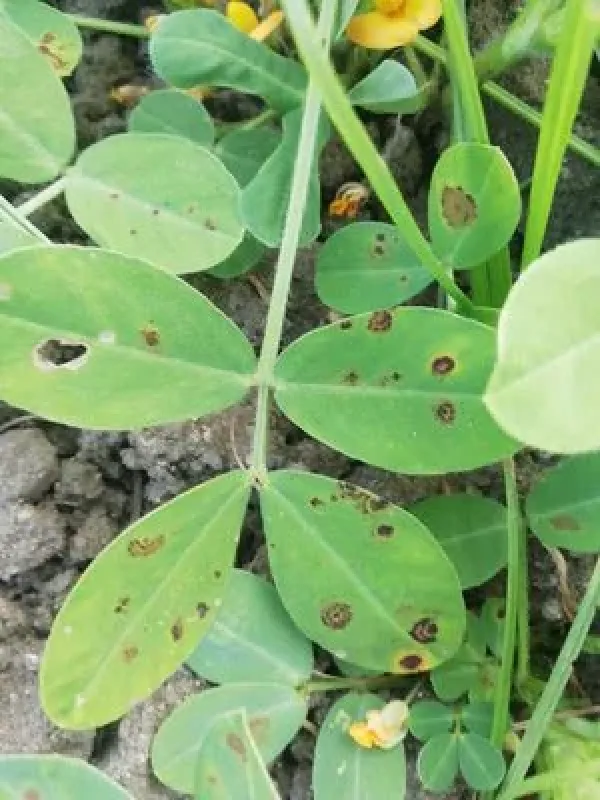
Description
Symptoms
The primary symptom is the emergence of small chlorotic spots on young peanut leaves. Over time, these spots may coalesce into larger, irregularly shaped bleached areas across the leaf blade.
Affected plants exhibit stunted growth and general suppression of vegetative development. Leaf blades may become deformed or develop wavy margins, which are clear indicators of a systemic viral infection.
As the disease progresses, chlorosis spreads to younger leaves. In some instances, necrosis can occur within the chlorotic patches, signaling a more severe stage of the infection.
Flowering in diseased plants becomes significantly reduced, leading to a marked decrease in pod formation. Pods that do develop are often smaller and suffer from reduced seed quality.
Visual diagnostics require close observation of symptom symmetry. Unlike localized mechanical injury, viral infections typically manifest in a more systematic, uniform pattern across the plant's canopy.
Pathogen
The disease is caused by the Groundnut chlorotic spot virus (GCSV), a specific pathogen that targets legume species. This virus is highly specialized, primarily affecting plants within the Arachis genus.
The virus is transmitted primarily by specific insect vectors during their feeding process on healthy plant tissues. In natural ecosystems, various weed species act as reservoirs for the virus throughout the year.
The pathogen's biological activity is closely linked to the plant's vegetative state. Once infected, the virus spreads systemically through the phloem, disrupting metabolic pathways and inhibiting photosynthetic efficiency in affected cells.
Laboratory identification of the pathogen involves serological assays and PCR diagnostics. These precise methods are essential for distinguishing viral infections from nutrient deficiencies, which often present similar foliar symptoms.
The genetic diversity of viral isolates can vary significantly depending on the geographical region. Understanding these variations is critical for breeding resistant peanut varieties tailored to specific agricultural zones.
Conditions for development
The development of Groundnut chlorotic spot is directly linked to the presence of insect vectors, such as specific thrips and aphid species. Their activity levels peak during warm and humid periods of the growing season.
High temperatures and moderate humidity provide an ideal environment for the spread of the infection by stimulating vector reproduction. Under these conditions, the virus can spread across large fields rapidly.
Weed infestations within and around the fields provide favorable environments for vectors to overwinter. Implementing effective weed control measures is a crucial component of vector population management.
High planting density in peanut fields creates a microclimate with increased humidity, which facilitates easier insect movement between plants. Adhering to recommended seeding rates helps mitigate the risk of rapid intra-field transmission.
Drought stress can render plants more susceptible to viral invasion by compromising their innate immune defenses. Low soil moisture conditions often make peanut crops more attractive to sap-sucking pests.
Why it matters
The primary economic impact of the disease is a significant reduction in total yield. Impaired photosynthesis prevents the plant from accumulating enough biomass and nutrients to develop healthy, high-quality pods.
The quality of seeds harvested from infected plants is severely compromised. This leads to reduced germination rates and low seed vigor, making such seeds unsuitable for planting in subsequent seasons.
The disease causes financial losses not only through lower yields but also through reduced oil content in the seeds. Produce from infected fields often fails to meet standard market quality requirements.
Viral infections increase the plant's vulnerability to secondary fungal and bacterial pathogens. Once weakened by the virus, the plant becomes susceptible to other diseases that would otherwise be insignificant.
Widespread outbreaks of Groundnut chlorotic spot may necessitate the destruction of infected crops to prevent further spread. This requires significant additional resources for soil remediation and crop rotation planning.
Protection
The first line of defense is the use of certified, disease-free planting material. Screening seeds before sowing prevents the initial introduction of the virus into new fields.
Effective management of insect vector populations using systemic insecticides helps contain primary infection foci. These treatments should be applied during the early stages of plant development.
Strict adherence to crop rotation and spatial isolation from other legume crops prevents the accumulation of the pathogen in the soil. It is recommended to avoid planting peanuts in the same field for at least three years.
Prompt identification and removal of symptomatic plants can prevent the virus from spreading throughout the field. This requires regular phytosanitary scouting by farm staff.
Breeding and adopting resistant or tolerant peanut varieties remains the most sustainable method of long-term disease management. Using high-resistance hybrids minimizes the need for heavy chemical intervention.
Discussion
No discussions yet — be the first.