

Description
Symptoms
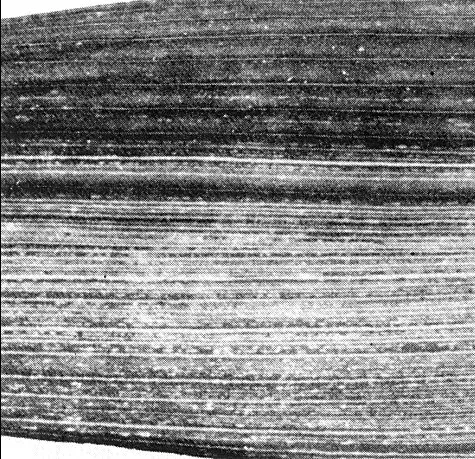
The earliest signs of infection include the appearance of light green or yellowish stripes and patches on the young leaves. Over time, these patterns coalesce, forming a distinct mosaic-like appearance.
As the disease progresses, leaves may turn chlorotic and often exhibit curling or distortion. Infected plants show stunted growth and significantly shortened internodes compared to healthy plants.
Severe infection results in dramatic dwarfing, where the plant fails to reach its full size. Ears on such plants are either absent, poorly filled, or significantly reduced in grain yield.
Field symptoms often appear in clusters, mirroring the distribution of the insect vectors as they move through the crop rows.
Visual identification can be difficult as symptoms may resemble nutrient deficiencies or other viral infections, often requiring diagnostic confirmation in a laboratory setting.
Pathogen
The causative agent of this disease is the virus Gammanucleorhabdovirus maydis, formerly known as the Maize mosaic virus (MMV). It belongs to the Rhabdoviridae family and is a significant pathogen of cereal crops.
The virus consists of bullet-shaped particles containing single-stranded RNA. It is an obligate parasite, meaning it requires living host cells to replicate and survive within the environment.
The primary reservoir for the virus includes perennial grassy weeds, which harbor the pathogen during the winter months, acting as a bridge for annual crop infection.
While corn is the primary host, the virus can also infect sorghum, millet, and various wild grass species found in agricultural landscapes.
The main vector of the virus is the corn planthopper, Peregrinus maidis. The virus is transmitted in a persistent manner, meaning that once a hopper acquires the virus, it remains infectious for its entire lifespan.
Conditions for development
The incidence of maize mosaic is heavily dependent on the population dynamics of the corn planthopper. Warm and humid conditions are ideal for the rapid reproduction and spread of these insect vectors.
Early-stage infection is the most critical, as plants are highly vulnerable when they are still in their initial stages of development. Infection at this time often leads to the most severe yield losses.
Proximity to weed-infested areas or field margins promotes the accumulation of planthoppers, which quickly migrate into the emerging corn crop.
Drought stress can exacerbate the impact of the virus, making the plants less resilient and reducing their ability to tolerate the physiological damage caused by the pathogen.
Optimal environmental conditions that favor the vector's lifecycle significantly increase the frequency of transmission and the overall spread of the disease throughout the field.
Why it matters
Maize mosaic is a systemic disease, meaning the virus spreads throughout the entire vascular system, disrupting critical metabolic processes such as photosynthesis and nutrient transport.
The primary impact is a severe reduction in grain yield. In cases of early infection, yield losses can be substantial, rendering affected portions of the field economically non-viable.
Grain quality is also compromised, as the kernels are often small, shriveled, and possess lower nutritional value, which is detrimental for both animal feed and human consumption.
Infected plants exhibit increased susceptibility to secondary infections, such as fungal pathogens, which further reduce the vitality of the crop.
Economic losses are compounded by the costs associated with pest management and the reduction in the total marketable yield at harvest time.
Protection
Effective control starts with strict weed management, particularly focusing on the removal of perennial grasses that serve as reservoirs for both the virus and its insect vector.
Utilizing host plant resistance is one of the most effective strategies; breeding and planting resistant corn hybrids can significantly limit the damage caused by the virus.
Timely application of insecticides to control the corn planthopper population during the early vegetative stages is essential to prevent large-scale spread of the disease.
Cultural practices such as adjusting planting dates can help ensure that the most vulnerable developmental stages of the corn do not coincide with the peak activity periods of the vector.
- Monitoring vector populations using yellow sticky traps.
- Rogueing infected plants early in the season to reduce inoculum sources.
- Providing balanced fertilization to maintain overall plant vigor.
Content graph
Connections · Maize mosaic
Most often together:
Marketplace
Products · 2

Community
Discussion
No discussions yet — be the first.