
Description
Symptoms
Initial symptoms of the infection on leaves appear as light-colored lesions that eventually darken and cause localized necrosis of the leaf tissue.
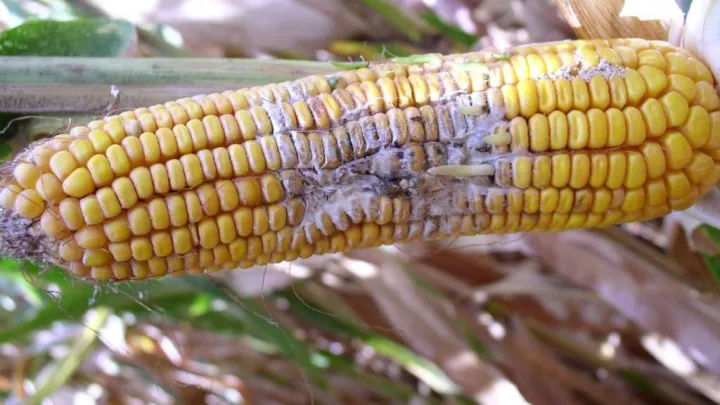
On ears, the disease is characterized by a white or pinkish mold growth that usually starts from the tip of the ear and spreads downwards.
Infected kernels may appear shriveled or discolored, often losing their viability and showing signs of fungal colonization on their surface.
When the infection reaches the stalks, it can cause internal rot, weakening the plant structure and leading to lodging before harvest time.
Small, dark, pinhead-sized structures (perithecia) may appear on the surface of decayed plant parts, indicating the presence of active fungal reproduction.
Pathogen
Fusarium ear rot and associated foliar symptoms are caused by fungi from the Gibberella complex, primarily Gibberella zeae (anamorph Fusarium graminearum).
These pathogens are persistent soil-borne fungi that survive as mycelium or spores on crop debris, such as corn stalks, cobs, and other organic matter.
Under favorable weather conditions, the pathogen produces airborne spores that easily disperse to the silk and leaves of corn plants, initiating infection.
The fungus is notorious for producing dangerous mycotoxins, including deoxynivalenol (DON) and zearalenone, which accumulate in infected plant tissues.
The disease cycle is highly dependent on humidity and temperature, making it a recurring challenge in intensive maize production systems worldwide.
Conditions for development
Warm and wet weather during the silking stage of corn development is the primary factor that triggers severe outbreaks of Fusarium ear rot.
Optimal temperatures for fungal proliferation range between 22 and 28 degrees Celsius, coupled with prolonged periods of high relative humidity.
Inadequate crop rotation, particularly planting corn after corn, allows the inoculum to build up in the soil and on residual plant material.
Insect damage to ears provides direct entry points for the pathogen, significantly increasing the severity of the infection across the field.
Poor field drainage and excessive canopy density create a humid microclimate that favors rapid fungal growth and spore transmission.
Why it matters
Fusarium ear rot causes substantial economic losses by reducing grain yield and significantly lowering the overall quality of the harvested crop.
The accumulation of mycotoxins in the grain makes the harvest unfit for human consumption or animal feed, leading to potential regulatory rejections.
Livestock consuming contaminated grain may experience severe health issues, including reduced growth rates and various reproductive failures.
Increased lodging of the crop caused by stem rot complicates harvesting operations and contributes to higher physical losses during machinery passes.
The disease negatively impacts the marketability of the corn, often forcing farmers to sell their yield at a significant price discount.
Protection
Implementing a robust crop rotation plan is the most effective way to break the disease cycle and reduce the local inoculum levels in the field.
Thorough tillage practices that ensure the deep burial of corn stalks and debris help speed up the decomposition process of the infected material.
Seed treatments with broad-spectrum fungicides protect germinating seedlings from early-season soil-borne pathogens and enhance initial crop vigor.
Monitoring for insect pests and using resistant corn hybrids are essential components of an integrated pest management strategy against this disease.
Timely application of authorized foliar fungicides during the silking stage can mitigate the risk of infection when environmental conditions are conducive.
Pathogens and affected parts
Affects crops · 1
Discussion
No discussions yet — be the first.