

Description
Symptoms
Symptoms are categorized into two patterns: a chronic, progressive decline and an acute form known as apoplexy.
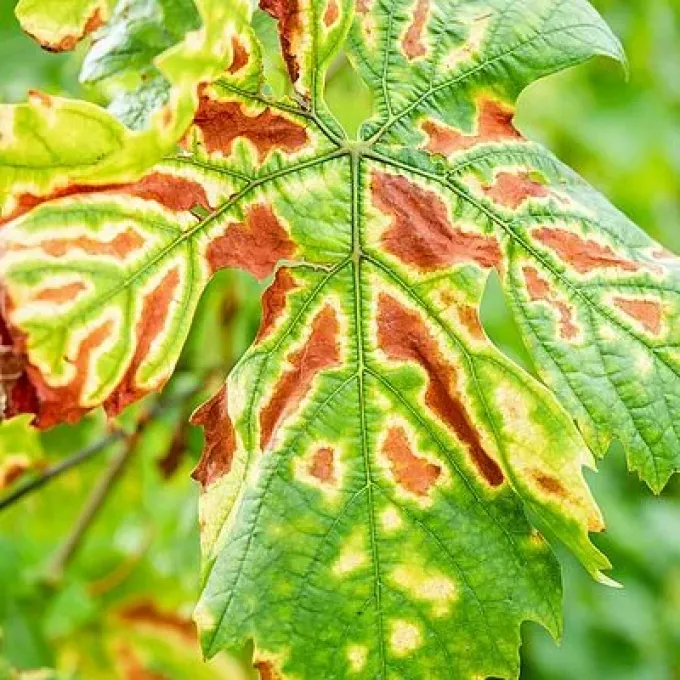
Chronic symptoms manifest as interveinal leaf chlorosis, creating a distinctive "tiger-stripe" pattern that becomes necrotic over time.
Fruit symptoms include small dark spots surrounded by purple halos, which significantly downgrade the quality of the grape harvest.
The acute form, or apoplexy, is marked by sudden wilting and death of the entire vine during hot summer weather conditions.
Internal examination of affected trunks reveals characteristic white rot, wood discoloration, and sometimes the presence of fungal fruiting bodies.
Pathogen
Grapevine Esca is a complex disease caused by a group of fungi, with Phaeomoniella chlamydospora acting as the primary pathogen alongside Phaeoacremonium species.
These fungi are systemic pathogens that colonize the vascular tissues, eventually causing wood necrosis and structural degradation of the vine.
The infection initiates through pruning wounds, bark cracks, or any mechanical injury that exposes the xylem to airborne fungal spores.
Once inside, the mycelium spreads slowly, obstructing water and nutrient transport, which causes chronic decline in the vine's health.
The pathogen can persist in a latent state for many years, making it difficult to detect before visible symptoms appear in the canopy or wood.
Conditions for development
The development of the disease is favored by high humidity and moderate temperatures, particularly during the pruning season.
Mature vineyards with extensive wood injuries are highly susceptible to the colonization and rapid spread of the pathogen.
The use of unsterilized pruning tools is a primary vector for transmitting spores from infected to healthy vines within the vineyard.
Plant stress, including drought or excessive fruit load, can trigger the transition from latent infection to active, severe disease development.
Spore dissemination occurs primarily via wind and rain splash, which deposit fungal propagules onto vulnerable wound sites.
Why it matters
Esca is one of the most destructive diseases in viticulture, as it causes irreversible damage to the woody structure of the vine.
Economic losses arise from reduced grape yields, poor fruit quality, and the necessity of removing and replanting dead vines.
Widespread infection can jeopardize the sustainability of a vineyard, potentially requiring a complete replanting of the entire block.
The disease poses a continuous threat to vineyard longevity, as currently, there are no curative treatments to fully restore infected wood.
Impact on the wine industry is significant, as the loss of productive vines disrupts production consistency and increases operational costs.
Protection
Strict sanitation protocols, such as disinfecting pruning tools with alcohol or bleach between each vine, are essential to prevent infection.
All large pruning wounds should be protected immediately with fungicide-based pastes or sealing agents to block fungal entry points.
Infected vines should be identified, marked, and removed, including the root system, to prevent the spread of inoculum to neighboring plants.
Minimal pruning techniques that avoid large cuts and promote faster wound healing can significantly reduce the risk of infection.
Preventative strategies include sourcing certified, healthy planting material and ensuring proper vine nutrition to support natural defense mechanisms.
Reference
Connections · Grapevine Esca
Most often together:
Marketplace
Products · 1
Community
Discussion
No discussions yet — be the first.