
Cynodon chlorosis
Cynodon chlorotic streak virus
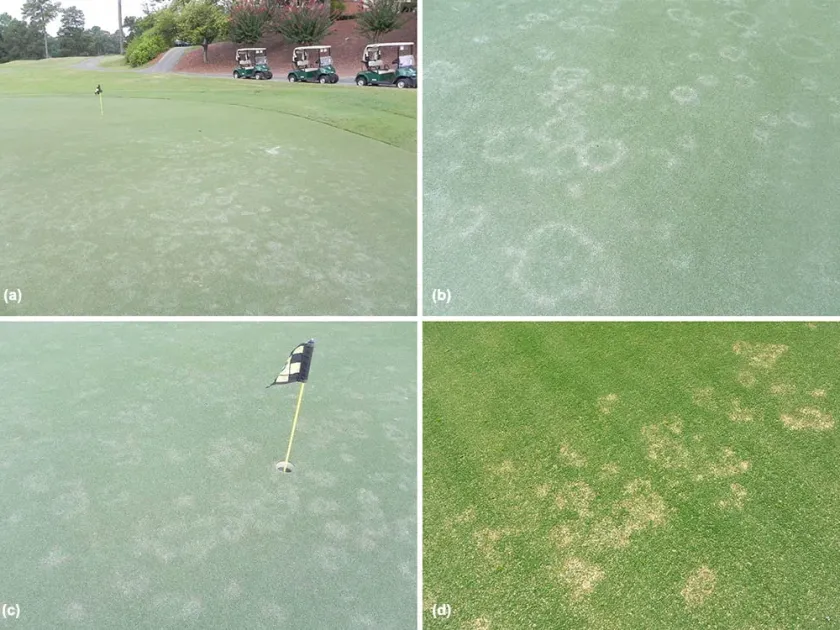
Description
Symptoms
The primary symptom of the disease is pronounced chlorosis, appearing as yellow spots or streaks on leaf blades. Over time, the yellowing spreads across the entire leaf, causing premature senescence and necrosis due to the failure of chlorophyll synthesis.
Infected plants exhibit severe stunting and shortened internodes. This results in a dwarfed, compact appearance compared to healthy plants, which typically reach normal height and growth stages.
A diagnostic characteristic is the proliferation of shoots, often referred to as a "witches' broom" effect. Instead of normal development, the plant produces numerous weak, stunted stems from nodes, significantly altering its morphology.
Reproductive processes are heavily impaired, leading to flower sterility and underdeveloped seeds. Inflorescences often show deformation and phyllody, where floral parts develop into leaf-like structures instead of normal reproductive organs.
Field diagnosis based on visual symptoms can be difficult due to confusion with nutrient deficiencies, such as magnesium or iron. Precise identification usually requires molecular testing, such as PCR, to confirm the presence of the phytoplasma.
Pathogen
The disease is caused by a phytoplasma organism (Cynodon chlorotic phytoplasma) that colonizes the vascular system of the host plant. These specialized prokaryotes lack a cell wall and thrive as intracellular parasites within the phloem tissues of plants.
Insect vectors, primarily leafhoppers, transmit the pathogen while feeding on infected sap. Once ingested, the phytoplasma multiplies within the insect, ensuring efficient transmission to healthy plants during subsequent feeding activities, which enables rapid disease spread.
Bermudagrass (Cynodon dactylon) serves as the primary natural reservoir for this infection. As a perennial weed with extensive rhizome systems, it facilitates the survival of the pathogen throughout the winter months, acting as a constant inoculum source.
The biological specificity of the pathogen involves the severe disruption of host metabolism. By colonizing the phloem, the phytoplasma inhibits the translocation of nutrients and photosynthates, leading to systemic physiological stress in the infected plant.
Genetic studies have revealed significant diversity among phytoplasma strains affecting Cynodon. This adaptability to various climates and environments makes the disease a challenging issue for phytosanitary monitoring in agricultural regions.
Conditions for development
Disease prevalence is strongly correlated with the population dynamics of insect vectors. Warm, dry weather conditions promote the breeding of leafhoppers, leading to increased transmission rates in mid-summer months.
The proximity of wild Bermudagrass stands to cultivated fields creates an ideal environment for winter survival of the pathogen. High density of weed reservoirs near crops significantly elevates the risk of early-season infection.
Moderate to high temperatures favor the internal development and spread of phytoplasma within the plant tissues. While development slows down during colder periods, the pathogen remains viable in the rhizomes of the perennial host.
Agronomic factors, such as over-irrigation and excessive nitrogen fertilization, indirectly contribute to the disease. High nitrogen levels stimulate succulent growth, which attracts insect vectors and makes plants more susceptible to infection.
In regions with intensive agricultural practices, the maintenance of weeds along field margins supports high vector populations. Controlling these habitats is essential to reducing the incidence and spread of the disease within the crop canopy.
Why it matters
The disease causes substantial losses in forage quality and productivity in pastures and grasslands. Infected plants suffer from reduced biomass accumulation and lower nutritional value, negatively impacting livestock production.
Harm is further characterized by the thinning of perennial stands, as heavily infected plants eventually die out. This leads to the long-term degradation of pastures and requires expensive remediation efforts such as reseeding.
Economic impact includes both direct yield losses and the high costs associated with management strategies. Effective control requires a long-term commitment to weed management and vector suppression, increasing overall production costs.
Seed production fields are at high risk, as latent infections can lead to contaminated seed lots. This compromises the quality of exported or distributed seeds and can introduce the pathogen into previously disease-free geographic regions.
Infected plants show reduced natural resistance, making them susceptible to secondary fungal and bacterial infestations. This creates a complex disease scenario in the field, further complicating crop maintenance and health management.
Protection
The cornerstone of control is the systematic eradication of Bermudagrass reservoirs along field borders, drainage ditches, and fences. Removing these sources significantly reduces the inoculum potential and vector breeding grounds.
Applying systemic or contact insecticides to control leafhopper populations is effective if timed with peak insect activity. Monitoring vector migration with sticky traps can provide critical data for efficient spray applications.
Utilization of certified, disease-free planting material is vital for maintaining crop health. Rigorous screening of seeds and vegetative propagation materials prevents the accidental introduction of the phytoplasma to clean sites.
- Implementing crop rotation with non-host species to break the disease cycle.
- Mechanical destruction of weed patches before they bloom and attract insects.
- Encouraging biological control agents to keep leafhopper populations in check.
Agronomic practices should focus on preventing the vegetative spread of the host weed. Deep plowing and timely cultivation effectively disrupt the rhizome network, limiting the overwintering success of the pathogen and reducing the overall disease pressure.
Discussion
No discussions yet — be the first.