
Description
Symptoms
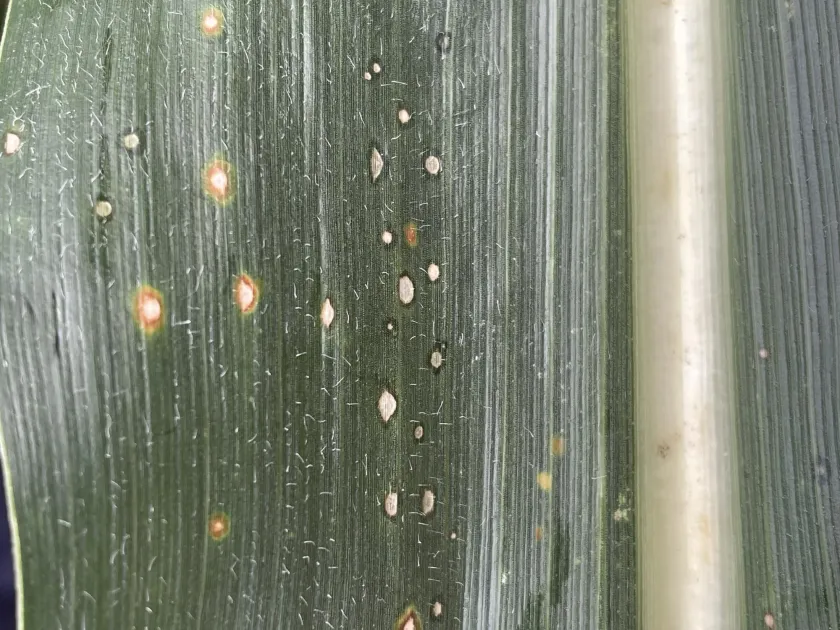
The primary symptom of Curvularia blight is the appearance of small, chlorotic spots on leaves that eventually enlarge and turn dark brown or black, often with a yellow halo.
In mango fruits, the infection manifests as dark, sunken, irregular lesions. These spots can expand rapidly, leading to fruit rot and the collapse of the internal tissues.
Young shoots may exhibit necrotic streaking or dieback. Severe infections can lead to the wilting of branches, significantly stunting the growth of the affected tree.
During periods of high humidity, a characteristic velvety or fuzzy dark-colored mass of conidiophores and spores becomes visible on the surface of the lesions.
Early leaf drop and reduced fruit set are common indicators of advanced disease progression, significantly impacting the overall physiological health of the plant.
Pathogen
The causal agent of the disease is the fungus Curvularia tuberculata. It is a filamentous fungus belonging to the phylum Ascomycota, capable of acting as both a necrotrophic parasite and a saprophyte.
The fungus produces dark-pigmented conidia that are adapted for dispersal by wind and rain splash. These spores are highly resilient, allowing the pathogen to persist in soil debris for extended durations.
Curvularia tuberculata has a broad host range, including many tropical fruit species like mango (Mangifera indica). It penetrates host tissue through stomata or mechanical injuries.
The pathogen utilizes a variety of extracellular enzymes to degrade plant cell walls, which facilitates the colonization of healthy tissue and the development of necrotic lesions.
In the field, the pathogen’s life cycle is closely linked to the availability of moisture, which is essential for the germination of conidia and the subsequent infection of host plants.
Conditions for development
High relative humidity, typically exceeding 80 percent, is the critical environmental factor that triggers widespread outbreaks of this disease.
The optimal temperature range for fungal growth is between 25°C and 30°C. These conditions are highly conducive to the rapid spread of spores throughout the orchard.
Poor orchard sanitation and crowded planting densities create stagnant air conditions, trapping moisture and providing an ideal environment for the pathogen to thrive.
Plants under environmental stress, such as drought or nutritional deficiency, or those suffering from mechanical wounds, are significantly more susceptible to infection.
Persistent rainfall or heavy dew during the fruit maturation stage creates prolonged leaf wetness, which is necessary for the fungus to establish successful infections.
Why it matters
The most immediate harm caused by Curvularia blight is the reduction in marketable yield due to fruit lesions and rot, which often develop during post-harvest storage.
Significant defoliation reduces the tree’s photosynthetic capacity, leading to weaker growth, reduced fruit quality, and lower yields in subsequent production years.
Seedlings and young nursery stock are particularly vulnerable; infection can cause stem girdling or root rot, often resulting in high mortality rates among young plants.
The economic impact is compounded by the costs of disease management, including the application of fungicides and the labor required for sanitation and orchard maintenance.
Infection can also weaken the overall vigor of the mango tree, making it more susceptible to secondary pathogens and other environmental stress factors.
Protection
Effective management begins with strict sanitation, including the removal and destruction of all infected plant tissues and fallen leaves to reduce the primary inoculum load.
Pruning trees to improve air circulation and light penetration is essential to minimize the period of leaf wetness and create an environment less favorable for the fungus.
Chemical control involving copper-based fungicides or systemic triazole compounds can be effective when applied as a preventative measure or at the first signs of symptoms.
Handling and packaging of fruit should be done with care to avoid mechanical abrasions, which serve as entry points for the fungal spores.
Maintaining optimal tree nutrition, particularly adequate levels of potassium, helps bolster the plant's cell walls and improve its natural resistance to pathogen penetration.
Pathogens and affected parts
Affects crops · 1
Discussion
No discussions yet — be the first.