
Description
Symptoms
The initial symptoms include stunted growth, chlorosis, and premature leaf drop. Often, individual branches or parts of the tree canopy begin to die back progressively.
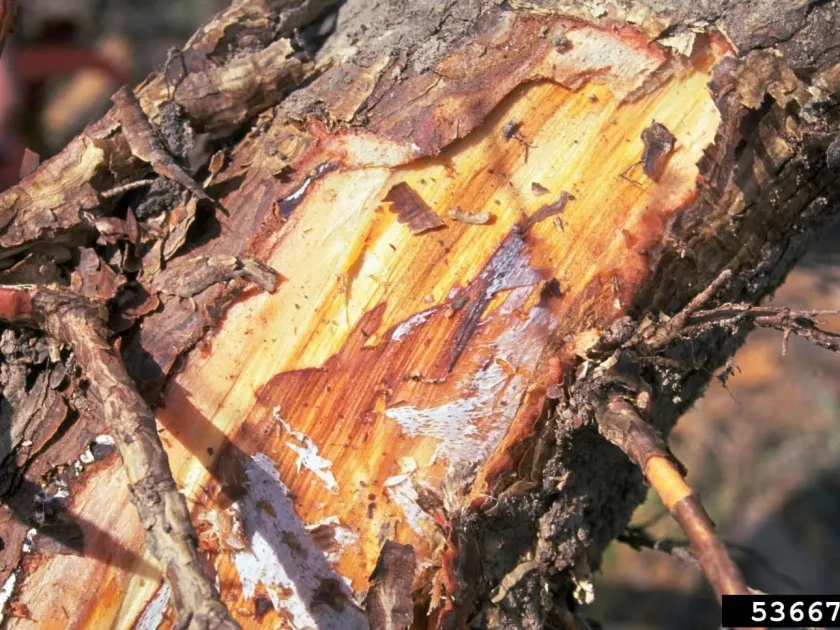
In the root collar area, the fungus creates white, fan-shaped mycelium layers beneath the bark. These layers often emit a distinct, mushroom-like odor when the bark is peeled away.
Severe infection leads to soft, white, or yellowish decay of the roots. The structural integrity of the plant is compromised, often resulting in trees falling over during high winds.
In banana plants, symptoms manifest as rotting at the base of the pseudostem and poor root health, resulting in yellowing and stunted leaf development.
The presence of honey-colored mushrooms at the base of the trunk or on surrounding soil is a clear indicator that the tree has been colonized by the fungus.
Pathogen
The disease is caused by fungi of the genus Armillaria, commonly known as shoestring fungus or honey fungus. These are opportunistic pathogens capable of switching between saprotrophic and parasitic modes of life.
They produce rhizomorphs, which are black, root-like fungal strands that grow through the soil to infect the root systems of healthy plants. Under the bark of infected trees, the fungus forms white fan-shaped mycelial mats.
The fungus can survive for many years in stumps and dead organic matter within the soil. Its ability to persist in the environment makes it one of the most challenging fungal diseases for growers.
Armillaria spp. infects a vast range of woody plants and several tropical crops, including bananas. In bananas, the fungus targets the corm and roots, leading to rapid decline.
The life cycle is completed by the emergence of mushrooms at the base of the host plant in late summer or autumn, which disperse spores to nearby damaged surfaces.
Conditions for development
Armillaria thrives in sites with high soil moisture and poor drainage. These conditions favor the growth and movement of rhizomorphs through the soil profile.
The presence of old tree stumps or decaying root systems provides the necessary food source for the pathogen to establish and spread to neighboring plants.
Plants under stress from drought, frost, or other pests are significantly more susceptible to infection. Environmental stress weakens the plant's natural defense mechanisms.
The optimal temperature range for the pathogen's growth is between 20°C and 25°C. During these conditions, rhizomorph expansion is at its peak intensity.
Mechanical damage to roots caused by agricultural machinery creates entry points for the fungus, facilitating direct infection from infested soil to healthy tissues.
Why it matters
Armillaria root rot causes substantial economic losses in orchards and forest ecosystems. It can kill trees over large areas, creating "gaps" in plantations that are difficult to replant.
The infection destroys the structural foundation of the plant, rendering timber in forests useless due to the decay in the wood and root system.
In banana production, the disease reduces yields and shortens the lifespan of plantations. Infected plants are unable to sustain fruit production due to severe root system degradation.
Mitigation costs are extremely high, as they involve not only the removal of the diseased plant but also the labor-intensive removal of stumps and potential soil sanitation.
Once a site is infested, it remains a high-risk zone for many years. This forces growers to either switch to resistant crops or leave the land idle for extensive periods.
Protection
The primary control method involves removing all infected plants, including the entire root system and the stump. Proper disposal of this material is crucial to prevent further spread.
Maintaining high plant vigor through proper fertilization and irrigation is essential for prevention. Avoiding root injuries during soil cultivation is another critical management step.
Improvement of soil drainage is a key preventive measure to limit the colonization ability of rhizomorphs in the subsurface environment.
Biological control, using antagonistic fungi such as Trichoderma, can suppress Armillaria mycelium in the soil, particularly in the early stages of infection or during site preparation.
In some orchard settings, digging deep trenches around identified disease centers can act as a physical barrier to prevent the rhizomorphs from spreading to adjacent healthy plants.
Pathogens and affected parts
Affects crops · 1
Discussion
No discussions yet — be the first.