
Description
Symptoms
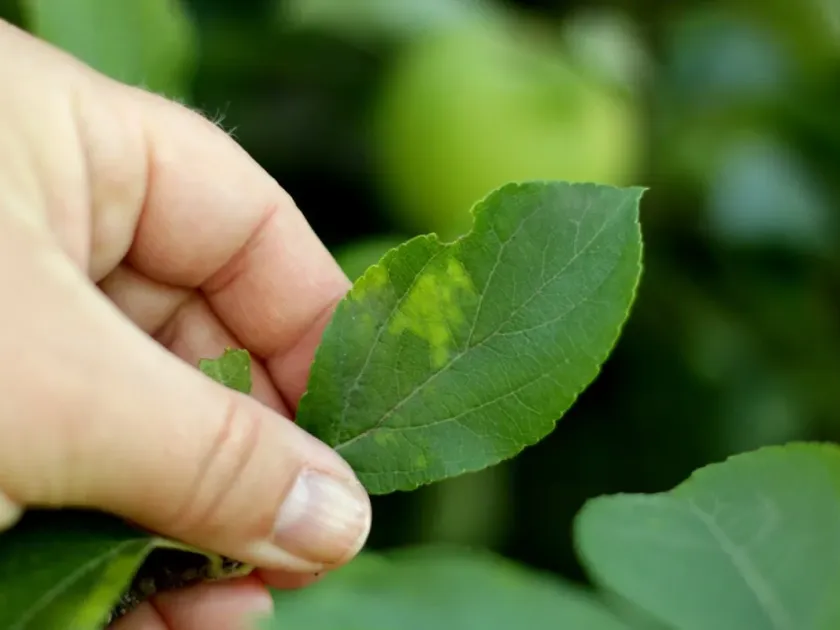
Symptoms of the disease are characterized by chlorotic spots on young leaves. These spots can appear as irregular patterns, rings, or line markings across the leaf blade.
In many cases, the leaves may show mosaic patterns. Severe infections can lead to leaf deformation, early senescence, and premature leaf drop during the growing season.
Fruits may exhibit surface blemishes, rings, or deformations. However, it is common for infected trees to remain asymptomatic, showing no visible signs while still harboring the virus.
The intensity of symptoms varies depending on the apple variety, environmental conditions, and the age of the tree at the time of infection.
Because symptoms often mimic nutrient deficiencies or environmental stress, accurate diagnosis requires specialized laboratory testing to distinguish the viral infection from other physiological disorders.
Pathogen
The causal agent of this disease is the Apple chlorotic leaf spot virus (ACLSV). It is a globally distributed phytovirus that affects a wide range of pome and stone fruit crops.
The virus is a member of the Betaflexiviridae family. It is known for its ability to persist in the host tissue for years, often remaining in a latent state without causing obvious symptoms.
Transmission mainly occurs through the use of infected grafting materials or budwood. Since the virus can spread systemically throughout the tree, any propagation material from an infected tree will carry the virus.
In addition to vegetative propagation, the virus can be transmitted through pollen, although its spread in commercial orchards is primarily attributed to human-assisted propagation practices.
Molecular diagnostics, such as ELISA or PCR, are essential for identifying the pathogen, as the virus can exist in orchards for long periods without detection by visual inspection alone.
Why it matters
The harm caused by ACLSV includes reduced vegetative growth and decreased overall vigor of the apple tree. Infected trees become more susceptible to environmental stressors like frost and drought.
Yield losses are common due to smaller fruit sizes, reduced fruit count, and compromised fruit quality. This directly affects the commercial viability of the harvested crop.
Chronic infection results in the gradual decline of tree health, leading to shorter lifespans for orchards. Over time, the cumulative impact of the virus significantly reduces orchard productivity.
The virus acts as a stressor that makes the tree more prone to secondary infections by other fungi or pathogens, leading to a synergistic decline in the orchard's overall health.
Economic losses are compounded by the necessity of rogueing (removing) infected trees, which requires additional labor and resources to replace them with healthy planting material.
Protection
The primary control measure is the use of certified virus-free nursery stock. Sourcing plants from reliable, audited nurseries is the most effective way to prevent the introduction of ACLSV.
Sanitation practices are critical in the orchard. All pruning tools and grafting equipment must be thoroughly disinfected between trees to prevent mechanical transmission of the virus.
Regular orchard inspections are necessary to identify and remove trees showing signs of viral infection. Early removal helps to contain the spread of the pathogen within the orchard block.
Maintaining good orchard hygiene and balanced crop nutrition helps trees remain resilient, which can mitigate the impact of the virus on the tree's health and yield.
While no chemical cure exists for viral diseases, managing secondary pests and environmental stressors helps ensure that trees have the best chance to perform under the burden of infection.
Pathogens and affected parts
Affects crops · 1
Discussion
No discussions yet — be the first.