

Description
Symptoms
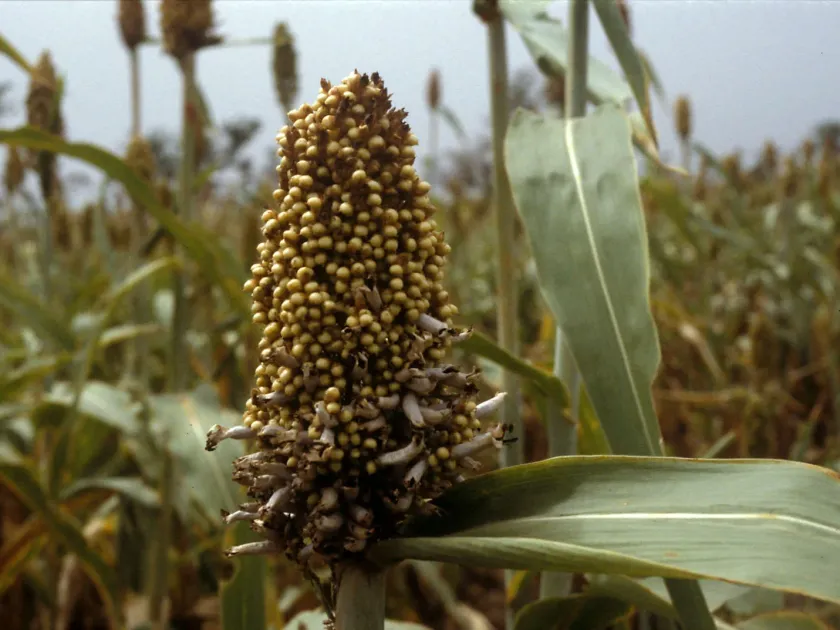
The primary symptom of sorghum smut is the replacement of the grain panicle with elongated, bladder-like growths filled with dark fungal spores.
As the infected parts mature, the protective membrane of these growths ruptures, releasing clouds of black spores into the field.
Infected plants often display stunted growth, reduced vigor, and a general decline in health compared to healthy sorghum plants.
The panicles may be partially or completely affected, appearing deformed and clearly distinct from healthy, productive heads.
Early identification of these symptoms is crucial for field monitoring and implementing necessary protective measures before the spores spread throughout the field.
Pathogen
The causal agent of sorghum smut is the fungus Anthracocystis ehrenbergii, a specialized pathogen that affects sorghum and related cereal crops.
The fungus is systemic, meaning it colonizes the host plant tissues from early germination and grows along with the plant during its development.
The pathogen completes its life cycle by converting the floral structures of the plant into dark masses of teliospores, which serve as the primary inoculum.
These spores are highly resilient and can persist in the soil for several seasons, waiting for the appropriate environmental conditions to germinate.
The biology of the fungus is highly adapted to the host, ensuring that spore production occurs exactly when the plant is most vulnerable during the reproductive phase.
Conditions for development
The development of the disease is favored by specific soil temperatures and moisture conditions during the germination phase of the sorghum seeds.
High temperatures during the early growth stages often promote the rapid systemic colonization of the host by the fungus.
Crop rotation practices are essential, as repeated planting of sorghum in the same field leads to the accumulation of spores in the soil.
Environmental stress, such as drought or poor soil fertility, can exacerbate the susceptibility of plants to fungal infection.
The presence of viable spores in the soil combined with susceptible cultivars creates a high-risk environment for disease outbreaks.
Why it matters
The economic impact of sorghum smut is significant due to direct grain yield losses and the degradation of grain quality for market use.
Infected harvests are often unsuitable for human consumption or livestock feed due to the presence of fungal toxins and contaminants.
Yield losses in severe cases can range from 30% to over 50%, depending on the intensity of the soil-borne infection and the susceptibility of the variety.
The persistence of spores in the field complicates agricultural operations for several years, requiring long-term management strategies.
Farmers face financial strain from the loss of harvest and the added costs of remediation and the procurement of clean seeds for future seasons.
Protection
Seed treatment with systemic fungicides is the most effective method to control seed-borne infections and protect the crop during the initial growth phase.
Strategic crop rotation and the use of resistant sorghum hybrids are fundamental components of a successful disease management program.
Field hygiene, including the removal of crop residues and controlling volunteer plants, helps to reduce the primary inoculum in the field.
Regular inspection of fields during the heading stage allows for the timely identification of outbreaks and prevents the further spread of spores.
- Using high-quality, fungicide-treated certified seeds.
- Implementing long-term crop rotation cycles.
- Deep plowing to bury infected plant debris.
In brief
1
Affects crops
Biology
Pathogens and affected parts
Pathogens
Affected plant parts
whole plant
Content graph
Affects crops · 1
Content graph
Connections · Sorghum smut
Most often together:
Marketplace
Products · 2
Community
Discussion
No discussions yet — be the first.