
Description
Symptoms
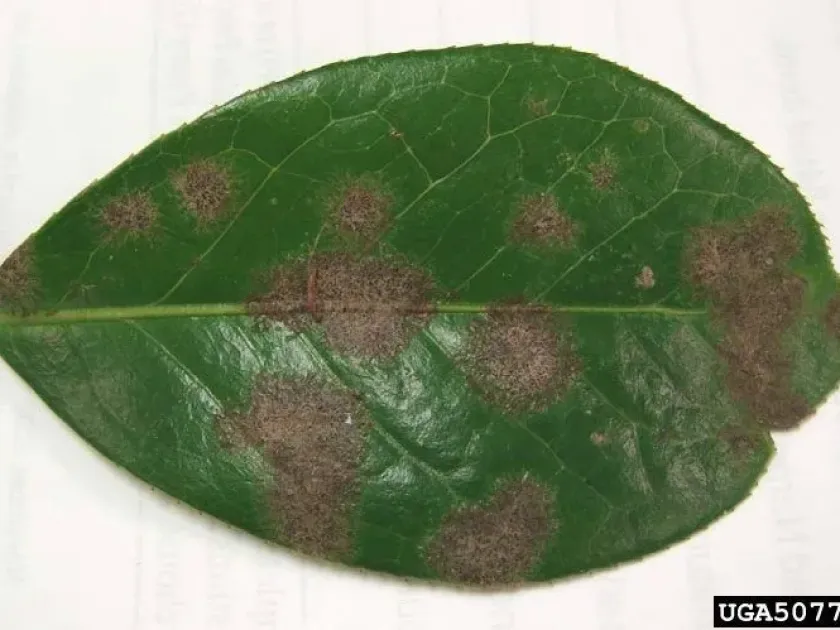
The primary symptom of a Cephaleuros infection is the appearance of distinct, velvet-like or powdery spots on leaves and stems. These lesions often range in color from orange to reddish-brown due to the accumulation of a specific pigment called hematochrome.
In Cattleya orchids, the disease manifests as round, slightly raised lesions on the leaf surface. If left untreated, these spots may coalesce into larger patches, leading to tissue chlorosis and eventual necrosis of the leaf area.
On avocado trees, the algae often colonize the bark of young twigs, appearing as crusty, scaly growths. Under humid conditions, these spots may become more vibrant and release spores, indicating an active phase of the disease.
Chronic infections often result in leaf yellowing, premature defoliation, and a decline in the overall vigor of the plant. A close inspection with a magnifying lens reveals hair-like sporangiophores standing above the plant tissue.
As the algae penetrate deeper, they can cause physical cracks in the bark or leaf surface, which can lead to secondary infections by bacteria or fungi, making the original diagnosis more complex.
Pathogen
Cephaleuros is a genus of parasitic green algae that causes significant diseases in various plants. The most common species, Cephaleuros virescens, is unique among algae as it grows as an epiphyte or parasite on the leaves, stems, and fruits of plants in tropical and subtropical regions.
This organism belongs to the order Trentepohliales and thrives by penetrating the host's cuticle and epidermis. It obtains nutrients from the host plant, disrupting its normal physiological functions and causing visible damage to the plant tissue.
The life cycle of this pathogen is closely tied to water. It produces zoospores that move across the surface of the plant using a film of water, allowing the infection to spread rapidly under high-humidity conditions.
A wide range of crops is susceptible to this infection, including fruit-bearing trees like avocado, where the pathogen can cause branch dieback, and various orchids, such as the Cattleya genus, which exhibit characteristic leaf lesions.
Because it is an obligate parasite, its presence is a direct indicator of specific environmental imbalances or lack of airflow in the plant's immediate environment.
Conditions for development
The development of Cephaleuros is highly dependent on environmental factors, primarily high relative humidity and temperatures ranging from 20 to 30 degrees Celsius. These conditions are necessary for both the growth and the reproduction of the algae.
The presence of free moisture, such as dew, persistent rainfall, or overhead irrigation, is essential for the movement of zoospores. Without this film of water, the pathogen cannot spread to new tissues or plants.
Poor agricultural practices, such as overcrowded plantings and inadequate ventilation in greenhouses, are major contributors to the spread of the disease. Stagnant air creates microclimates that remain damp for extended periods, facilitating rapid infection.
Plants that are stressed due to nutrient deficiencies, poor light exposure, or existing wounds are significantly more susceptible to colonization. A robust, well-maintained plant is better equipped to resist initial algal attachment.
The pathogen is often transmitted within a nursery or orchard via contaminated pruning tools or splashing water during irrigation, emphasizing the importance of rigorous hygiene protocols.
Why it matters
The damage caused by Cephaleuros is primarily metabolic. By covering large portions of the leaf surface, the algal colonies block essential light and inhibit the plant's photosynthetic capacity, leading to reduced growth and diminished yield.
In avocado production, the disease can lead to significant economic losses by reducing the quality and quantity of fruit. Heavy infestations on branches can cause tissue death, potentially killing off entire sections of the tree.
For ornamental plants like Cattleya, the aesthetic damage is a critical issue. The presence of unsightly lesions ruins the ornamental value of the plant, making it unsuitable for display or sale in professional collections.
The physical penetration of the host tissue by the algae creates entry points for secondary pathogens. This often leads to a synergistic effect where the combination of the algae and secondary infection causes much more rapid plant decline.
Long-term infestation significantly weakens the plant's defense mechanisms, making it more prone to other environmental stressors, including drought and pest attacks, effectively shortening the plant's lifespan.
Protection
Management of Cephaleuros begins with optimizing cultural practices to minimize humidity around the plant canopy. Ensuring proper airflow and adequate spacing between plants is crucial for keeping leaves dry.
Sanitation is a vital part of the control program. All infected plant material, including fallen leaves and pruned branches, must be removed and destroyed to prevent the accumulation of inoculum in the environment.
Copper-based fungicides are widely recognized as an effective treatment for controlling algal infestations. These products effectively inhibit the metabolic activity of the algae and prevent further spore production.
Adopting subsurface or drip irrigation instead of overhead watering is highly effective in controlling the disease, as it eliminates the surface water required for zoospore movement.
- Sterilize pruning tools regularly to prevent cross-contamination.
- Maintain proper mineral nutrition to boost the plant's natural disease resistance.
- Monitor closely in high-humidity seasons and apply preventative treatments if necessary.
Pathogens and affected parts
Affects crops · 2
Discussion
No discussions yet — be the first.