

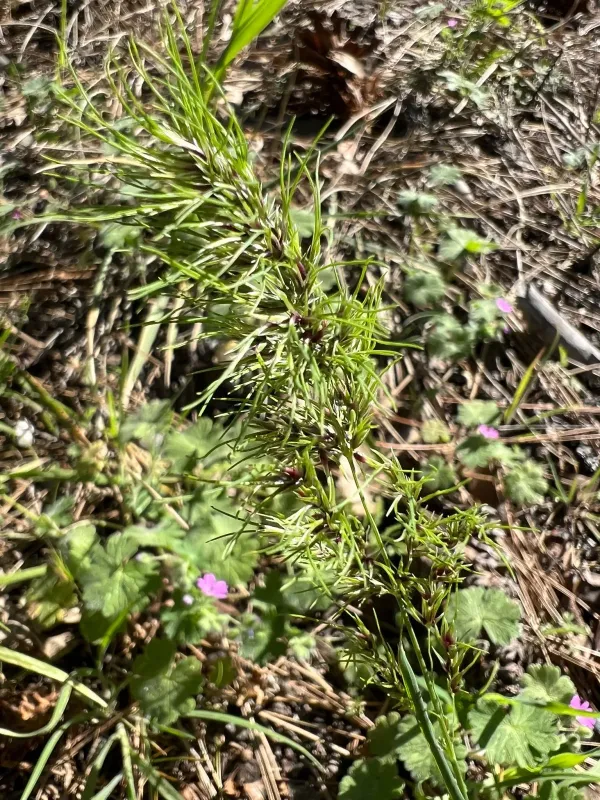
Description
Sowing dates
Bulbous bluegrass is classified as an ephemeral species, meaning its growth cycle is concentrated in the early spring. The optimal time for planting or natural establishment is the autumn, when soil temperatures drop to 10–12°C.
The seeds or specialized bulbils germinate immediately after snowmelt when soil moisture is sufficient. It is crucial to ensure good contact between the reproductive material and the moist soil layer for successful rooting.
When incorporating this species into pasture mixtures, it should be noted that it spreads rapidly by forming daughter bulbils within the inflorescences.
Seeding density depends on the intended use; for establishing pasture stands, a seeding rate of 5 to 10 kg per hectare in pure stands is typically sufficient.
The planting depth should not exceed 1–1.5 cm, as the small seeds have limited energy reserves for seedling emergence.
Growing requirements
This species belongs to the Poaceae family and is a typical plant of arid and semi-arid zones, highly adapted to harsh environmental conditions.
Bulbous bluegrass prefers open, well-lit areas with light, sandy, or rocky soils, where competition from taller grasses is minimal.
The plant exhibits exceptional drought resistance and tolerance to high summer temperatures, entering dormancy once the spring growing season concludes.
It is not demanding regarding soil pH, though it performs best on neutral or slightly alkaline soils with excellent drainage.
A key factor for development is the availability of early spring moisture, which is essential for biomass production before the onset of summer heat.
Yield
Biomass yield for bulbous bluegrass is relatively low compared to traditional forage grasses, as the plant remains short and enters dormancy early.
Average productivity ranges from 1.5 to 3.5 tonnes of green matter per hectare, depending on moisture conditions during the spring.
The primary value of this culture lies not in the volume of biomass, but in its high nutritional density, as it is rich in protein and sugars during early growth stages.
When used in grazing systems, it provides high-quality early forage that significantly improves livestock rations during the early spring period.
Economic efficiency increases when bulbous bluegrass is integrated into long-term pasture mixtures, serving as a vital component of the early spring feed supply.
Main diseases and pests
The main threats to these stands include specific fungal diseases that thrive in cool, humid conditions.
Common diseases include leaf rust and powdery mildew, which can reduce foliage density and overall forage quality.
Pests such as cereal flies and stem borers cause the most significant damage by attacking vegetative parts of the plant during the active growth phase.
To control pest and pathogen populations, it is recommended to follow proper crop rotation practices and avoid overgrazing on pastures.
Chemical control is rarely implemented due to the low economic feasibility of treating ephemeral grassland crops.
Harvesting
Harvesting bulbous bluegrass for green forage must be done in a narrow timeframe, coinciding with the flowering phase, before the leaves begin to yellow and dry out.
When grazing livestock, it is necessary to manage stocking rates to prevent the depletion of bulb reserves, which are essential for the plant's regeneration in the following season.
For seed production, harvesting is performed mechanically when the bulbils in the inflorescences reach maturity, often replacing the flowers.
After the growth phase, the field quickly loses its forage appeal as the above-ground parts of the plant rapidly die back in early summer.
Timely monitoring of biological development stages is the key to successfully managing this species as a productive pasture culture.
Content graph
Connections · Bulbous bluegrass
Most often together:
Marketplace