
Paspalum maritimum
Paspalum maritimum Trin.
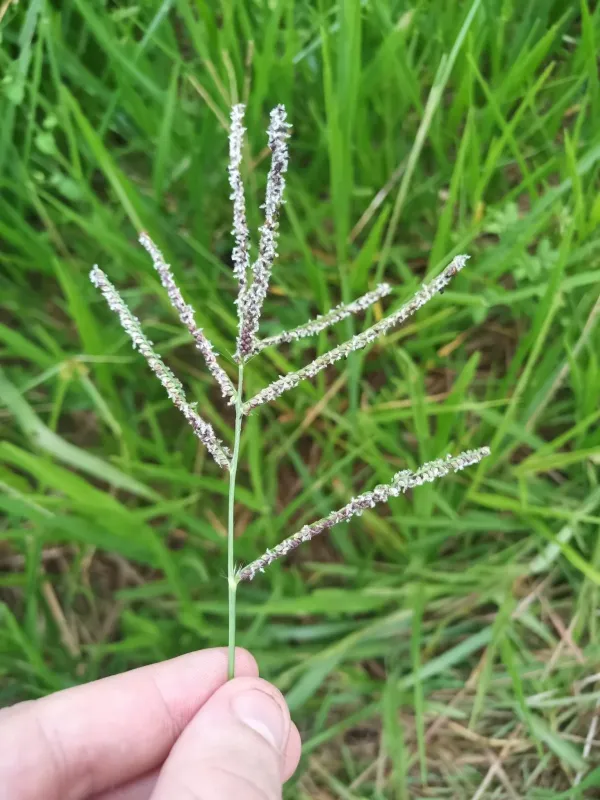
Description
Growing requirements
Paspalum maritimum is a perennial grass species belonging to the Poaceae family. Native to the tropical and subtropical regions of South America, this plant is naturally adapted to coastal environments and sandy, saline soils.
The plant exhibits remarkable physiological resilience, allowing it to thrive in saline conditions that would be lethal to most other crops. This salt tolerance is its defining agronomic characteristic, making it valuable for land reclamation.
Climatically, Paspalum maritimum requires warm conditions and high humidity to maintain active growth. It is highly sensitive to frost, which limits its commercial cultivation to frost-free regions where temperatures remain consistently mild.
Soil requirements involve a preference for well-drained, sandy substrates that allow for expansive root development. While it tolerates occasional waterlogging, prolonged stagnant water can impede the health of the rhizomatous system.
Effective management includes clearing the site of aggressive competing weeds before establishment. As a seed-bearing plant, it requires precise sowing depths to ensure germination, followed by consistent moisture during the early seedling stage.
Yield
Paspalum maritimum is primarily utilized for erosion control and the stabilization of dunes and coastal soils. Its dense root system and creeping habit make it an excellent choice for ground cover in challenging environments.
In certain agricultural contexts, it serves as a forage grass for livestock. Its ability to produce biomass in saline areas where other forage crops fail provides a significant advantage for sustainable grazing practices.
The productivity of the grass is highly responsive to nitrogen fertilization. Providing adequate mineral nutrition significantly enhances the rate of biomass regrowth, ensuring a steady supply of fodder throughout the growing season.
Under optimal management, the grass develops a thick, wear-resistant mat. This makes it suitable for recreational green spaces and landscapes that require durable, low-maintenance turf in coastal zones.
Regular mowing or grazing management is necessary to maintain the vigor of the sward. Removing excess biomass prevents thatch accumulation and promotes the emergence of fresh, nutrient-rich shoots.
Main diseases and pests
Fungal diseases are the primary threat, particularly during periods of high humidity and poor air circulation. Leaf spot pathogens can rapidly diminish the decorative and nutritional value of the stand if not addressed.
Insect pests, specifically soil-dwelling larvae, pose a risk to the root network. Proactive monitoring of soil health and the use of targeted biological controls are recommended to prevent extensive subterranean damage.
Nutrient deficiencies, particularly nitrogen and iron, often manifest as yellowing or chlorosis in the foliage. Standard soil testing is essential for developing a balanced fertilization program that supports healthy growth.
Weed competition is a significant factor during the establishment phase. Paspalum maritimum grows relatively slowly at the start, necessitating manual or selective chemical weeding to protect young plantings.
Poor soil drainage can lead to root rot if the moisture levels remain too high for an extended period. Designing adequate site drainage remains a foundational step in preventing these physiological and pathological threats.