
Lotus subbiflorus
Lotus subbiflorus
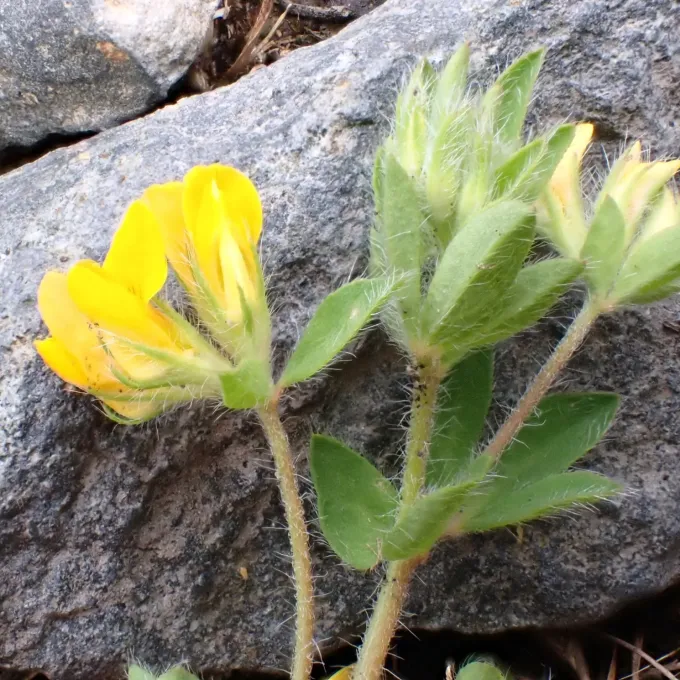
Description
Sowing dates
Lotus subbiflorus is a leguminous plant belonging to the Fabaceae family, recognized for its role in sustainable forage production. It is an annual or biennial herb that adapts well to various soil conditions, making it a valuable component in pasture seed mixtures.
The sowing season typically begins in early spring, once soil temperatures consistently reach 8–10 degrees Celsius. Successful establishment requires a well-prepared seedbed, as small seeds need close contact with soil particles to absorb moisture efficiently for germination.
Seeding rates are adjusted based on the intended use, whether for hay production or grazing purposes. It is recommended to scarify seeds before planting to overcome physical dormancy, which significantly improves the rate of germination and ensures uniform stand density across the field.
Placement depth should be shallow, generally within 1.5 to 2 centimeters. Deep sowing often leads to poor emergence because the small seedlings lack the energy reserves to push through excessive soil layers, emphasizing the need for precision drilling during the planting operation.
The plant thrives when inoculated with specific Rhizobium bacteria, which are essential for nitrogen fixation. This process allows the crop to contribute to soil fertility, reducing the need for synthetic nitrogen fertilizers in subsequent crop rotations within the farming system.
Growing requirements
Lotus subbiflorus requires temperate climatic conditions and exhibits a preference for moist but well-drained soils. It is particularly well-suited to regions with maritime climates, where mild winters and cool springs support continuous vegetative growth throughout the season.
Regarding soil requirements, the species shows tolerance to moderately acidic soils, though it performs optimally in a pH range of 6.0 to 7.5. It is known to adapt to sandy or loamy soils but requires careful management to avoid waterlogged conditions that can inhibit root respiration.
Sunlight exposure is crucial for the development of biomass. Therefore, it is best planted in open fields or as part of a low-density forage mix to prevent competition for light, which can cause the stems to become spindly and prone to lodging during heavy rainfall.
Soil structure should be kept friable to allow for deep root penetration. Minimal tillage practices are often sufficient, provided that the soil is not compacted, as root growth is vital for the plant's ability to extract nutrients and maintain stability during the flowering phase.
Maintenance of phosphorus and potassium levels is essential for overall plant health. While nitrogen fixation provides the bulk of the nitrogen requirement, these other minerals play a key role in developing sturdy stems and increasing the plant's resilience against environmental stressors.
Main diseases and pests
Fungal diseases such as powdery mildew and rust are common threats to Lotus subbiflorus, especially during periods of high humidity. These pathogens can significantly reduce the photosynthetic capacity of the foliage, leading to a drop in total nutritional value.
Pests, particularly various species of weevils, often target the flowers and pods. This feeding damage interferes with the reproductive cycle and reduces seed yield, posing a challenge for farmers intending to harvest their own seeds for the following planting season.
Effective management includes regular field scouting to detect early signs of infestation. Implementing a crop rotation strategy is one of the most efficient ways to disrupt the life cycle of soil-borne pathogens and reduce the risk of large-scale disease outbreaks in the field.
Biological control methods, such as encouraging beneficial insects, are highly recommended to keep pest populations at manageable levels. In cases where chemical intervention is necessary, it must be performed with precision to avoid harming pollinators that are vital for seed formation.
Sanitation practices after harvest play a major role in preventing carry-over of pathogens. Removing crop residues or incorporating them deep into the soil after the final cut helps to minimize the overwintering potential of common fungal spores and pests in the field.
Harvesting
For high-quality forage, the optimal harvest time is at the onset of the flowering stage. At this phenological phase, the plants provide the best balance of crude protein and digestible fiber, ensuring maximum nutritional intake for livestock during the grazing or hay-feeding period.
Hay production requires careful handling of the swath to protect the leaves, which are the most nutritious portion of the plant. Using modern hay-making equipment that minimizes mechanical agitation ensures that leaf loss is kept to an absolute minimum during the drying process.
In grazing scenarios, a rotational stocking system is ideal to prevent overgrazing. This approach allows the plants to recover after being grazed, promoting sustained regrowth and ensuring the long-term productivity of the pasture area throughout the entire growing season.
Seed harvesting should be timed carefully when the pods turn brownish but before they shatter. Shattering is a common issue with this species, so using specialized harvesters or direct combining at the right moisture content is necessary to secure a high yield of viable seeds.
Post-harvest, the remaining biomass acts as an excellent green manure. By incorporating this material into the soil, farmers can naturally enrich the field with organic matter and nitrogen, preparing the soil for productive use in the next cycle of the crop rotation program.