
Wall barley
Hordeum murinum L.
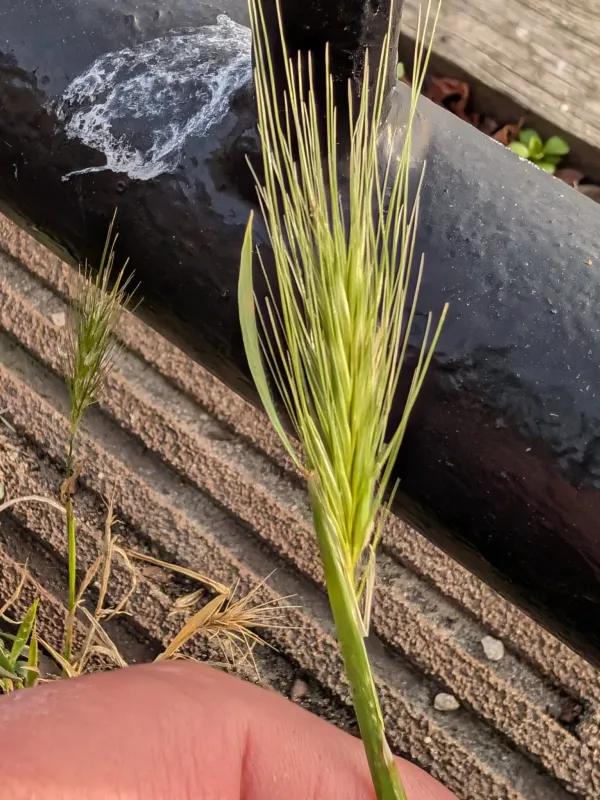
Description
Growing requirements
Wall barley (Hordeum murinum L.) is a member of the Poaceae family. This annual grass species is widely recognized as a pioneer plant that quickly colonizes disturbed areas and vacant lands.
It thrives in soils rich in nitrogen, often indicating areas with high organic matter accumulation or human-induced nutrient runoff, which explains its common presence near fences and buildings.
The plant demonstrates significant drought tolerance, which allows it to complete its life cycle before the onset of extreme summer heat in Mediterranean-type climates.
Botanically, it is distinguished by its nodding, flat spikes and long, scabrous awns that facilitate seed dispersal via attachment to passing animals or human clothing.
Its natural range encompasses temperate regions, but it has become a cosmopolitan weed due to international trade and agricultural migration, establishing itself on every continent except Antarctica.
Main diseases and pests
Wall barley is a known host for several cereal pathogens, including rust fungi and barley yellow dwarf virus, which can spread to commercial crops if the weed is not managed.
Pest populations, such as aphids and grasshoppers, frequently utilize the dense stands of wall barley as a staging ground before moving into neighboring agricultural crops.
The sharp, barbed awns of the spikes pose a significant physical threat to livestock, as they can lodge in the eyes, mouth, or skin of animals, leading to serious infections.
Effective management requires integrated strategies including early cultivation and the use of pre-emergent herbicides to prevent the establishment of the seed bank.
In grazing lands, excessive growth of wall barley can degrade forage quality because the spikes become highly unpalatable and dangerous to consume once the seed head matures.