
Oil palm
Elaeis guineensis Jacq.
Description
Sowing dates
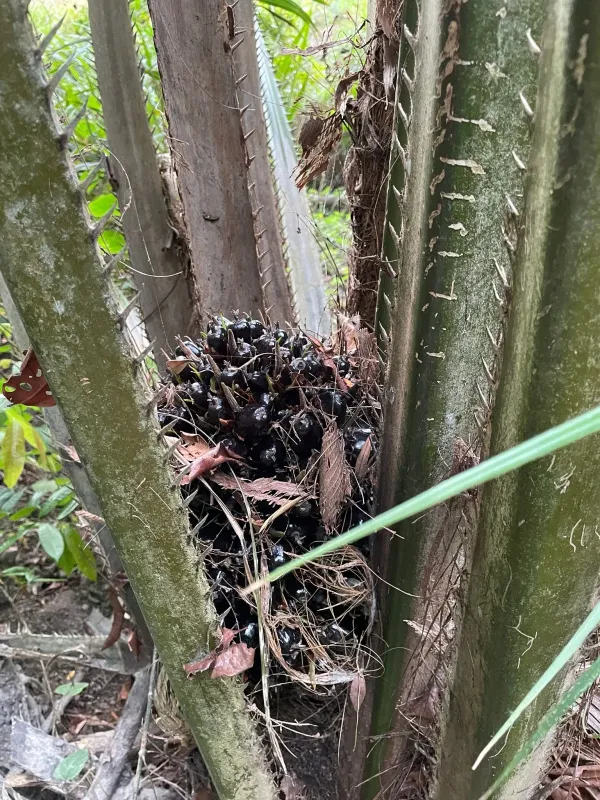
The oil palm (Elaeis guineensis) is a perennial monoecious species belonging to the Arecaceae family. Cultivation begins in specialized nurseries where seedlings are nurtured for 10–12 months until they develop 10–12 functional leaves, marking their readiness for field transplanting.
In plantation settings, palms are typically spaced 9x9 meters apart in a triangular pattern to ensure optimal sunlight access and root development, with a standard density of approximately 135–145 palms per hectare.
Originating from the tropical regions of West Africa, the crop is now predominantly grown in Southeast Asia, particularly Malaysia and Indonesia, which provide the humid tropical climate essential for its biological cycle.
Botanically, the oil palm is a robust, single-stemmed tree. While wild specimens can grow significantly taller, agricultural hybrids are selected for slower vertical growth, making the heavy fruit bunches more accessible for harvesting.
The plant possesses large, pinnate leaves that can reach up to 7 meters in length. In the axils of these leaves, the palm produces large inflorescences that develop into massive, compact fruit bunches containing hundreds of oil-rich drupes.
Growing requirements
Oil palms are highly sensitive to their environment, thriving best in a strictly tropical climate. They require consistent temperatures between 24 and 28 degrees Celsius throughout the year, with minimal seasonal fluctuation.
Water availability is critical; the crop requires a high annual rainfall of at least 2000 mm, distributed evenly throughout the year. Prolonged dry spells can severely disrupt fruit development and overall plant vitality.
Soil requirements involve deep, well-draining textures, ideally alluvial or volcanic, with a slightly acidic pH level between 4.5 and 5.5. Good aeration is essential to prevent root rot and promote healthy nutrient uptake.
Full sun exposure is mandatory for maximum photosynthetic efficiency. Even moderate shading can lead to reduced fruit set and lower yield, which is why proper plantation layout and management are vital from day one.
Strategic fertilization is part of standard agronomy, focusing on balancing nitrogen, phosphorus, potassium, and magnesium. Soil testing is recommended periodically to adjust nutritional plans to the specific needs of the local soil profile.
Yield
The oil palm is recognized as one of the most productive oil-bearing crops in the world. Plantation trees begin to produce fruit clusters 3–4 years after planting, with commercial yields peaking between the ages of 8 and 12 years.
Well-managed plantations can yield 20–30 metric tons of fresh fruit bunches per hectare annually. Each bunch contains numerous fruits, which are processed to extract both palm oil from the mesocarp and palm kernel oil from the seed.
The efficiency of the crop is attributed to its continuous production cycle. Unlike many seasonal crops, oil palms produce fruit year-round, ensuring a constant supply for processing facilities and economic stability for growers.
Current industrial success relies heavily on high-yield hybrids like the "Tenera" variety, which balances a thick layer of oil-rich fruit flesh with a relatively small stone, optimizing the oil extraction ratio.
Yield management also involves the careful timing of harvesting. Because the fruits mature continuously, plantation managers must implement precise logistics to harvest bunches exactly when they reach peak oil content.
Main diseases and pests
The most devastating disease for oil palm plantations is the Basal Stem Rot, caused by the fungus Ganoderma. This pathogen attacks the root system and vascular tissues, inevitably leading to the death of the tree and necessitating strict biosecurity measures.
Pests such as rhinoceros beetles and various weevil species pose a constant threat by damaging the palm’s growing tip or "spear." Integrated pest management, including the use of pheromone traps, is critical for survival.
Weed control is essential, particularly during the first three years of plantation development, to prevent competition for vital resources. Cover crops are often planted between rows to suppress weeds and improve soil moisture retention.
In some regions, small mammals like rats and squirrels cause significant damage by feeding on young fruit. Biological control strategies, such as the introduction of barn owls, have proven effective in maintaining pest populations below economic injury levels.
Nutrient deficiency, specifically magnesium chlorosis, is common in soils with low mineral content. Early detection through leaf sampling and prompt intervention with targeted foliar or soil applications can prevent long-term yield reduction.
Harvesting
Harvesting is a skilled labor-intensive process. Workers use long, telescopic poles equipped with specialized blades to carefully detach the heavy fruit bunches from the trunk without causing structural damage to the tree.
Post-harvest logistics are crucial; fruits must be transported to the mill within 48 hours. Any delay in processing allows for the rapid development of free fatty acids, which significantly degrades the quality and market value of the extracted oil.
At the processing plant, bunches undergo sterilization using high-pressure steam. This process serves a dual purpose: it loosens the fruit from the stalks and inactivates natural enzymes that would otherwise break down the oil.
Following sterilization, the fruit is threshed, digested, and pressed to extract raw palm oil. This oil is then refined, bleached, and deodorized to produce a clean, versatile ingredient for the global food and industrial markets.
The economic footprint of the oil palm is massive, spanning applications from human food ingredients and bakery shortenings to high-performance biofuels and essential cosmetic base components due to its superior oxidation stability.