
American oil palm
Elaeis oleifera (Kunth) Cortés
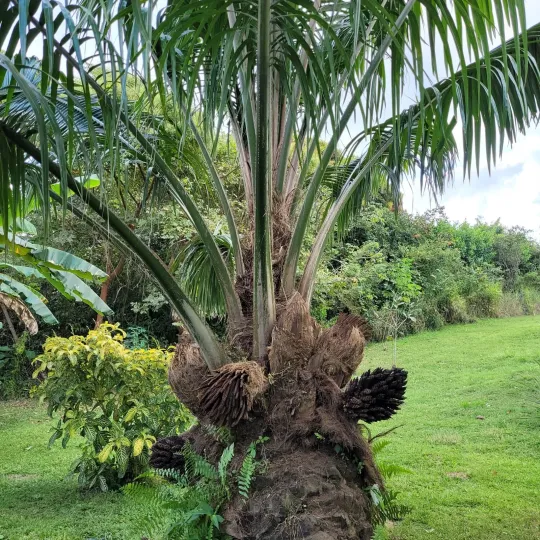
Description
Growing requirements
The American oil palm (Elaeis oleifera) is a perennial tropical plant belonging to the Arecaceae family. It is characterized by its prostrate or creeping stem and slow vertical growth, which makes it distinct from its African counterpart.
This species is native to the rainforest regions of Central and South America. It thrives in environments with high humidity and consistent, warm temperatures throughout the year, typically found in equatorial zones.
Regarding soil requirements, this palm prefers deep, fertile, and well-draining soils. It is highly sensitive to waterlogging, necessitating proper drainage systems in commercial plantation settings to maintain root health.
The ideal climatic conditions require annual rainfall exceeding 2000 mm. Prolonged drought periods can severely affect the physiological development of the palm and reduce the final oil yield per hectare.
Proper agronomic management involves regular application of nitrogen, phosphorus, and potassium fertilizers. Maintaining a slightly acidic soil pH (between 5.0 and 6.0) is essential for nutrient uptake and overall plant vigor.
Yield
The primary economic value of the American oil palm lies in its high-quality oil, which contains a high percentage of oleic acid. This chemical composition makes the oil liquid at room temperature and highly desirable for healthy food formulations.
While native trees produce lower quantities of oil than African varieties, breeders use Elaeis oleifera in hybridization programs. These interspecific hybrids are prized for their disease resistance and superior oil quality profiles.
Harvesting is performed by carefully cutting the fruit bunches when they reach the desired maturity level. Timely processing is crucial to ensure that the free fatty acid content remains within the acceptable standards of the industry.
- Food industry and cooking oils
- Cosmetics and personal care production
- Sustainable biofuel manufacturing
- Animal feed supplementation
Efficient processing facilities are required to extract the oil cleanly and maximize the recovery rate. Proper industrial extraction ensures that the waste streams are utilized efficiently, contributing to zero-waste agricultural practices.
Main diseases and pests
The American oil palm is susceptible to several fungal diseases, most notably the 'bud rot' disease that affects the apical meristem. Management involves the removal of infected parts and strict quarantine procedures to stop the spread.
Insect pests, such as the palm weevil (Rhynchophorus species), pose a constant threat by boring into the trunk. Integrated pest management (IPM) strategies, including pheromone traps and biological control, are highly recommended.
Nutrient deficiency, particularly of magnesium and boron, can cause chlorosis and reduced growth rates. Frequent leaf analysis is recommended to adjust fertilization schedules and keep the palms in optimal health.
Environmental stresses like extreme wind and soil erosion can destabilize the palm. Planting cover crops between rows helps maintain soil structure and provides a natural barrier against excessive moisture loss.
Strategic use of certified, disease-tolerant planting material is the most effective long-term defense against localized outbreaks. Modern nurseries play a vital role in providing high-quality seedlings for new plantations.