
Desmanthus leptophyllus
Desmanthus leptophyllus Kunth
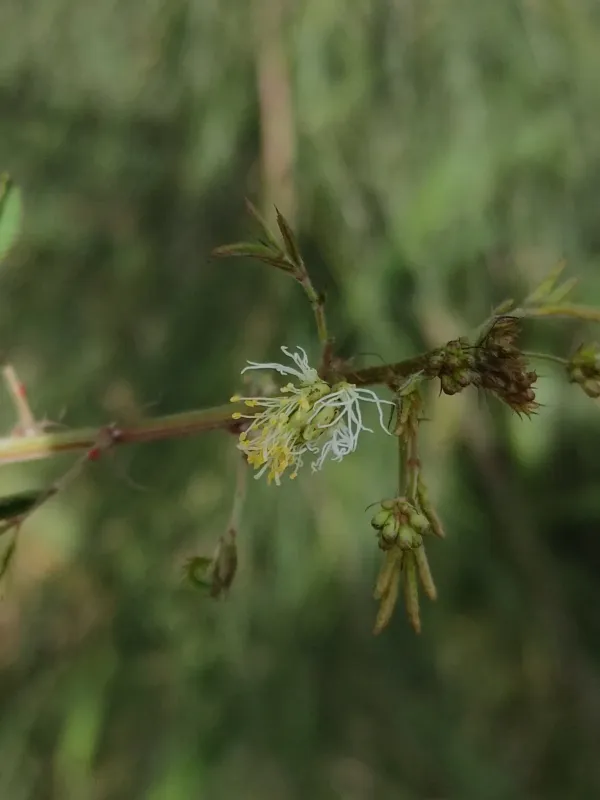
Description
Sowing dates
Desmanthus leptophyllus is a perennial legume that requires specific temperature conditions for successful establishment. Planting should commence in late spring when soil temperatures consistently reach 18–20 degrees Celsius to ensure rapid germination.
Seeds possess a hard seed coat, making mechanical or chemical scarification an essential prerequisite for sowing. This treatment increases water permeability and significantly improves the uniformity of seedling emergence.
Sowing should be conducted in rows with spacing between 30 and 45 centimeters. This arrangement provides adequate space for plant development and allows for easier mechanical weed control during the initial establishment period.
The optimal seeding depth ranges from 1 to 2 centimeters. Exceeding this depth can significantly hinder the emergence of seedlings, as the plant reserves are limited during the early stages of primary root development.
Post-sowing soil compaction is recommended to ensure optimal seed-to-soil contact. This practice is crucial in semi-arid environments to prevent the seeds from drying out before they can access deep soil moisture.
Growing requirements
This crop is highly adapted to tropical and subtropical climates, demonstrating a strong preference for warm temperatures. It is well-known for its exceptional drought tolerance once the root system is established.
Desmanthus leptophyllus thrives in well-drained soils, showing a preference for neutral to slightly alkaline pH levels. It is capable of growing on rocky or sandy terrains where nutrient availability is restricted for other species.
The plant engages in a symbiotic relationship with nitrogen-fixing bacteria. This biological nitrogen fixation allows the crop to maintain high productivity levels even in nutrient-poor soils without the need for high synthetic fertilizer inputs.
During the first year, moisture management is critical for survival. While mature plants are extremely hardy, consistent moisture is required during the early vegetative phase to ensure the plant develops a deep taproot.
Waterlogging and poor drainage are major constraints for this species. Sites prone to seasonal flooding or those with high water tables should be avoided to prevent root rot and plant mortality.
Yield
Primary utilization of Desmanthus leptophyllus involves cattle grazing and hay production. It is highly valued for its ability to produce significant biomass under rotational grazing regimes.
Under favorable conditions with adequate rainfall, the crop can support 3 to 4 cuts per season. Its capacity for rapid regrowth after defoliation makes it a highly productive component of forage systems.
The foliage maintains a crude protein content ranging between 15% and 20% on a dry matter basis. This makes it an excellent source of protein, especially when compared to native tropical grasses.
The plant remains palatable to livestock even during the early flowering stages. This characteristic provides farmers with a wider window of opportunity for harvesting without sacrificing nutritional value.
Integrating this legume into mixed pastures with perennial grasses often results in higher overall system productivity. This combination improves the animal diet balance and provides essential ground cover to mitigate erosion.
Main diseases and pests
Desmanthus leptophyllus is naturally resistant to most common agricultural pathogens. Its inherent hardiness significantly reduces the need for chemical disease control measures throughout the growing cycle.
The most common threats come from leaf-feeding insects and beetles during the early growing season. Monitoring is particularly important in the first few weeks after germination to protect the young, developing foliage.
Root rot diseases may occur in high-density stands under conditions of excessive moisture or poor ventilation. Maintaining appropriate seeding density and promoting airflow are effective management strategies.
In its native range, the plant is typically resistant to local pests. Problems usually arise only when the plant is grown under extreme environmental stress or in unsuitable soil types that weaken the plant's natural defenses.
Integrated pest management, including crop rotation and field sanitation, is usually sufficient to maintain healthy stands. Chemical intervention is rarely required if proper agrotechnical practices are followed.
Harvesting
Hay harvesting should be performed when the crop is in the peak flowering stage. This timing captures the highest concentration of essential nutrients while the stem structure is still pliable enough for efficient forage processing.
In rotational grazing systems, it is essential to manage stock density to avoid overgrazing. Allowing the plant sufficient time to recover energy stores in its root system after each grazing event is critical for long-term stand persistence.
A minimum stubble height of 10–15 centimeters should be maintained during mechanical harvesting. This practice ensures that axillary buds remain intact, which is vital for the plant's rapid vegetative recovery.
Seed harvesting should be timed carefully when the pods turn dark and mature. Because the seeds are prone to shattering as they dry, timely collection is necessary to prevent significant yield losses in the field.
Harvested seeds must be promptly cleaned and dried to a low moisture content. Proper storage in a cool, dry environment ensures the maintenance of seed viability and high germination energy for subsequent planting seasons.