

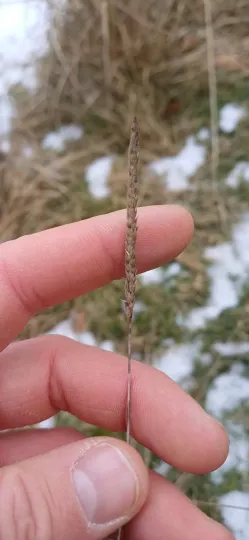
Description
Sowing dates
Crested dogstail is primarily sown in early spring or late summer, in August, when the soil is sufficiently moist after rainfall. The optimal seeding depth is 1 to 2 centimeters, as the seeds are small and require good contact with the soil to germinate quickly.
The seeding rate for pure stands is about 10–12 kg per hectare, although the crop is most commonly used in seed mixtures with clover, ryegrass, or meadow grass. In mixtures, the seeding rate is adjusted based on the overall composition of components to ensure an even stand.
After sowing, the field must be rolled to ensure capillary moisture rise to the seeds. This is critical for obtaining uniform emergence, as crested dogstail is sensitive to the drying of the topsoil during the initial growth stage.
During spring sowing, the grass develops slowly, so it is important to control weeds in a timely manner. In the early stages of development, the crop forms a powerful root system, strengthening the turf, which makes it indispensable for preventing soil erosion.
In the first year of life, crested dogstail does not provide a high yield, as it directs all its resources toward forming shoots and the root system. Full utilization of the sward is possible from the second year of the crop's life if the grazing regime is followed.
Growing requirements
Crested dogstail is a perennial low-growing grass of the Poaceae family, characterized by high ecological plasticity. It is well-adapted to temperate climates, withstanding both short-term droughts and excessive soil moisture during the spring period.
The crop prefers fertile, loamy, and sandy-loam soils with a neutral or slightly acidic reaction. Crested dogstail does not tolerate extremely poor sandy soils or severely waterlogged areas with stagnant water, requiring well-drained terrain for active development.
The plant is light-loving, therefore it develops most productively in open areas or with a sparse sward. It can tolerate moderate shading, but biomass productivity drops sharply under conditions of severe light deficiency.
Nutrient requirements for crested dogstail are moderate, but the crop responds positively to nitrogen fertilization, which stimulates tillering and green mass growth. High concentrations of potassium and phosphorus in the soil contribute to increased winter hardiness of the plants.
An important feature of the species is its high winter hardiness and resistance to trampling by livestock. Thanks to its dense turf, crested dogstail is ideal for pastures that are intensively grazed by livestock for many years.
Yield
The yield of green mass of crested dogstail depends on the composition of the seed mixture and the intensity of the land's use. On average, from one hectare of pure stand, 150 to 250 centners of green mass can be obtained over several grazing cycles.
Seed production is also significant for agricultural enterprises. With proper care, the seed yield ranges from 3 to 6 centners per hectare; however, seeds ripen unevenly, which requires moisture control during harvesting.
The highest nutritional value of the biomass is achieved in the tillering and jointing phases. During this period, the content of protein and sugars in the plant is at its maximum, ensuring high palatability for livestock and contributing to increased animal productivity.
The grazing regime should be moderate: frequent and overly close mowing can weaken the plants and lead to their decline in the sward. An optimal regime is one where the remaining stubble height is at least 5–7 centimeters.
After each grazing cycle, it is recommended to apply small doses of nitrogen fertilizers, which allows for maintaining a high rate of grass regrowth and increasing the total seasonal yield per hectare.
Main diseases and pests
Crested dogstail is characterized by relative resistance to diseases, but in years with high humidity, it can be affected by fungal diseases such as leaf rust and powdery mildew. These diseases reduce feed quality and total biomass.
Among pests, larvae of cockchafers, wireworms, and cereal flies pose the greatest threat. They damage the root system and young shoots, which can lead to thinning of the sward and reduced longevity.
To control pests and diseases in fields with crested dogstail, it is recommended to use agronomic methods: crop rotation, proper mowing regimes, and timely application of fertilizers to maintain plant immunity.
The use of chemical protection agents in pastures is limited due to the need to observe waiting periods before livestock grazing. Therefore, priority is given to preventive measures and the selection of resistant varieties adapted to specific zones.
It is important to regularly survey fields for the presence of pests during the vegetative phase. Early diagnosis allows for limiting the spread of pathogens and avoiding significant losses in the productivity of the pasture sward.
Content graph
Connections · Crested dogstail
Most often together:
Marketplace
Products · 2

Selenit
«Нанджин Ессенс Файн-Кемікал Ко. Лтд» (Китай)
Herbicides
0
0
·
1.4K
4 offers
12.05 €per 1 l
Buy