
Rescue grass
Bromus catharticus Vahl var. elatus (E. Desv.) Planchuelo
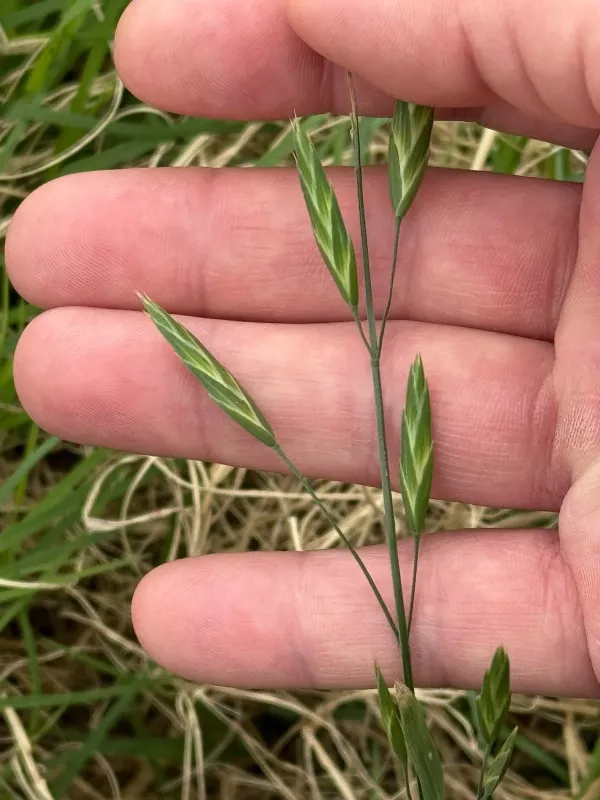
Description
Sowing dates
Rescue grass, botanically known as Bromus catharticus, is a highly valued cool-season grass within the Poaceae family. The most favorable time for sowing is during the early spring or late autumn when soil moisture levels are optimal for seed germination.
Seeds should be sown at a depth of 1–2 cm into a well-tilled, friable seedbed. Proper seed-to-soil contact is essential for uniform emergence, often achieved by lightly rolling the soil after planting to ensure consistency.
Seeding rates typically range from 20 to 30 kg per hectare, depending on the intended use and local climate conditions. The plant displays rapid initial growth, which helps in establishing a strong root system before environmental stressors occur.
In regions with mild winters, rescue grass can be managed as an annual or short-lived perennial forage, providing early-season grazing when other pastures are dormant. Proper spacing ensures adequate airflow, reducing the risk of fungal pathogens.
Consistent irrigation or rainfall during the first few weeks after sowing is critical to ensure that the seedlings establish firmly and can compete effectively with invasive weeds.
Growing requirements
This grass thrives in fertile, well-drained loamy soils but displays remarkable versatility across different soil types. It performs best in neutral to slightly acidic pH conditions and benefits significantly from regular fertilization.
Nitrogen application is vital for maximizing biomass production, especially during peak growth phases. Regular phosphorus and potassium supplements are also recommended to support root development and overall plant endurance.
Rescue grass is well-adapted to temperate climates but requires sufficient soil moisture throughout the growing season to maintain its high nutritional profile. While it can withstand brief dry spells, prolonged drought will significantly reduce yields.
The crop prefers sunny locations and performs poorly in heavily shaded areas where competition for light inhibits tiller development. Proper land management includes clearing surrounding debris to prevent the buildup of stagnant air.
It is often grown in mixture with legumes to improve soil nitrogen levels naturally and to provide a more balanced nutritional profile for grazing livestock. This symbiotic relationship enhances the long-term sustainability of the pasture.
Yield
The primary use of rescue grass is as a high-quality forage source for cattle, sheep, and horses. Its palatability and soft texture make it an excellent choice for hay production, silage, and intensive rotational grazing.
Under optimal management, rescue grass can produce multiple harvests per year, with yields often ranging between 30 and 50 tonnes of green biomass per hectare. Nutritional content remains high during the vegetative stage.
Harvesting should ideally occur at the early heading stage to optimize the balance between energy density and fiber content. Delaying harvest leads to significant lignification, which reduces the digestibility of the forage.
The plant exhibits vigorous regrowth capabilities, allowing for frequent grazing cycles without exhausting the reserves. This trait makes it highly valuable in dairy farming where high-quality feed is needed consistently.
Additionally, the deep root system provides excellent soil stability and helps to minimize erosion in hillside environments, contributing to land conservation while serving as a productive agricultural crop.
Main diseases and pests
Common diseases affecting this crop include rusts and various leaf spots, which are particularly prevalent in high-humidity environments. Maintaining proper air circulation through timely mowing is the best preventative measure.
Pests such as aphids and grass-feeding insects can cause damage during the active growing season. Regular scouting of the fields is recommended to determine if chemical control measures are necessary to prevent yield loss.
Root rot pathogens may emerge in areas with poor drainage or compacted soil conditions. Ensuring proper land leveling and avoiding waterlogging are essential strategies for long-term field health.
Invasive weed species can compete with young rescue grass during the establishment phase, potentially choking out the crop. Integrated weed management programs should be implemented to protect the investment.
- Maintain appropriate soil fertility.
- Monitor for rust symptoms regularly.
- Implement rotational grazing to promote plant health.