
Smooth brome (coastal type)
Bromus riparius Rehmann
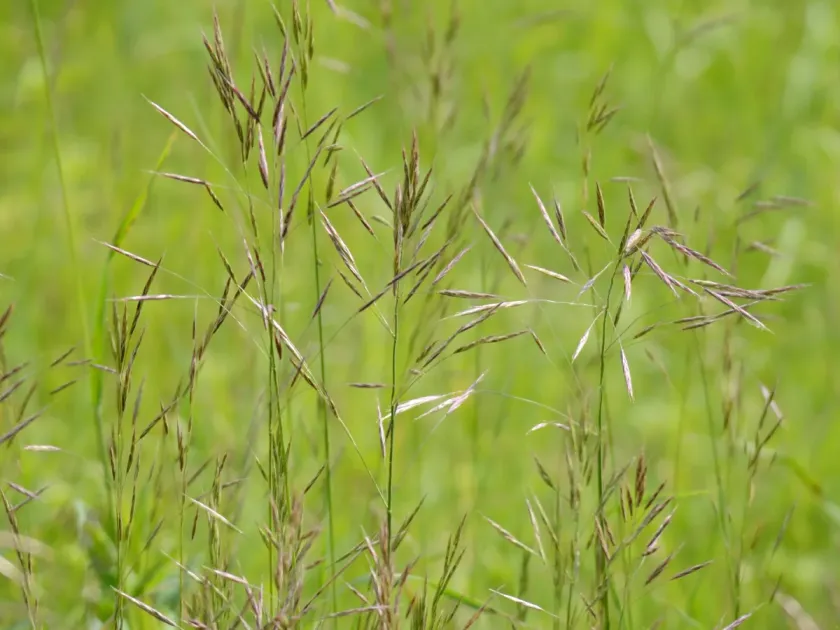
Description
Sowing dates
Bromus riparius is a perennial grass highly valued for its resilience and forage quality. Sowing is typically carried out in early spring, allowing the seeds to benefit from early soil moisture and moderate temperatures, which are ideal for germination.
The recommended seeding rate varies between 12 and 15 kg per hectare, depending on the desired density and soil conditions. It is crucial to drill the seeds at a depth of about 2 to 3 cm to ensure they remain anchored while maintaining access to sufficient oxygen for sprouting.
Given that the grass grows slowly during its establishment year, intercropping with an annual cover crop is often recommended to suppress weed competition. This practice protects the delicate seedlings and maximizes land usage during the initial growth phase.
Autumn sowing is also an option in regions with mild winters, as it allows the seeds to benefit from winter stratification. This often leads to earlier and more vigorous growth once spring temperatures rise.
Once established, the grass displays excellent lateral spread through its root system, gradually filling in gaps in the pasture and creating a thick, uniform turf that withstands regular use over many years.
Growing requirements
This species is well-known for its adaptability to various environmental conditions. It thrives in temperate climates and is highly regarded for its superior cold tolerance, often surviving harsh winters that would kill other pasture grass varieties.
While Bromus riparius performs best in fertile, well-drained soils, it exhibits remarkable tolerance to drought and can survive in moderately saline conditions. This versatility makes it an excellent choice for marginal land where other crops might fail.
Adequate sunlight is essential for optimal biomass production. While the plant can tolerate partial shade, its growth rate and seed production potential are significantly higher in full-sun conditions throughout the growing season.
It prefers neutral to slightly alkaline soil pH levels. Soil testing prior to planting is recommended to determine if any corrective measures, such as liming, are necessary to achieve the desired balance for grass development.
Nitrogen fertilization is a key factor in maximizing the productivity of this grass. Applying fertilizer in early spring or after the first cut encourages vigorous regrowth and significantly enhances the nutritional profile of the hay or pasture.
Yield
The yield potential of Bromus riparius is impressive, with dry matter production reaching 6 to 9 tons per hectare under ideal management. Proper irrigation and fertilization schedules play a major role in achieving these high performance levels.
Seed production is another vital aspect of this crop, typically yielding between 300 and 500 kilograms per hectare. Successfully harvesting seed requires careful monitoring of the seed heads for signs of maturity to avoid losses from shattering.
The longevity of a productive stand usually ranges from 5 to 7 years. With proper grazing rotation and annual nutrient management, the stand can remain highly productive, providing a reliable source of quality feed for livestock.
Nutritional analysis shows that early-harvested hay is high in protein and energy, making it an excellent feed component for cattle and sheep. The grass maintains its quality well even as it matures, offering a wide window for harvest.
Compared to other cool-season grasses, it is noted for its high regrowth rate after harvest. This characteristic ensures that producers can maximize the number of cuttings or grazing cycles available throughout the summer months.
Main diseases and pests
Bromus riparius generally possesses high natural resistance to common grass diseases. However, in environments with poor air circulation or excessive moisture, it may become susceptible to rust, which can affect the leaves and reduce biomass quality.
Pests such as grass bugs and various aphids can occasionally affect stand health. Integrated pest management practices, including scouting and the use of targeted control measures, are effective in maintaining healthy crops.
To prevent disease outbreaks, it is important to maintain proper plant spacing and avoid excessive nitrogen application, which can cause overly succulent growth that is more attractive to both pests and fungal pathogens.
In cases of significant infestation, rotation or temporary grazing may be used to disrupt pest lifecycles. Maintaining a diverse ecosystem around the fields also helps by encouraging beneficial insects that naturally control pest populations.
Good field hygiene, including the removal of infected debris and the selection of certified, clean seed, is the best defense against seed-borne diseases that could jeopardize the purity and health of future crops.
Harvesting
For hay production, the optimal harvest time is during the early heading stage. Cutting at this time ensures the best balance between total dry matter volume and nutritional quality before the stems become too fibrous.
When harvesting for seed, producers should wait until the majority of seed heads have reached a straw-like color. Equipment must be calibrated to minimize seed loss during the threshing process due to the potential for early shattering.
Post-harvest handling is critical for maintaining quality. Hay should be raked and baled at a moisture level below 18% to prevent heating, mold development, and loss of green color, which indicates better nutrient retention.
For pastures, rotational grazing is recommended to ensure even utilization and allow the plants adequate time for recovery. Keeping a residual height of at least 5 cm prevents overgrazing and protects the plant crowns.
Finally, winter maintenance is minimal, but ensuring that the plants are not grazed too heavily late in the fall allows them to accumulate sufficient energy reserves in their roots for a successful start in the following spring.