
Naked oats
Avena nuda L.
Description
Sowing dates
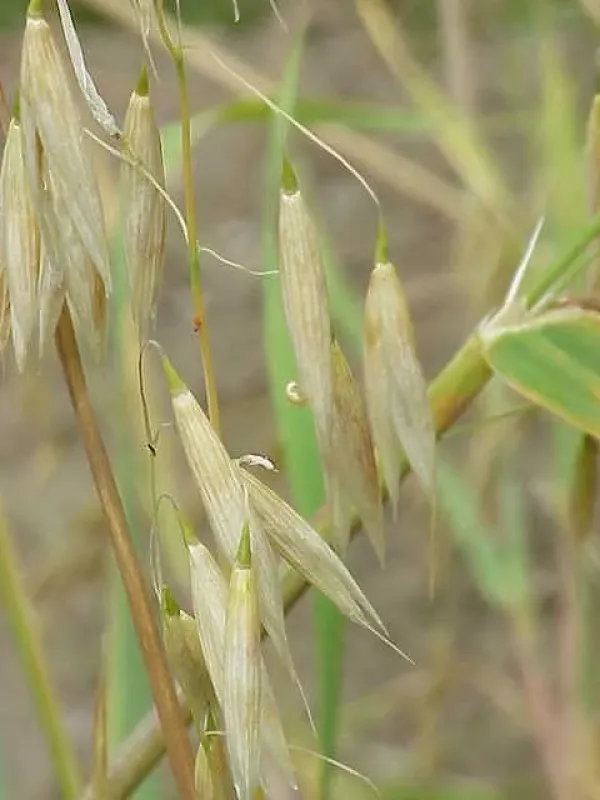
Naked oats (Avena nuda L.) belong to the Poaceae family. Unlike conventional oats, this variety lacks the tight lemma and palea, meaning the grain threshes free from the hull during harvest, resulting in a higher protein and oil content per unit of weight.
Sowing should take place as early as possible in the spring, once soil temperatures reach 3 to 5 degrees Celsius. Being a cool-season crop, naked oats perform best when they can establish themselves before the onset of summer heat, utilizing residual winter moisture.
Seeds should be drilled at a depth of 3 to 5 centimeters. Proper soil-to-seed contact is crucial for uniform emergence, which is essential for consistent development across the entire field.
The optimal seeding rate is generally between 4 and 6 million germinable seeds per hectare. Adjustments should be made based on local environmental conditions and the expected fertility of the soil to achieve the desired plant density.
Narrow-row spacing or cross-seeding methods are recommended to maximize the canopy cover. This technique creates a competitive environment that naturally suppresses weed growth and improves the overall light interception of the crop.
Growing requirements
Naked oats thrive in temperate climates with cool, moist growing seasons. They are notably frost-tolerant during the early stages of growth, which makes them highly suitable for northern regions and high-altitude farming.
The crop prefers well-drained, fertile soils, such as loams or silty clays, with a neutral to slightly acidic pH level. While they are adaptable, they do not perform well in waterlogged areas or severely saline conditions.
Water availability is critical, especially during the tillering and grain-filling stages. A moisture deficit during these phases can lead to stunted growth and a significant reduction in the weight of the harvested kernels.
Nutrient management should focus on a balanced application of nitrogen, phosphorus, and potassium. Over-fertilization with nitrogen can lead to excessive straw growth and lodging, which complicates harvesting and reduces yields.
Crop rotation is an essential management practice. Including naked oats in a diverse rotation helps maintain soil health, prevents the accumulation of soil-borne pathogens, and maximizes the nutrient efficiency of subsequent crops.
Yield
While the overall grain yield of naked oats might be slightly lower in weight compared to hulled varieties, the high energy density and lack of indigestible hull make it a premium feed and food product. The harvest yields typically range from 2.5 to 4 tonnes per hectare.
In human nutrition, naked oats are highly valued for their nutritional profile, which includes higher concentrations of beta-glucans, antioxidants, and essential amino acids. They are a popular choice in health-conscious dietary markets.
For livestock, naked oats provide an excellent energy-dense feed source. The absence of hulls improves digestibility in pigs, poultry, and young calves, significantly reducing waste and promoting better growth rates.
The straw of naked oats is considered superior to that of hulled oats in terms of palatability and nutritional value. It is widely used as a high-quality forage supplement in rations for ruminants and horses.
Market demand for organic and non-GMO naked oats has been growing. Farmers can capture higher value by focusing on post-harvest cleaning and maintaining the purity of the grain, ensuring it meets strict quality standards.
Main diseases and pests
Crown rust, powdery mildew, and loose smut are the most common diseases affecting naked oats. These fungal infections can severely impact photosynthetic efficiency and reduce overall grain quality if not monitored properly.
Pest pressures, such as cereal aphids, leaf beetles, and various fly species, can damage the crop during the vegetative phase. Early detection through regular field scouting allows for timely and targeted intervention.
Seed treatment with authorized fungicides is a standard preventive measure against seed-borne and early-stage soil diseases. This ensures a healthy crop stand and provides a solid foundation for further growth.
Cultural control methods, such as removing debris and practicing appropriate crop rotation, are vital for breaking the disease cycle. Healthy fields with low weed pressure are naturally more resistant to severe pest outbreaks.
Integrated pest management (IPM) strategies, including the use of beneficial insects and sustainable chemical applications when necessary, ensure that yields are protected while minimizing the impact on the local ecosystem.
Harvesting
Timing the harvest is crucial, as naked oats can shatter and suffer from grain loss if left in the field too long after reaching maturity. A two-stage harvesting process is often preferred to ensure grain quality.
Care must be taken when setting up the combine harvester. Because the hulls are missing, the grain is more prone to physical damage. Reducing the threshing drum speed is necessary to prevent kernel cracking and improve seed quality.
Post-harvest handling requires rapid cleaning and drying of the grain. Moisture levels should be monitored closely to prevent overheating, spoilage, and the development of mycotoxins in storage.
Storage facilities must be dry, well-ventilated, and protected from vermin. Proper aeration maintains the quality of the oats and prevents the growth of fungi, which is essential for both human and animal feed safety.
Gentle handling throughout the harvesting and processing chain ensures that the natural nutritional integrity of the naked oat grain is preserved. This attention to detail results in a product that maintains its premium status in the marketplace.