
Bristle oat
Avena strigosa Schreb.
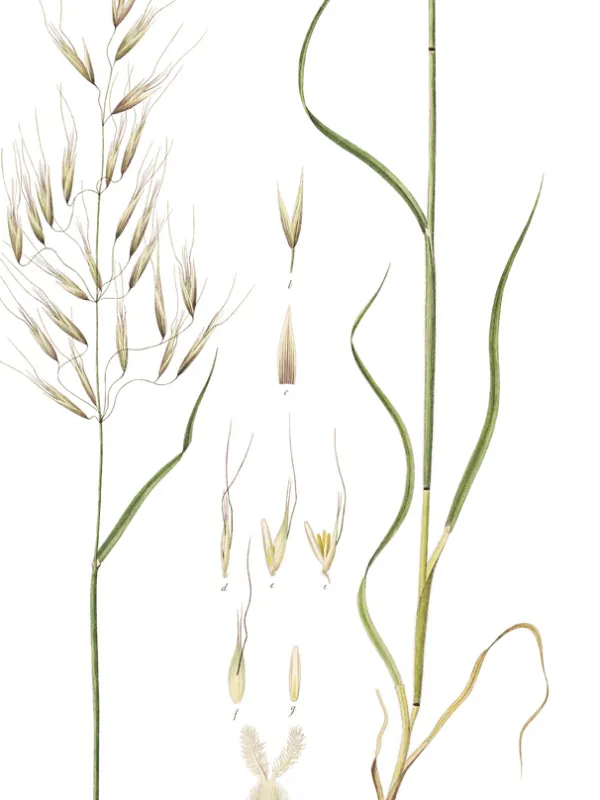
Description
Sowing dates
Bristle oat (Avena strigosa Schreb.), also known as black oat, belongs to the Poaceae family. It is a diploid species recognized for its resilience and ability to thrive in challenging soil conditions where common oats often fail.
The optimal sowing time is early spring, immediately after the soil is workable. Avena strigosa is highly tolerant to cool temperatures, which allows for early establishment and vigorous growth during the spring season.
When cultivated as a cover crop or green manure, sowing can also occur in late summer. This strategy is widely used to prevent soil erosion and to build up biomass before the onset of winter frost.
Seed depth should be maintained between 3 and 5 cm. Given the crop's preference for lighter soils, adequate depth is crucial to ensure consistent moisture uptake during the germination phase.
The seeding rate is determined by the intended use of the crop. For dense green forage, a higher seeding density is typically employed to maximize biomass production and improve ground coverage.
Growing requirements
Bristle oat is well-adapted to temperate climates and prefers regions with moderate rainfall. Its defining characteristic is its superior performance in acidic and nutrient-poor sandy soils compared to other grain crops.
Moisture availability is critical during the tillering and jointing stages. While the crop can tolerate brief periods of drought, consistent water supply significantly improves the yield and nutritive quality of the forage.
The crop thrives in well-aerated soils but exhibits a higher tolerance for waterlogged conditions than many other small grains. It is frequently used in systems designed to improve soil structure and organic content.
In agricultural practice, Avena strigosa is valued for its allelopathic properties, which help in suppressing weed growth, reducing the need for chemical herbicides.
Nutrient requirements are generally modest. However, strategic nitrogen application can significantly increase the total dry matter production, which is particularly beneficial for soil building and fodder production.
Main diseases and pests
The most significant pathological threats to bristle oat include various species of rust and loose smut. These diseases can negatively impact plant health and drastically reduce the biomass or grain quality.
Insects such as cereal flies can damage seedlings during the early growth stages. Integrated pest management, including crop rotation and the use of certified seeds, is essential for mitigating these risks.
Aphids pose a threat not only through direct feeding but also by acting as vectors for barley yellow dwarf virus. Regular field scouting is necessary to determine if chemical intervention is required.
Good field hygiene, including the removal of crop residues and maintaining spatial separation from other cereal fields, helps minimize the incidence of fungal and viral infections.
The crop's natural competitiveness against weeds makes it an excellent choice for low-input systems, as it effectively shades out competing vegetation without the need for intensive chemical weed control.