
Wild oat
Avena fatua L.
Description
Growing requirements
Wild oat (Avena fatua L.) is a troublesome annual grassy weed belonging to the Poaceae family. It is widely recognized as one of the most competitive and difficult-to-control weeds in cereal production worldwide, often causing substantial economic losses in wheat and barley crops.
Originally native to Eurasia, wild oat has spread to all temperate climate zones. It thrives in fertile, well-drained soils, showing a remarkable ability to colonize fields where traditional cereal crops are intensively grown, often mimicking the growth habits of the crops it infests.
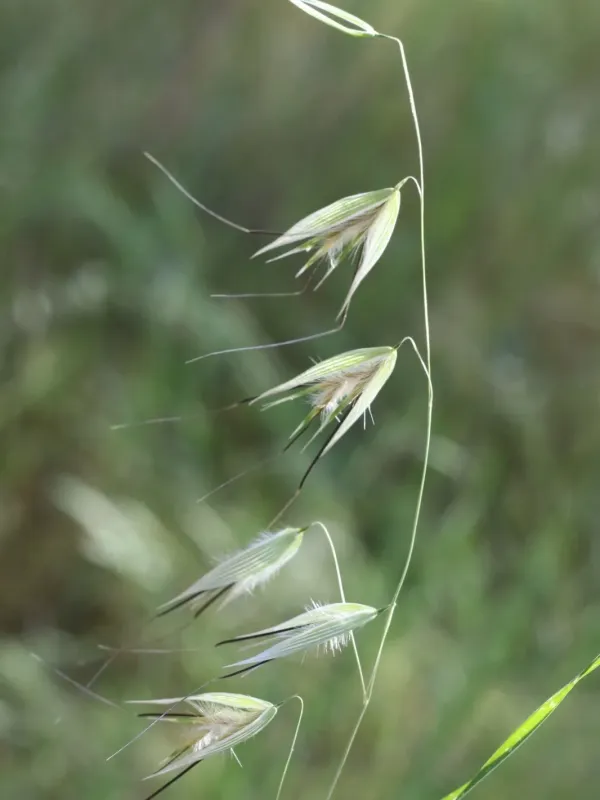
Botanically, Avena fatua is distinguished by its fibrous root system and slender culms that reach heights of up to 120 cm. The panicle is loose and spreading, and each floret features a twisted, bent awn that exhibits hygroscopic movement, facilitating the seed's burial in the soil profile.
In terms of environmental requirements, wild oat is highly resilient. It can germinate at soil temperatures as low as 2–3°C, allowing it to emerge earlier than many crop species. It demonstrates superior drought tolerance compared to domestic cereals, giving it an advantage in water-stressed environments.
Agricultural management is complex due to the seed dormancy of wild oat, which can last for several years in the soil. Farmers must implement integrated strategies, including crop rotation, competitive sowing densities, and precision tillage to manage the soil seed bank effectively.
Main diseases and pests
Wild oat acts as a critical host for various fungal diseases, including stem rust, crown rust, and different types of smut. These pathogens can easily spread from the weed population to adjacent cereal fields, complicating disease management programs.
Several insect pests, such as aphids, cereal leaf beetles, and Hessian flies, utilize wild oat as a host plant during their lifecycle. By providing a habitat for these pests, wild oat ensures their survival and promotes outbreaks during the growing season of the main crop.
Chemical control remains a primary strategy, utilizing herbicides that target grass weeds. However, the development of herbicide-resistant wild oat populations has become a global concern, necessitating the rotation of herbicide modes of action and the use of tank mixtures.
Cultural practices are essential for suppression. Delaying sowing dates in winter cereals can allow for the pre-emergence control of germinating wild oat. Additionally, increasing crop seeding rates can create a more competitive canopy, limiting the light availability for the weed.
Harvest hygiene is also a critical factor in preventing the spread of wild oat. Cleaning machinery thoroughly before moving between fields is essential, as the seeds are easily transported via harvesting equipment and contaminated seed lots.